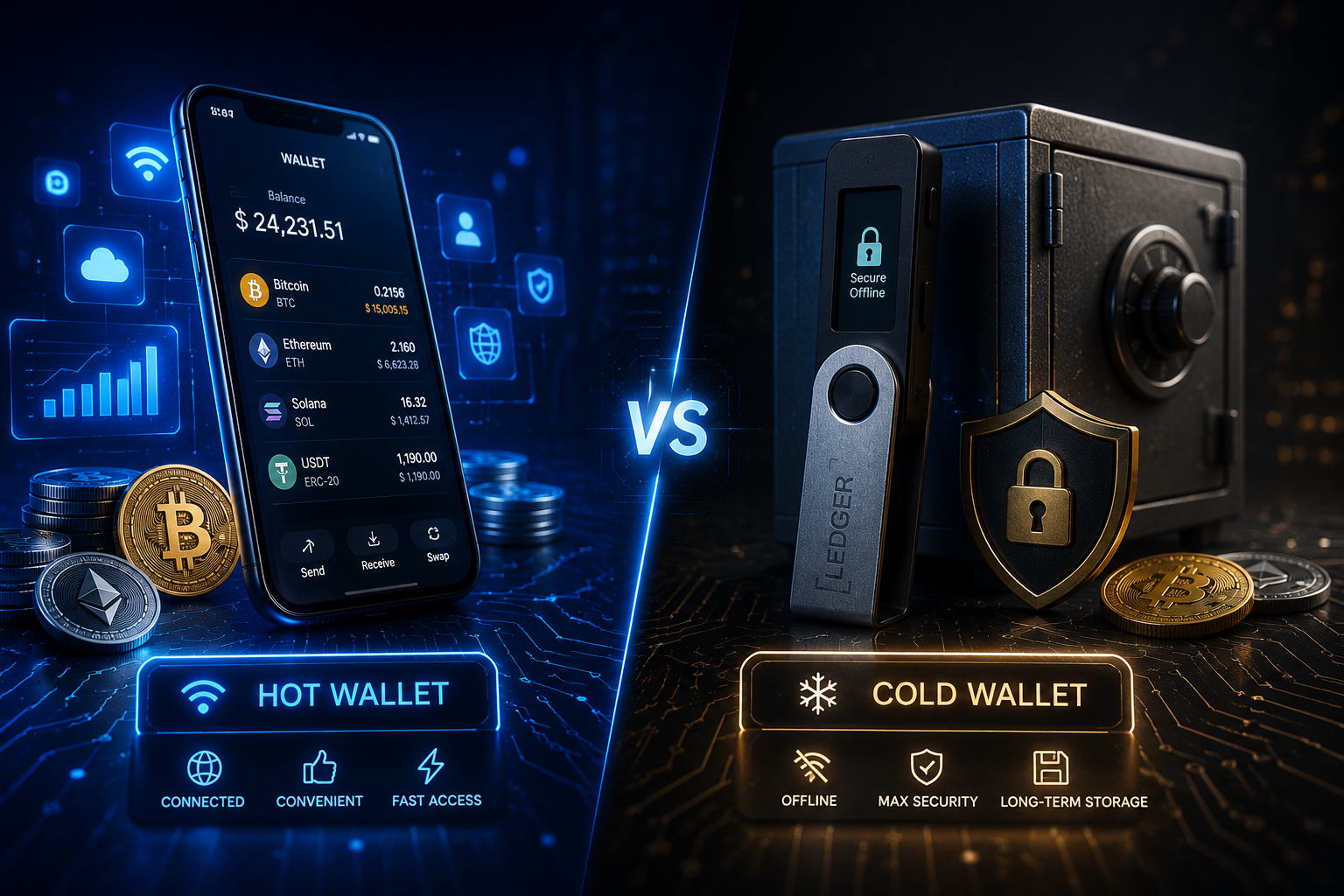
Wondering how much should beginners invest in crypto 2026? Discover practical limits, DCA strategies, safety rules, and an honest risk breakdown for new investors.
How Much Should Beginners Invest in Crypto 2026? (Honest Guide)

Entering the cryptocurrency market feels like stepping into a high-stakes arena where fast fortunes and sudden market drops coexist. As adoption grows and institutional participation deepens, the most crucial question you can ask is not which token to buy, but how much should beginners invest in crypto 2026 without exposing themselves to financial ruin.
This honest guide cuts through the marketing noise, affiliate hype, and social media flexing to deliver grounded, responsible financial principles tailored for absolute beginners entering the market this year.
1. The Golden Rule of Crypto Allocation: Risk Capital Only
The Golden Rule of Crypto Allocation: Prioritizing Risk Capital and Personal Stability
Before buying a single token or opening an account on an exchange, every newcomer must recognize the underlying volatility of the digital asset landscape. Understanding how much should beginners invest in crypto 2026 starts with a strict definition of risk capital: funds you can afford to lose completely without compromising your basic living standards, housing stability, daily food needs, or psychological well-being.
Unlike traditional financial markets, cryptocurrency markets operate 24/7 without trading halts or circuit breakers. Asset prices can easily fluctuate between 20% and 50% within a few weeks—or even days—due to macroeconomic shifts, regulatory announcements, or unexpected market liquidity events. Viewing your initial cryptocurrency allocation as a non-refundable tuition fee for gaining hands-on market experience helps protect both your financial health and your peace of mind.
a. The Non-Negotiable Prereqs Before Your First Crypto Purchase
To ensure your financial stability remains intact regardless of market movements, fulfill these foundational personal finance prerequisites before deploying any capital into digital assets:
-
Secure a Dedicated Emergency Fund First: Never use cash reserves earmarked for real-world emergencies. Before allocating a single dollar to digital assets, maintain 3 to 6 months of essential living expenses (rent, healthcare, utilities, groceries) in liquid fiat currency or high-yield savings accounts. This cash cushion ensures you will never be forced to sell your crypto holdings at a loss during a severe market downturn just to cover unexpected life expenses.
-
Pay Off High-Interest Debt First: High-interest obligations—such as credit card balances, personal loans, or high-yield payday loans—carry guaranteed negative returns that destroy long-term wealth faster than crypto assets can compound it. Clearing bad debt yields a guaranteed, risk-free return equal to your loan’s interest rate.
-
Enforce a Strict Zero-Leverage Policy: Never take out personal loans, utilize credit card cash advances, or use margin trading accounts to fund digital asset purchases. Borrowed money amplifies downside risks exponentially. If the market declines sharply, margin calls or loan liquidation events can wipe out your position completely, leaving you with debt obligations and zero asset backing.
b. Risk Capital Checklist for New Investors
Use this checklist to verify whether your funds meet the criteria for safe crypto allocation:
| Financial Checkpoint | Target Benchmark | Why It Matters for Crypto Investors |
| Emergency Reserve | 3–6 months of basic living expenses | Prevents forced asset liquidation during market corrections |
| High-Interest Debt | $0 balance on high-interest loans | Guarantees wealth preservation over high-risk speculation |
| Monthly Cash Flow | Positive net monthly income | Ensures crypto purchases come from excess savings, not baseline budget |
| Psychological Buffer | Fully prepared for a total drawdown | Keeps decision-making rational during 30%+ market pullbacks |
c. Approaching Capital Allocation with the Right Mindset
When evaluating how much should beginners invest in crypto 2026, position sizing determines whether crypto becomes a productive addition to your portfolio or an source of financial distress.
-
Treat Capital as Fully Discretionary: Assume that any money transferred into a digital asset wallet could experience significant drawdowns. If losing your initial allocation would prevent you from paying rent, buying groceries, or sleeping peacefully at night, your position size is too large.
-
Separate Savings from Speculation: Keep your long-term wealth anchors—such as retirement accounts, stock index funds, and real estate savings—completely insulated from digital asset accounts. Cryptocurrency should complement a sound financial foundation, never replace it.
By anchoring your investment strategy in strict risk management, paying off debt, and relying exclusively on true risk capital, you position yourself to navigate market cycles without exposing your personal life to unnecessary financial risk.
2. Standard Portfolio Ratios: Finding Your Percentage
To determine how much should beginners invest in crypto 2026, professional advisors and risk managers rely on percentage-based allocation models based on your personal risk tolerance.
| Investor Profile | Recommended Crypto Allocation | Best For | Strategy Focus |
| Conservative | 1% – 5% of Net Worth | Risk-averse beginners, near-retirees | Bitcoin & Ethereum focus |
| Moderate | 5% – 10% of Net Worth | Balanced growth seekers | Core assets + select Layer-1s |
| Aggressive | 10% – 20% Max Portfolio | Young investors with high risk capacity | Core holdings + structured DCA |
-
The Conservative Benchmark (1% – 5%): For absolute newcomers, allocating 1% to 5% of total investable assets allows you to participate in market upside while ensuring that even a total market correction will not derail your long-term wealth.
-
The Moderate Cap (5% – 10%): If you have steady income, low living costs, and a long investment horizon, an allocation approaching 10% offers meaningful exposure without catastrophic drawdown risks.
-
Why “All-In” is Financial Suicide: Concentration builds wealth, but diversification preserves it. Going all-in on volatile assets exposes you to severe psychological stress, leading to panic selling at market bottoms.
When determining how much should beginners invest in crypto 2026, calculating your position size as a small percentage of your broader financial portfolio keeps emotion out of the process.
3. Building Big with Small Capital: Why Starting Crypto with Just $100 in 2026 Is Your Best Strategic Advantage
A common misconception among newcomers is that you need thousands of dollars to build a portfolio or buy high-priced digital assets like Bitcoin. When analyzing how much should beginners invest in crypto 2026, starting small is often the single best strategic move you can make. Entering the market with $100 isn’t just “enough”—it is actually the ideal starting capital to master market dynamics without risking your financial stability.
The Mechanics of Small-Scale Crypto Investing
Digital assets differ fundamentally from traditional financial instruments in their accessibility and structure. Understanding these three core principles reveals why $100 provides more than enough room to build a real position:
-
Infinite Fractional Ownership: Unlike real estate or traditional shares where purchasing fractional units can be restrictive or costly, cryptocurrencies are infinitely divisible. Bitcoin ($BTC) is divisible down to 8 decimal places (0.00000001 BTC, known as a Satoshi), and Ethereum ($ETH) divides into 18 decimal places (Wei). You do not need $60,000 or $90,000 to own Bitcoin—you can acquire $10, $25, or $50 worth effortlessly.
-
Low-Stakes Educational Sandbox: The learning curve in crypto involves acquiring operational skills: navigating exchange interfaces, setting up hardware wallets, managing seed phrases, making on-chain transfers, and enabling strong Two-Factor Authentication (2FA). Executing these processes with $50 to $100 provides hands-on experience without the psychological anxiety of making a costly mistake with significant savings.
-
Elimination of Market Timing Pressure: Placing a large sum into a volatile market creates immense stress, frequently prompting emotional decisions like selling at a loss during sharp pullbacks. Starting with $100 conditions you to focus on long-term portfolio growth rather than short-term price fluctuations.
Lump Sum vs. Dollar-Cost Averaging (DCA)
When evaluating how much should beginners invest in crypto 2026, the method of deployment matters far more than the initial amount. Spreading small, consistent purchases over time—a strategy known as Dollar-Cost Averaging (DCA)—consistently outperforms reckless lump-sum purchases driven by market hype.
| Strategy Metric | Lump-Sum Purchase ($1,000 All-At-Once) | Dollar-Cost Averaging ($100/Month) |
| Market Timing Dependency | Critical (High risk of buying at localized tops) | Zero (Automated regular entry points) |
| Psychological Stress | High (Monitors charts constantly during drops) | Low (Price dips allow buying more units for $100) |
| Capital Risk Exposure | 100% of capital exposed on Day 1 | Capital deployed gradually alongside market learning |
| Long-Term Entry Cost | Single fixed price point | Smoothed average entry cost over time |
Example 12-Week DCA Schedule ($50 Fortnightly):
Week 2:  Deploy $50 -> BTC Price: $65,000 -> Accumulate 0.000769 BTC
Week 4:  Deploy $50 -> BTC Price: $58,000 -> Accumulate 0.000862 BTC (Buy More on Dip)
Week 6:  Deploy $50 -> BTC Price: $62,000 -> Accumulate 0.000806 BTC
Week 8:  Deploy $50 -> BTC Price: $70,000 -> Accumulate 0.000714 BTC
----------------------------------------------------------------------
Total Deployed: $200 | Result: Reduced average entry cost + zero emotional stress
The $100 Wealth-Building Blueprint for 2026
To maximize a $100 initial budget, follow a disciplined asset split that prioritizes capital preservation over high-risk speculation:
-
70% Core Blue-Chips ($70): Split $70 between Bitcoin ($BTC) and Ethereum ($ETH). These two assets carry the highest liquidity, mature market structures, and deep institutional adoption.
-
20% High-Utility Infrastructure ($20): Allocate $20 toward established Layer-1 or Layer-2 scaling networks that provide real-world utility and strong developer ecosystems.
-
10% Security & Reserve ($10): Keep $10 in fiat or stablecoins on standby to practice placing limit orders during market pullbacks.
If you are debating how much should beginners invest in crypto 2026, remember that a disciplined $100 monthly allocation continuously outperforms a reckless $2,000 lump sum purchase driven by FOMO (Fear Of Missing Out).
To set up an account safely for your initial purchase, check out our guide on Best Crypto Exchanges 2026.
Structuring Your First Allocation Safely

Knowing how much should beginners invest in crypto 2026 is only half the battle; knowing exactly where to deploy those initial funds determines your ultimate survival rate in these volatile digital asset markets. Many newcomers make the catastrophic mistake of spreading small amounts of capital across dozens of micro-cap tokens, obscure altcoins, or trending viral coins in hopes of catching a quick return. In reality, high-risk altcoins and speculative tokens carry immense downside risks for unseasoned traders, often suffering drawdowns exceeding 80% to 90% during broader market corrections. Building a resilient crypto portfolio requires a strategic, tiered approach that balances growth potential with rigorous capital preservation.
a. The Core-and-Explore Portfolio Architecture
When designing an entry-level digital asset portfolio, professional wealth managers and seasoned market participants recommend adopting a “Core-and-Explore” framework. This structure ensures that the majority of your capital is anchored in time-tested, highly liquid assets, while keeping speculative exposure capped at manageable levels.
-
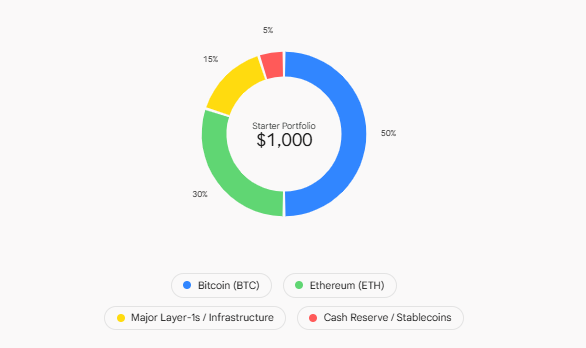
70% to 80% Core Allocation (Blue-Chip Anchors): Allocate the vast majority of your crypto budget to market leaders—specifically Bitcoin ($BTC) and Ethereum ($ETH). These two foundational assets possess proven network effects, unparalleled market liquidity, extensive developer ecosystems, and significant institutional backing through spot ETFs and corporate treasuries. Bitcoin acts as the digital gold store-of-value anchor, while Ethereum serves as the primary settlement layer for decentralized finance and smart contracts.
-
15% to 20% Major Altcoin Layer (Established Layer-1s & Layer-2s): If you wish to gain exposure to broader blockchain innovation, limit your secondary picks to established top-tier infrastructure projects (such as leading Layer-1 platforms or major Layer-2 scaling solutions) that feature multi-billion-dollar market caps, transparent tokenomics, and real-world utility.
-
0% to 5% High-Risk Satellite Layer (Optional): Highly speculative assets, new token launches, or sector-specific plays should never exceed 5% of your total crypto portfolio. For absolute beginners, keeping this allocation at exactly 0% is often the safest path.
b. Recommended Beginner Allocation Model
To visualize how a conservative beginner budget should be divided across asset classes, consider this balanced distribution model:
c. Critical Safety Rules for New Capital
Beyond picking the right assets, managing operational risk is paramount to keeping your principal safe from market exploits, bad actors, and technical missteps:
-
Avoid Micro-Caps & Hype Tokens: Do not commit beginner capital to newly launched tokens promising overnight returns or viral social media hype. The vast majority of low-liquidity micro-caps lose over 90% of their value over full market cycles or end up as illiquid projects.
-
Master Self-Custody and Security Early: Leaving your digital assets indefinitely on centralized exchanges exposes you to third-party custody risks and potential exchange outages. For long-term holdings, learn how to transfer funds to cold storage hardware wallets where you maintain direct control over your private keys.
-
Implement Strict Execution Protocols: Always double-check wallet addresses, utilize test transactions for large transfers, and activate hardware-based Two-Factor Authentication (2FA) across all trading accounts.
If you are still evaluating how much should beginners invest in crypto 2026, the most prudent approach is to start small with disciplined Dollar-Cost Averaging (DCA) into blue-chip digital assets. Review our step-by-step guides on How to Build Crypto Portfolio and How to Avoid Crypto Scams to safeguard your capital, and refer to How to Buy Bitcoin when executing your very first purchase.
Frequently Asked Questions (FAQ)
When deciding how much should beginners invest in crypto 2026, navigating the operational, technical, and psychological aspects of the market can raise crucial questions. Below are detailed answers to the most common inquiries new investors ask before deploying their capital.
Q1: Is 2026 too late to start investing in crypto?
A: No, 2026 is not too late to begin. While the era of effortless overnight gains from obscure tokens has largely given way to a more mature asset class, the market landscape today offers vastly improved market infrastructure, clearer regulatory frameworks, and deep institutional participation via spot ETFs and asset management products.
Rather than chasing explosive, high-risk micro-cap returns, modern crypto investing centers on asset diversification, long-term store-of-value dynamics, and participation in established decentralized networks. Focusing on disciplined dollar-cost averaging (DCA) and conservative position sizing allows you to build exposure safely, regardless of macro market cycles.
Q2: Should I take out a loan or use credit cards to invest in crypto?
A: Absolutely not. Borrowing money—whether through personal bank loans, credit card cash advances, peer-to-peer lending, or exchange margin accounts—is one of the fastest paths to financial distress in cryptocurrency trading.
Because digital asset markets operate 24/7 without trading halts, sudden 30% to 50% price pullbacks are common. If you trade with leverage or borrowed capital, a sharp downward spike can trigger automatic liquidations, wiping out your entire principal while leaving you fully responsible for repaying the original debt plus high interest charges. Always invest strictly with cash you own outright.
Q3: How often should I adjust how much I invest?
A: You should review and recalibrate your investment amounts quarterly or whenever a significant change occurs in your personal financial circumstances (such as a career transition, salary adjustment, or unexpected major life expense).
-
When Income Increases: Avoid the temptation to scale up your crypto purchases aggressively. Instead, prioritize topping off your traditional emergency fund, paying down remaining liabilities, and boosting low-risk retirement accounts before increasing your monthly crypto DCA allocation.
-
When Cash Flow Contracts: Immediately reduce or pause your crypto purchases. Cryptocurrency allocations should always be funded by excess discretionary income, never by squeezing your baseline living budget.
Q4: How much should beginners invest in crypto 2026 if they currently have no savings?
A: Exactly $0. If you do not have a dedicated cash emergency fund, you should not allocate any money to speculative digital assets.
Cryptocurrency markets are highly illiquid during major downturns, and prices can remain depressed for extended periods. If an unexpected emergency arises—such as medical bills, car repairs, or job loss—and all your money is tied up in depreciating crypto tokens, you will be forced to sell at a severe loss to cover basic living expenses. Build a liquid savings safety net covering 3 to 6 months of essential costs in high-yield fiat savings accounts before buying your first fraction of a coin.
Q5: How do I know if my crypto portfolio allocation is too high?
A: The primary indicator that your position size is excessive is psychological stress. If you find yourself constantly checking price charts throughout the day, experiencing anxiety during regular market pullbacks, or worrying about meeting daily expenses, your capital exposure is beyond your personal risk tolerance.
Conclusion: Mastering Crypto Investment with Patience and Discipline
Determining how much should beginners invest in crypto 2026 is ultimately an exercise in personal finance fundamentals, honest self-assessment, and rigorous risk management. While market commentary and social media trends often push the narrative of fast returns and aggressive positioning, long-term success in digital assets relies on capital preservation, disciplined execution, and continuous education.
Building a durable crypto investment strategy requires sticking to clear financial boundaries:
-
Secure Your Financial Base First: Complete your fundamental financial objectives before placing capital into digital assets. That means maintaining a 3 to 6-month cash emergency fund, eliminating high-interest personal debt, and funding traditional retirement accounts.
-
Keep Position Sizes Reasonable: Cap your digital asset holdings within a conservative ratio—typically between 1% and 5% of your total investable net worth. This limits portfolio drawdowns from impacting your overall financial security during market downturns.
-
Embrace Dollar-Cost Averaging (DCA): Avoid attempting to time volatile market cycles with large lump-sum deposits. Instead, deploy small, consistent purchases (such as $50 or $100 monthly) to build position sizes gradually while lowering average cost bases.
-
Prioritize Core Infrastructure & Cold Storage: Focus the vast majority of your allocation on established, high-liquidity assets like Bitcoin ($BTC) and Ethereum ($ETH). Complement this by moving long-term assets to hardware wallets and practicing strong operational security.
By treating cryptocurrency as a modest, long-term component of a broader wealth-building strategy—rather than a quick financial solution—you insulate yourself against unnecessary risk while participating thoughtfully in the growth of digital asset markets.
Disclaimer: The contents of this article are for informational and educational purposes only and do not constitute financial, investment, legal, or tax advice. Cryptocurrency investments are inherently volatile, speculative, and carry a high risk of capital loss. Never invest money you cannot afford to lose entirely. Always conduct independent research and consult with a licensed financial advisor before making investment decisions.