Navigating the financial markets can feel overwhelming, especially when traditional banking systems collide with decentralized digital assets. If you have been exploring modern investment opportunities, you have likely encountered the term crypto ETF. As institutional adoption accelerates across global exchanges, understanding what is a crypto etf 2026 has become essential for both individual retail investors and seasoned portfolio managers seeking structured market exposure.
This comprehensive, beginner-friendly guide breaks down the core concepts behind financial baskets, examines how spot funds function, compares traditional broker accessibility against self-custody solutions, and highlights the major market participants defining the current landscape.
1. What Is an ETF? Understanding the Basket Concept
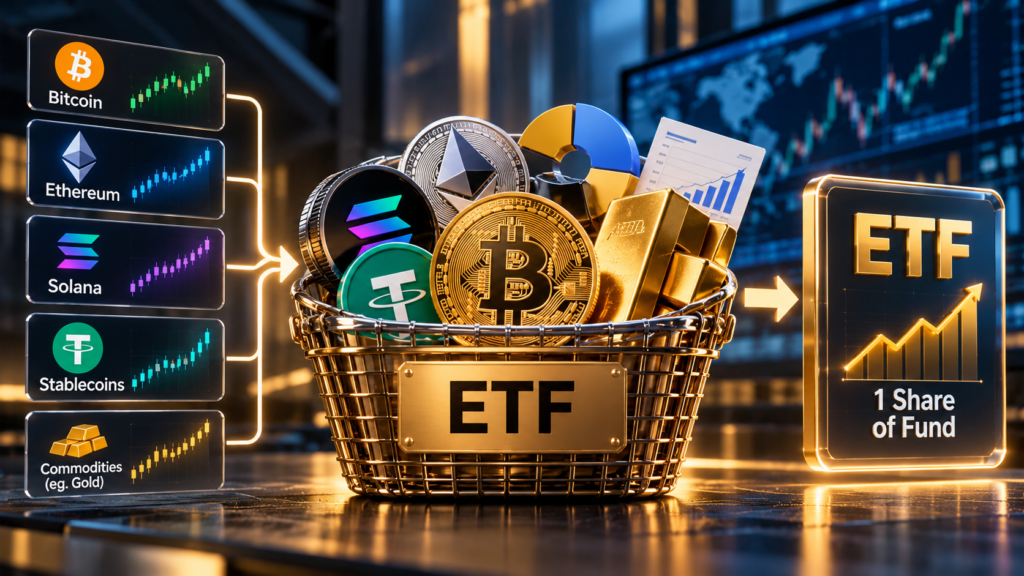
Before navigating the mechanics of digital asset integration, it is essential to establish a solid baseline understanding of a standard Exchange-Traded Fund (ETF). Originating in the early 1990s as an innovation to democratize index investing, the ETF structure has grown into one of the most dominant financial vehicles in global modern finance, holding trillions of dollars across equity, fixed-income, and commodity markets.
The Grocery Basket Metaphor
To understand how an ETF works without getting bogged down in Wall Street jargon, imagine walking into a market to purchase fruit. If you wanted a balanced variety, you could manually select an individual apple, a single orange, and a lone banana—paying separate prices for each and placing them in your cart individually.
Alternatively, the store offers a pre-packaged fruit basket. This basket holds all three fruits in fixed, predetermined proportions.
-
If bad weather drives up global orange and apple prices, the overall cost of your pre-packaged basket increases accordingly.
-
Conversely, if there is a surplus of fruit and prices drop, the retail value of the entire basket decreases.
When you buy the basket, you do not need to negotiate or select each piece of fruit one by one; you simply acquire a single item that encapsulates the value of everything inside it.
+-----------------------------------------------------------------------------------+
|                            TRADITIONAL ETF BASKET STRUCTURE                       |
|                                                                                   |
|   [ Stock A ]       +       [ Stock B ]       +       [ Stock C ]       = 1 Share |
| (e.g., Apple 40%)       (e.g., Microsoft 35%)     (e.g., Nvidia 25%)      of Fund |
|                                                                                   |
|   ---> Underlying Assets Held in Secure Institutional Custody (Custodian Vault)   |
|   ---> Fund Shares Issued and Publicly Traded on Stock Exchanges (NYSE / NASDAQ)  |
+-----------------------------------------------------------------------------------+
Core Financial Mechanics of an ETF
An ETF operates on this exact same structural logic within traditional financial markets, serving as an investment vehicle that tracks a specific index, sector, commodity, or basket of equities:
-
Pooled Capital and Scale: An asset management firm (such as BlackRock, Vanguard, or Fidelity) pools capital from thousands of individual and institutional investors. The manager uses this combined buying power to acquire the underlying physical assets—such as blue-chip stocks, government treasury bonds, gold bullion, or foreign currencies.
-
Exchange Traded Liquidity: Unlike traditional mutual funds, which only calculate their Net Asset Value (NAV) and execute buy or sell orders once per day after market close, ETF shares trade publicly on major stock exchanges (such as the NASDAQ or New York Stock Exchange) throughout normal trading hours. Investors can buy or sell shares instantly at fluctuating intraday prices just as they would with shares of a single company.
-
Precise Price Tracking & Arbitrage: The market price of a single ETF share closely tracks the real-time net asset value of the underlying assets held inside the institutional fund’s vault. Authorized Participants (APs)—large institutional market makers—continuously creation and redemption mechanisms to keep the trading price of the ETF aligned with the underlying value of its basket, preventing major price dislocations.
Why Investors Prefer the ETF Framework
Rather than opening multiple specialized exchange accounts, managing individual share certificates, or manually rebalancing a complex multi-asset portfolio, an investor can simply buy a single share of an ETF through a standard brokerage dashboard. This structure delivers immediate portfolio diversification, lower transaction costs, dynamic intraday liquidity, and seamless tax efficiency.
Understanding these foundational basket mechanics is crucial before evaluating how traditional equity infrastructure bridges into blockchain ecosystems. To explore how native digital assets compare to legacy equity market structures, read our in-depth analysis on What Is Bitcoin 2026.
2. What Is a Crypto ETF? Spot Bitcoin and Ethereum ETFs Explained
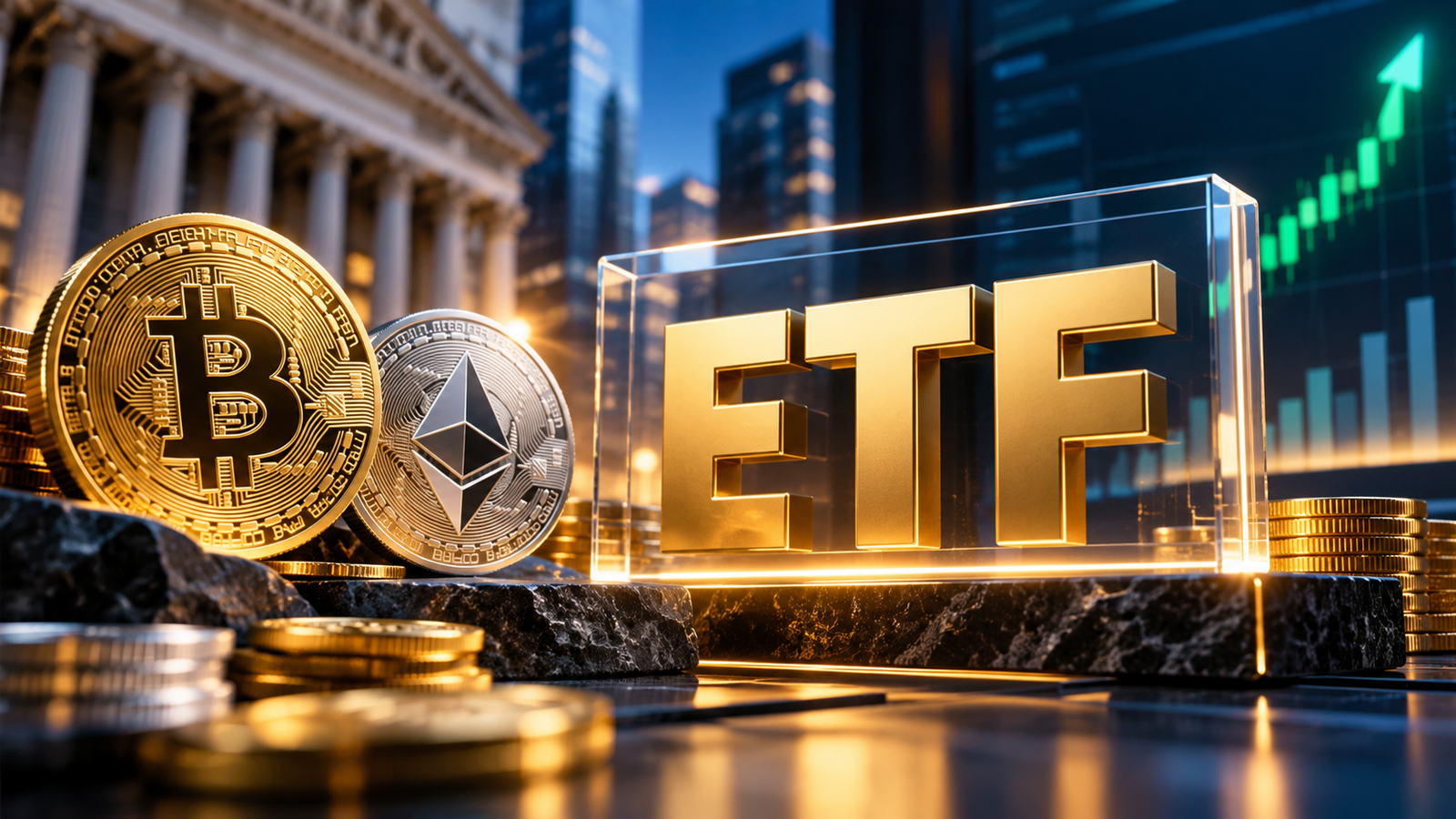
A Crypto ETF translates the foundational mechanics of traditional exchange-traded products directly into the digital asset class. When analyzing what is a crypto etf 2026, market participants evaluate how these structured financial products bridge legacy banking systems with public blockchain networks, enabling investors to gain price exposure without navigating non-custodial wallets or decentralized exchanges.
The institutional market fundamentally differentiates between two primary structural frameworks: Spot Crypto ETFs and Futures-Based Crypto ETFs.
+---------------------------------------------------------------------------------------+
|                              SPOT CRYPTO ETF ARCHITECTURE                             |
|                                                                                       |
|  [ Retail / Inst. Investor ]                                                          |
|               |                                                                       |
|               v  (Purchases Shares via NYSE / NASDAQ / Cboe)                          |
|    [ Authorized Participant ]                                                         |
|               |                                                                       |
|               v  (Transfers Fiat USD / Capital Flow)                                  |
|     [ ETF Asset Manager ]  (e.g., BlackRock, Fidelity)                                |
|               |                                                                       |
|               v  (Executes Spot Market Purchases)                                     |
|    [ Institutional Custodian ] ---> Stores Physical BTC/ETH in Segregated Cold Storage |
+---------------------------------------------------------------------------------------+
Structural Comparison: Spot ETFs vs. Futures-Based Funds
Understanding the structural mechanics between spot and futures products is critical for long-term capital allocation:
-
Spot Crypto ETF (Physical Backing): In a spot fund, the asset management company purchases the actual underlying cryptocurrency (such as physical Bitcoin or Ether) directly from spot markets. The acquired digital assets are immediately transferred to institutional-grade, multi-signature cold storage vaults managed by regulated custodians (e.g., Coinbase Prime, Fidelity Digital Assets). Each share issued by the fund corresponds to a direct fractional claim on the actual coins held in reserve. As a result, the share price exhibits near-perfect correlation with the real-time spot market price of the asset.
-
Futures Crypto ETF (Derivatives-Based): A futures-based ETF does not hold physical cryptocurrencies in a vault. Instead, the fund uses investor capital to purchase cash-settled futures contracts traded on regulated derivatives platforms like the Chicago Mercantile Exchange (CME). Because futures contracts expire periodically (monthly or quarterly), the fund manager must continuously sell expiring contracts and purchase longer-term contracts—a process known as “rolling over” contracts. During contango market conditions (where future prices trade higher than spot prices), this constant rollover creates a financial drag called “contango bleed,” leading to tracking errors over extended holding periods.
Historical Milestones: Regulatory Evolution and Market Maturity
The journey toward institutional crypto integration reached several key inflection points that redefined global financial infrastructure:
+---------------------------------------------------------------------------------------+
|                                  TIMELINE OF APPROVALS                                |
|                                                                                       |
|  OCTOBER 2021          JANUARY 2024               MID-2024               2025 - 2026   |
|  CME Futures ETFs  --> SEC Grants Spot Bitcoin --> SEC Approves Spot  --> Index Funds & |
|  First Approved        ETF Regulatory Approval    Ethereum ETFs           Staking Filings|
+---------------------------------------------------------------------------------------+
-
The Landmark January 2024 SEC Approvals: After more than a decade of application rejections, the U.S. Securities and Exchange Commission (SEC.gov) approved the first spot Bitcoin ETFs in January 2024. This regulatory turning point allowed mainstream wealth managers, registered investment advisors (RIAs), corporate treasuries, and pension funds to allocate capital to Bitcoin using standard brokerage infrastructure.
-
The Mid-2024 Ethereum Expansion: Building upon the operational framework established by Bitcoin funds, regulatory approvals expanded in mid-2024 to include Spot Ethereum ETFs. This marked the entry of smart-contract platforms into Wall Street’s product suite, giving traditional investors exposure to the foundational native token of the decentralized finance (DeFi) ecosystem.
Key Data & Institutional Adoption Snapshot (As of Late 2026)
As the financial ecosystem matures, institutional asset managers continue to deepen their digital asset product suites:
-
Spot Bitcoin ETF Asset Scale: U.S.-listed spot Bitcoin ETFs command tens of billions of dollars in combined Assets Under Management (AUM). High-volume trading days routinely process hundreds of millions in net daily capital inflows, making these products some of the fastest-growing financial instruments in Wall Street history.
-
Spot Ethereum ETF Market Share: Spot Ethereum funds represent around $15 billion in cumulative net assets, holding approximately 5% of Ethereum’s total circulating supply in custodian vaults.
-
Expanding Multi-Asset Index Products: Financial institutions are actively expanding beyond single-asset exposure, filing applications for broader crypto index ETFs and yield-bearing structures to serve diversified institutional portfolios.
3. Crypto ETF vs. Direct Crypto Purchases: Pros and Cons Comparison
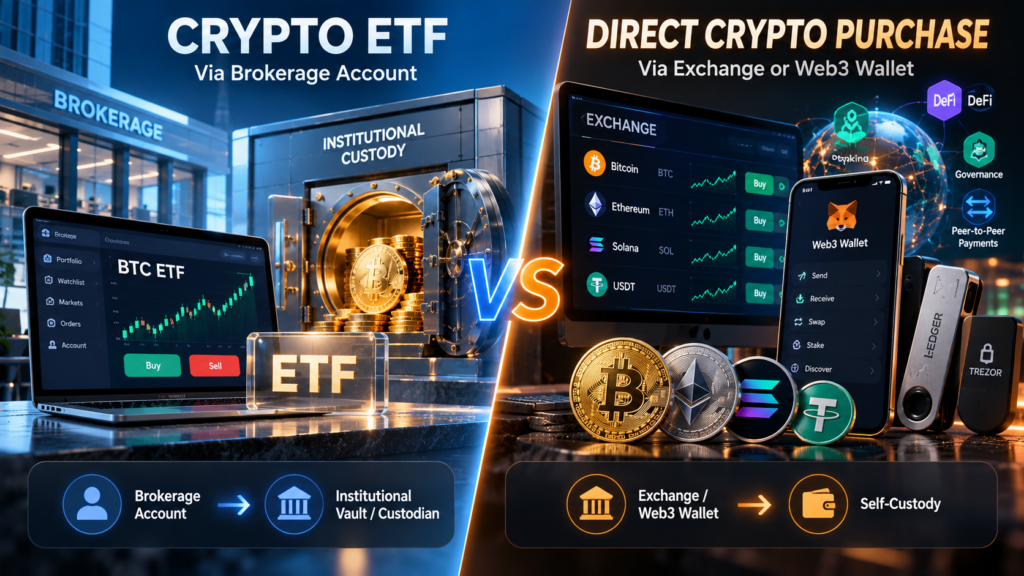
Evaluating what is a crypto etf 2026 requires a granular side-by-side comparison between holding regulated exchange-traded funds and owning native digital tokens directly on a blockchain. While both vehicles offer exposure to underlying market price movements, their underlying technology, custody obligations, cost structures, and utility models differ fundamentally.
+---------------------------------------------------------------------------------------+
|                                CUSTODY & ARCHITECTURE DIFFERENCES                     |
|                                                                                       |
|   SPOT CRYPTO ETF ROUTE:                                                              |
|   Investor ---> Brokerage Account (Roth IRA/401k) ---> Regulated Custodian Vault      |
|   (Features: Traditional Securities Regulations, SIPC/FDIC Insured Frameworks)       |
|                                                                                       |
|   DIRECT CRYPTO ROUTE:                                                                |
|   Investor ---> Crypto Exchange (CEX) or Web3 Wallet ---> Self-Custody / Ledger / Trezor|
|   (Features: Direct On-Chain Ownership, Sovereign Control, 24/7 Transactability)      |
+---------------------------------------------------------------------------------------+
Detailed Comparison Table
| Comparative Feature | Spot Crypto ETF Vehicle | Direct Native Token Ownership |
| Custody & Key Management | Institutional Custody: Managed entirely by qualified third-party custodians (e.g., Coinbase Prime, Fidelity Digital Assets). Zero risk of losing private key seed phrases or suffering wallet phishing attacks. | Self-Custody or CEX Wallet: Requires manual handling of 12-to-24 word cryptographic seed phrases, private keys, hardware wallets (e.g., Ledger, Trezor), or reliance on centralized crypto exchange security. |
| Market Trading Hours | Legacy Exchange Hours: Traded strictly during regular stock exchange operating hours (e.g., 9:30 AM – 4:00 PM EST, Monday through Friday). Closed on weekends and federal bank holidays. | Continuous 24/7/365 Liquidity: Uninterrupted, continuous global execution on centralized spot exchanges and decentralized protocols (DEXs) every day of the year. |
| On-Chain Utility & Programmability | Zero Utility: Fund shares exist strictly as paper equity claims within traditional clearing houses (DTCC). Cannot be used for gas fees, smart contract interactions, or decentralized lending. | Full On-Chain Utility: Native tokens can be transferred peer-to-peer globally in minutes, staked for validator network rewards, deployed in DeFi liquidity pools, or used for governance voting. |
| Fee Architecture | Ongoing Expense Ratio: Subject to an annual management fee (typically 0.19% to 0.25% annually) deducted directly from the fund’s Net Asset Value (NAV), plus standard brokerage commissions where applicable. | Transaction/Gas Fees: Pay-per-use network execution fees (gas fees) and exchange maker/taker trading fees. No recurring management or holding fees over time. |
| Tax Efficiency & Account Placement | Seamless Tax Integration: Easily held inside tax-advantaged retirement accounts (IRAs, Roth IRAs, 401(k) plans). Tax reporting consolidated into standard end-of-year brokerage forms (e.g., Form 1099). | Complex Transaction Tracking: Requires specialized crypto tax software to track cost bases across multiple wallets, token swaps, transfers, staking rewards, and exchange conversions. |
| Regulatory & Investor Protections | Established Legal Protections: Governed by traditional securities laws (SEC, FINRA) with standard brokerage account SIPC protection against broker insolvency (does not cover market value decline). | Evolving Regulatory Landscape: Subject to local exchange licensing rules and smart contract risks. Losses from lost keys or protocol exploits are generally unrecoverable. |
Key Structural Trade-Offs Analyzed
1. Security vs. Sovereign Ownership
For non-technical investors, managing private cryptographic keys presents a major operational barrier. A single misplaced seed phrase or compromised hardware wallet can result in the total, permanent loss of capital. A crypto ETF delegates security responsibility to institutional vaults that utilize multi-signature cold storage and hardware security modules (HSMs). However, this convenience trades away the core principle of cryptocurrency: self-sovereign, censorship-resistant asset control without intermediary reliance.
2. Liquidity Windows vs. After-Hours Volatility
Cryptocurrency markets are uniquely global and continuous. Significant price shifts frequently occur outside standard U.S. trading hours during Asian or European trading sessions, or over weekends. ETF investors cannot execute buy or sell orders while stock exchanges are closed, exposing them to weekend gap risk when markets reopen on Monday morning. Direct crypto holders retain 24/7 risk-management capabilities.
3. Passive Price Exposure vs. Ecosystem Yield
While a spot Bitcoin ETF captures raw capital appreciation, holding spot Ethereum or Sol-based fund shares historically creates an opportunity cost regarding network yield. Direct holders can stake native tokens to earn ongoing network consensus validation rewards (staking yield). While asset managers have submitted regulatory filings to integrate staking into ETF structures, regulatory frameworks continue to limit native staking within standard fund vehicles.
To better understand how these operational differences influence trading environments and platform selection, explore our comprehensive review of major trading venues in our guide on Bybit Review 2026.
4. Who Should Choose an ETF vs. Direct Ownership?
Selecting between an ETF vehicle and direct token ownership depends on your technical familiarity, tax goals, and overall investment strategy.
                  +-----------------------------------+
                  |  WHICH PATH MATCHES YOUR GOALS?   |
                  +-----------------------------------+
                                    |
          +-------------------------+-------------------------+
          |                                                   |
          v                                                   v
+-------------------+                               +-------------------+
|  CHOOSE CRYPTO    |                               |  CHOOSE DIRECT    |
|       ETF         |                               |     CRYPTO        |
+-------------------+                               +-------------------+
| • Convenience     |                               | • 24/7 Access     |
| • IRA / 401(k)    |                               | • Self-Custody    |
| • Simplified Tax  |                               | • DeFi & Staking  |
| • No Private Keys |                               | • On-Chain Use    |
+-------------------+                               +-------------------+
Who Should Consider a Crypto ETF?
-
Traditional Stock Investors: Individuals who prefer managing all assets within a single brokerage dashboard (e.g., Fidelity, Charles Schwab, Vanguard).
-
Retirement Account Holders: Investors seeking tax-advantaged exposure through traditional IRAs, Roth IRAs, or corporate 401(k) plans.
-
Risk-Averse Technical Users: Those who do not want to manage private cryptographic keys, hardware wallets, or seed phrase backups.
Who Should Choose Direct Crypto Ownership?
-
Web3 Participants: Users who want to actively participate in decentralized finance (DeFi), yield generation, or governance voting.
-
Self-Custody Advocates: Investors who adhere to the core crypto ethos (“not your keys, not your coins”) and value complete control over their funds.
-
24/7 Traders: Active market participants who require round-the-clock liquidity and instantaneous cross-border settlement capabilities.
If you decide that direct token ownership aligns better with your personal financial roadmap, consult our step-by-step guide on How to Buy Bitcoin.
4. Major Crypto ETFs in 2026: Asset Managers and Expense Ratios
The global market for crypto-backed securities features competing offerings from the world’s largest asset managers. When researching what is a crypto etf 2026, investors evaluate liquidity, underlying custody providers, and annual management costs (expense ratios).
Leading Spot Bitcoin ETFs
1. BlackRock iShares Bitcoin Trust (IBIT)
-
Ticker: IBIT
-
Expense Ratio: 0.25%
-
Custody Partner: Coinbase Prime
-
Overview: As the largest spot Bitcoin ETF by total net assets and trading volume, BlackRock’s IBIT provides deep liquidity and narrow bid-ask spreads for institutional and retail investors alike.
2. Fidelity Wise Origin Bitcoin Fund (FBTC)
-
Ticker: FBTC
-
Expense Ratio: 0.25%
-
Custody Partner: Fidelity Digital Assets (In-house)
-
Overview: FBTC stands out by utilizing Fidelity’s proprietary, vertically integrated institutional custody architecture rather than relying on third-party crypto custodians.
3. ARK 21Shares Bitcoin ETF (ARKB)
-
Ticker: ARKB
-
Expense Ratio: 0.21%
-
Custody Partner: Coinbase Prime
-
Overview: A collaboration between Cathie Wood’s ARK Invest and 21Shares, ARKB offers one of the lowest permanent expense ratios among top-tier spot Bitcoin issuers.
4. Grayscale Bitcoin Trust ETF (GBTC / BTC)
-
Ticker: GBTC (Flagship) / BTC (Mini Trust)
-
Expense Ratio: 1.50% (GBTC) / 0.15% (BTC Mini)
-
Custody Partner: Coinbase Custody
-
Overview: Converted from the original flagship Bitcoin trust, Grayscale offers both its legacy high-fee vehicle (GBTC) and a competitive low-cost Mini Trust (BTC) designed for cost-conscious allocators.
Frequently Asked Questions (FAQ)
What is the primary difference between a Bitcoin ETF and buying real Bitcoin?
A Bitcoin ETF grants you exposure to Bitcoin’s price fluctuations through securities shares held in a traditional brokerage account. Buying real Bitcoin gives you direct digital ownership of tokens that can be transferred to a personal wallet, used for payments, or deployed on-chain.
Can I holding a crypto ETF in a tax-advantaged account like an IRA?
Yes. One of the primary advantages of analyzing what is a crypto etf 2026 is that ETF shares can be purchased directly within traditional IRAs, Roth IRAs, and qualifying 401(k) brokerage accounts, allowing for potential tax-deferred or tax-free growth depending on the account structure.
Are crypto ETFs safer than holding crypto on an exchange?
Crypto ETFs mitigate personal security risks associated with exchange hacks, lost passwords, or misplaced hardware wallets because the underlying assets are stored by regulated institutional custodians. However, ETF shares remain subject to market volatility and broader financial market risks.
Do crypto ETFs pay dividends?
Generally, no. Spot Bitcoin and Ethereum ETFs track the spot price of their underlying assets and do not distribute regular dividend payments. Any changes in value are reflected in the fund’s net asset value (NAV) share price.
Conclusion & Disclaimer
Understanding what is a crypto etf 2026 helps clarify how traditional financial architecture now connects directly with digital asset markets. Whether you prioritize the regulatory convenience and tax integration of an ETF or the decentralized utility and self-custody control of direct token ownership, both pathways offer structured routes to market participation.
If you decide that direct token ownership aligns best with your portfolio goals, explore our comprehensive walkthrough on How to Buy Bitcoin to learn about exchange setups, security best practices, and personal wallet management.
-
Financial Disclaimer: This article is strictly for informational and educational purposes only and does not constitute financial, investment, legal, or tax advice. Cryptocurrency assets and exchange-traded products carry significant market risk, volatility, and potential loss of principal. Readers should conduct independent research and consult with a licensed financial advisor before making any investment decisions.