
Learn how to withdraw crypto to bank account 2026 with our complete step-by-step guide covering Bybit, Binance, P2P options, transfer fees, and security tips.
How to Withdraw Crypto to Bank Account 2026: The Complete Step-by-Step Guide
Withdrawing digital assets into traditional cash requires navigating changing exchange regulations, security checks, and payment networks. Understanding how to withdraw crypto to bank account 2026 ensures your funds travel safely from exchanges like Bybit or Binance directly into your local checking or savings account without unexpected holds or excessive transaction fees.
This comprehensive guide breaks down the most efficient cashing-out routes, detailed step-by-step walk-throughs, speed expectations, fee structures, and troubleshooting steps for seamless crypto-to-fiat conversion.
Why Withdrawing Crypto to a Bank Account Isn’t Like Using an ATM
Cashing out digital tokens to a bank account involves a bridge between decentralized block networks and centralized banking ecosystems. Learning how to withdraw crypto to bank account 2026 means understanding three main technical and regulatory hurdles:
-
Fiat Gateways & Settlement Networks: Exchanges use intermediary financial institutions, payment processors, and clearing networks (such as SEPA in Europe, FPS in the UK, or ACH/FedWire in North America) to process fiat currency transfers.
-
KYC and AML Compliance: Anti-Money Laundering (AML) and Know Your Customer (KYC) requirements require strict identity verification before releasing cash to external bank accounts.
-
Liquidity and Order Matching: Converting volatile assets (like Bitcoin or Ethereum) into government-issued money requires trading on order books or matching with counter-parties on peer-to-peer (P2P) platforms prior to bank transfer settlement.
The 2 Primary Methods to Convert Digital Assets to Cash
When planning how to withdraw crypto to bank account 2026, traders generally rely on two core pathways depending on regional availability, banking partners, and speed requirements.
| Feature | Direct Fiat Withdrawal (Sell → Fiat) | Peer-to-Peer (P2P) Trading |
| How It Works | Sell crypto on exchange order book for fiat (USD/EUR/GBP), then request a direct bank wire or ACH transfer. | Sell crypto to a buyer on a P2P marketplace who sends local currency directly to your bank account via local instant bank transfer. |
| Processing Speed | Minutes to 3 business days (depending on payment network). | Near-instant (typically 5 to 15 minutes). |
| Fee Structure | Fixed exchange withdrawal fee + potential bank processing charges. | Zero platform fee on many exchanges, but costs are baked into merchant exchange rate spreads. |
| Key Advantage | High security, fully automated, direct platform interaction. | Supports localized payment methods, flexible fiat currencies, and wide geographic availability. |
Step-by-Step Guide: How to Withdraw Crypto to Bank Account 2026 via Bybit
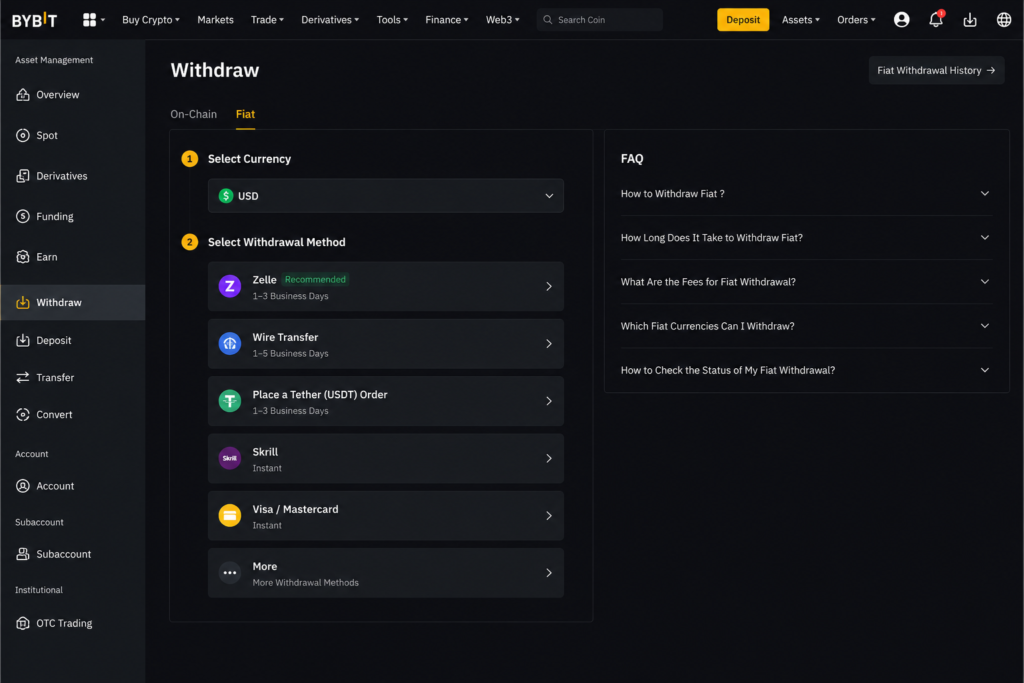
Bybit offers robust direct fiat off-ramps and P2P solutions. For an in-depth platform overview, check out our Bybit Review 2026.
Method 1: Direct Fiat Withdrawal on Bybit
-
Log In & Convert: Log into your Bybit account. Go to Trade > Convert or use Spot Trading to sell your crypto into your target fiat currency (e.g., EUR, GBP, BRL).
-
Access Fiat Options: Navigate to Assets > Withdraw and select the Fiat tab.
-
Select Currency & Network: Choose your fiat currency and preferred settlement method (e.g., SEPA, FPS, or Local Bank Transfer).
-
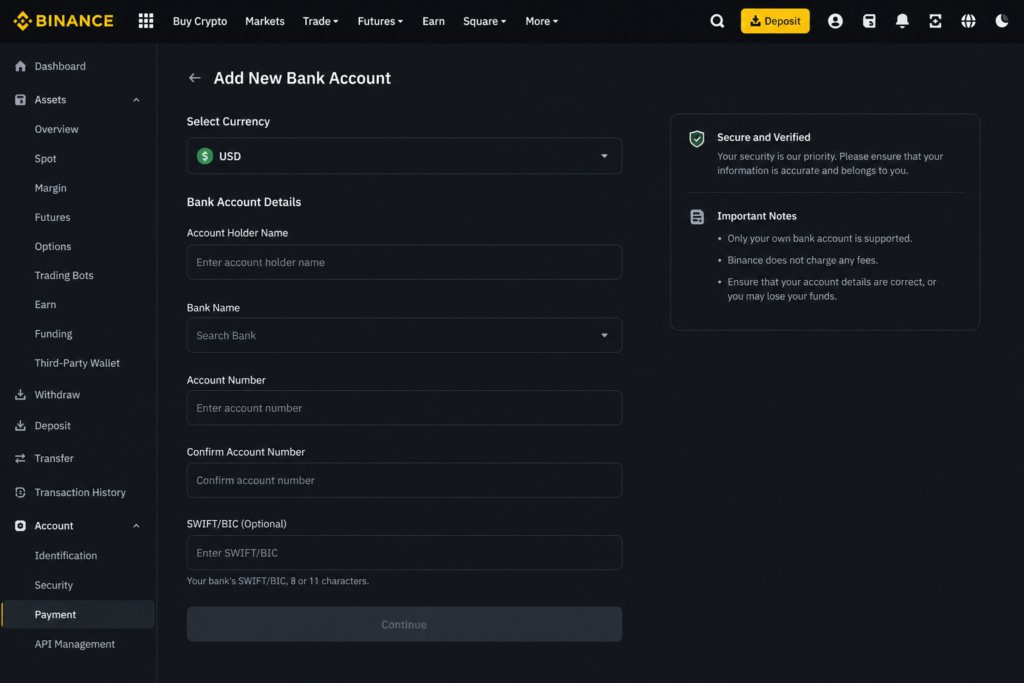
Link Your Bank Account: Input your IBAN, Account Number, or SWIFT/BIC code. Ensure the bank account holder name matches your verified Bybit account name exactly.
-
Confirm Security: Enter your Two-Factor Authentication (2FA) code and email verification code to authorize the payout.
Method 2: Bybit P2P Trading
-
Go to Buy Crypto > P2P Trading and select the Sell tab.
-
Filter by your target local currency, preferred bank transfer method, and amount.
-
Pick a verified merchant with a high completion rate (95%+).
-
Enter the amount of crypto to sell, select your linked bank account, and initiate the order.
-
Wait for the buyer to transfer funds directly to your bank account. Check your online banking app to verify cash receipt before releasing crypto escrow.
Screenshots Needed for Visual Walkthrough:
☐ Bybit → Withdraw → Fiat section
☐ Bank account linking page
Step-by-Step Guide: How to Withdraw Crypto to Bank Account 2026 via Binance
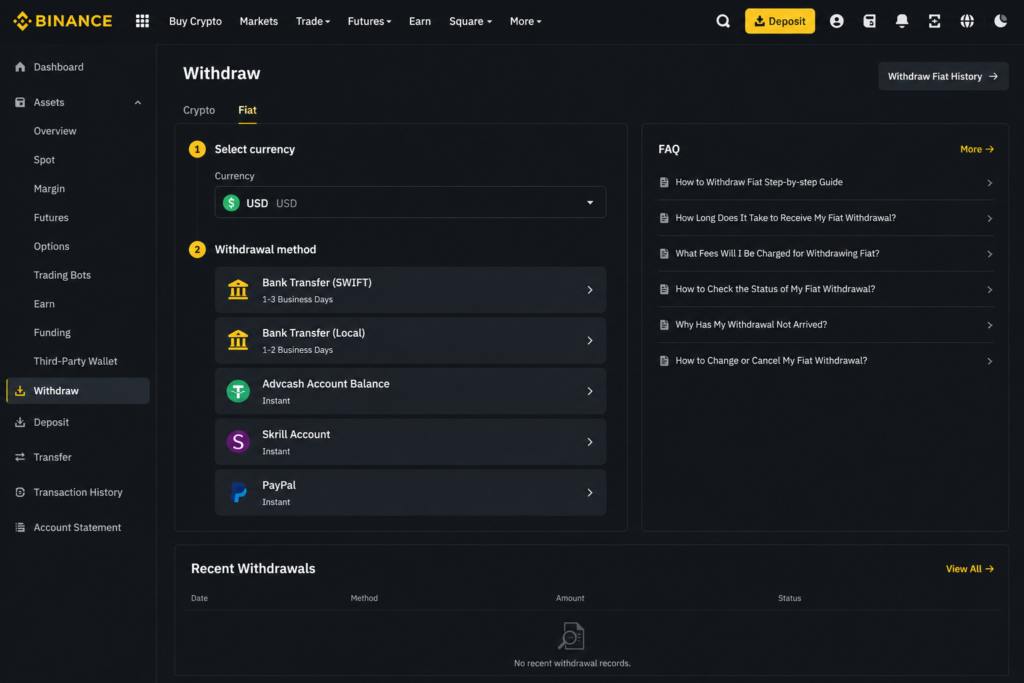
Binance remains a primary liquidity provider for global fiat conversions. Read our full Binance Review 2026 for updated features.
Method 1: Direct Fiat Payout on Binance
-
Convert Crypto to Fiat: Navigate to Trade > Binance Convert or Spot trading to convert your crypto into fiat (USD, EUR, GBP, AUD, etc.).
-
Navigate to Fiat Withdrawal: Go to Wallet > Overview > Withdraw and toggle to the Fiat section.
-
Choose Payment Channel: Select your currency and preferred transfer channel (e.g., Bank Transfer via SEPA/FPS or direct Card Withdrawal).
-
Enter Amount & Account Details: Specify the withdrawal amount and select or add your verified bank account details.
-
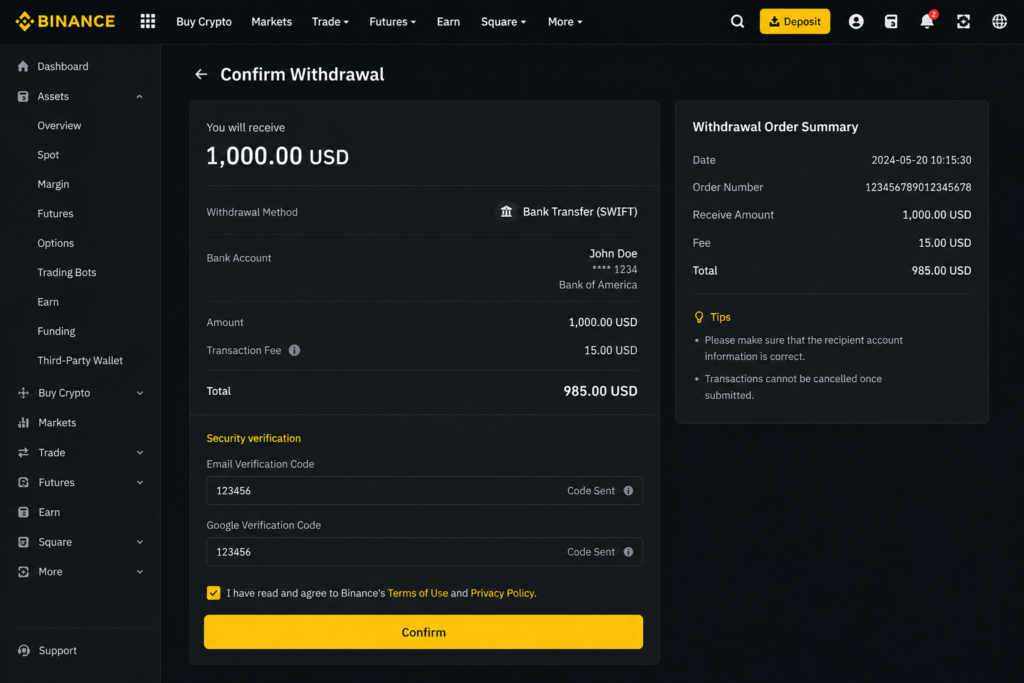
Complete Verification: Complete Security Verification (Passkey, SMS, Authenticator app) to release the transfer request.
Method 2: Binance P2P Cashing Out
-
Go to Trade > P2P and switch the mode to Sell.
-
Select the crypto token you want to sell (e.g., USDT, BTC) and filter by your bank’s country/payment options.
-
Select an established buyer with a high order volume and strong rating score.
-
Input the trade amount and confirm your bank account information.
-
Once the buyer marks the order as paid, open your bank app to confirm the funds have settled, then click Payment Received & Release.
Screenshots Needed for Visual Walkthrough:
☐ Binance → Withdraw → Fiat section
☐ Withdrawal confirmation screen
Withdrawal Fees, Processing Times, and Common Pitfalls
Knowing how to withdraw crypto to bank account 2026 efficiently requires managing transaction overheads, execution speeds, and technical troubleshooting. While off-ramping digital assets to traditional banking systems has become more streamlined, hidden processing friction, variable payment network fees, and automated security protocols can still disrupt your cash-out experience if not anticipated in advance.
Typical Withdrawal Fees & Settlement Times
Understanding the cost structures and transfer speeds of different fiat gateways allows you to select the most cost-effective and timely route for your specific transaction volume.
| Withdrawal Route | Average Fee Structure | Settlement Speed | Best Suited For |
| SEPA Instant / FPS | $1 to $3 flat fee | Less than 10 minutes | European & UK traders seeking fast, low-cost bank transfers. |
| Standard Wire / ACH | $5 to $25 flat fee | 1–3 business days | High-volume transfers in North America and international SWIFT regions. |
| P2P Local Bank Transfer | 0% exchange fee (spread built into price) | 5 to 20 minutes | Users in regions with restricted direct banking access or local instant networks. |
| Direct Card Cash-Out (Visa/Mastercard) | 1% to 2% percentage fee | Near-instant (1–5 minutes) | Urgent, smaller withdrawals directly to linked debit/credit cards. |
-
Direct Bank Transfers (SEPA/FPS/ACH): Direct exchange-to-bank routes typically charge a fixed fee per request rather than a percentage, making them optimal for mid-to-large capital transfers. Modern settlement networks like SEPA Instant (EU) and Faster Payments System (UK) process transfers within minutes around the clock. Standard ACH and international SWIFT wire transfers, however, remain subject to traditional banking hours and clearing cycles, often requiring up to three business days to fully settle.
-
Peer-to-Peer (P2P) Transfers: Major exchanges do not charge platform fees for P2P trading, making it an attractive option on paper. However, market makers and merchants usually factor their profit margins directly into the offered exchange rate spread. Despite this implicit cost, P2P remains one of the fastest off-ramp solutions, with peer-to-peer bank transfers settling within 5 to 20 minutes once initiated.
-
Credit/Debit Card Cash-outs: Direct card payouts utilize Instant Transfer mechanisms provided by Visa Direct or Mastercard Send. While this option provides immediate liquidity right to your card-linked account, the percentage-based fee structure can scale up significantly on larger sums, making it less practical for high-value withdrawals.
Troubleshooting Common Off-Ramp Issues & Fixes
Even experienced traders encounter operational roadblocks when transferring capital out of centralized exchanges. Below are the most frequent causes of failed or delayed withdrawals and how to resolve them before funds become locked.
1. Identity & Name Mismatch Rejections
Centralized exchanges enforce strict Anti-Money Laundering (AML) controls that strictly prohibit third-party bank transfers. The legal name registered on your verified exchange account must match the name on your destination bank account with complete precision.
-
The Problem: Middle names omitted on exchange profiles, minor typographical errors, or attempting to withdraw funds directly to a business, spouse, or relative’s bank account will trigger an immediate system rejection.
-
How to Fix: Verify that your platform KYC profile matches your bank statement word-for-word. If your legal name differs due to a marriage or legal name change, submit updated legal identification documents to customer support before initiating any off-ramp requests.
2. Automated Security & Safety Holds
Exchanges continuously run risk algorithms to shield account balances from unauthorized access, account takeovers, or credential stuffing attacks.
-
The Problem: Modifying essential security settings—such as updating your account password, resetting Two-Factor Authentication (2FA), changing your registered email address, or adding a new bank account or withdrawal address—automatically activates a temporary security lockout on both Bybit and Binance.
-
How to Fix: Plan your cash-out timeline carefully. Expect an automatic 24-to-48-hour withdrawal cooling-off period following any major security update. Avoid updating credentials right before you need immediate access to cash.
3. Bank Filters, Flagged Transactions, & Frozen Transfers
While crypto exchanges may approve a fiat payout on their end, traditional retail banks employ independent risk engine filters that monitor incoming clearing requests.
-
The Problem: Commercial banks often flag incoming wire transfers originating from known cryptocurrency platform accounts or P2P payment references. Using explicit keywords like “Bitcoin”, “USDT”, “Crypto”, or “Trading” in transaction memos or payment descriptions can trigger automated fraud reviews, leading to incoming transfer holds or temporary account freezes.
-
How to Fix: When utilizing direct bank wires, rely strictly on the default system reference code generated by the exchange’s banking partner. For P2P transfers, never include crypto-related terminology in the bank transfer reference note; leave the note blank or use only the transaction order ID if required by the buyer or merchant. If a bank holds an incoming deposit, prepare your exchange account trade logs and bank statement history to confirm your legitimate source of funds upon compliance request.
Tax Considerations & Regulatory Obligations
When mastering how to withdraw crypto to bank account 2026, keep in mind that converting digital assets into fiat currency or transferring cash directly to a traditional bank account is generally treated as a taxable event across most global jurisdictions. Tax authorities like the IRS in the United States, HMRC in the UK, and revenue agencies across the European Union view cryptocurrency as property or digital capital assets rather than legal tender. Consequently, exchanging crypto for government-backed money triggers a capital gains tax event based on the difference between your initial acquisition price (cost basis) and the final realized fiat value at the time of conversion.
Taxable Gain / Loss = Realized Fiat Value (Gross Sale Price) - Cost Basis (Purchase Price + Original Network Fees)
Global Tax Transparency & Automated Information Exchange
The era of anonymous, unmonitored off-ramps has effectively come to a close. Financial regulators and international tax bodies have established automated infrastructure that bridges centralized crypto exchanges directly with national revenue services:
-
OECD Crypto-Asset Reporting Framework (CARF): Implemented globally across dozens of participating countries, CARF enforces standardized annual reporting obligations on Crypto-Asset Service Providers (CASPs). Exchanges are required to automatically disclose user identification data, total gross fiat withdrawal values, and aggregate transaction histories directly to relevant tax authorities.
-
EU DAC8 Directive: Operating alongside CARF, the EU’s 8th Directive on Administrative Cooperation mandates that all regulated centralized exchanges report transaction metrics and identity data (including Tax Identification Numbers) for EU-resident users.
-
Bank Monitoring & Source of Funds (SoF): Traditional retail banks enforce stringent Anti-Money Laundering (AML) monitoring systems. When large incoming fiat wire transfers arrive from crypto brokers or P2P clearing networks, compliance teams often request verified Source of Funds documentation—including tax filings, exchange trade histories, or proof of income—before releasing pending account holds.
Essential Record-Keeping & Reporting Best Practices
To avoid costly audits, unexpected tax assessments, or payment delays when moving capital back into the traditional financial system, maintain meticulous documentation for all digital asset movements:
-
Track Cost Basis Accurately: Record the exact date, total trade volume, unit acquisition price, and gas or processing fees associated with every cryptocurrency purchase.
-
Account for Income vs. Capital Gains: Ensure you distinguish standard capital gains from ordinary income. Yield farming, staking rewards, mining income, or payment for services received in crypto are typically taxed as standard income upon receipt, followed by subsequent capital gains taxation when eventually sold for fiat cash.
-
Document Deductible Losses: Capital losses incurred during market downturns can often be used to offset taxable capital gains from other investments, reducing overall tax liabilities during annual filing periods.
-
Utilize Dedicated Tax Software: Export raw CSV files or connect read-only API integrations from platforms like Bybit and Binance into dedicated crypto tax calculators to ensure your mathematical cost-basis accounting aligns with what exchanges report to tax agencies.
Frequently Asked Questions (FAQ)
What is the minimum amount required to withdraw crypto to a bank account in 2026? Minimum withdrawal thresholds vary depending on the platform, currency, and settlement rail you select. For direct fiat bank transfers on primary exchanges like Bybit and Binance, standard minimums typically start between $10 and $20 USD equivalent (or approximately 10 EUR / 10 GBP). For automated P2P trading routes, minimum limits are set by individual liquidity providers and merchants, often allowing cash-outs starting as low as $5 to $10. Always check the specific withdrawal modal before initiating transactions, as high network traffic or regional bank limits can temporarily adjust these operational floors.
Can I withdraw crypto directly to a third-party or relative’s bank account? No, you cannot withdraw fiat funds to a third-party account, including family members or business associates. Global cryptocurrency exchanges operate under stringent Anti-Money Laundering (AML) laws and Counter-Financing of Terrorism (CFT) regulations, which enforce strict compliance with Know Your Customer (KYC) identity protocols. As a result, the legal full name on your destination bank account must match the verified name on your exchange account with 100% precision. Attempting to bypass this rule will trigger an automated transaction reversal, subject your account to prolonged risk reviews, and potentially cause account freezes or permanent platform bans.
Is P2P safer than direct exchange fiat withdrawal? Both withdrawal pathways are secure, but they manage counterparty and operational risks through different mechanisms:
-
Direct Exchange Fiat Withdrawals: This method operates directly through institutional banking channels and payment processing partners integrated into the exchange. It eliminates human interaction and counterparty risk entirely, making it ideal for large transaction volumes and traders who prefer automated, official banking rails (such as SEPA Instant or FPS).
-
Peer-to-Peer (P2P) Trading: P2P marketplaces rely on a smart contract escrow mechanism where the exchange holds the seller’s crypto until the buyer sends local fiat directly to the seller’s bank account. While highly secure and flexible—especially in regions with limited direct banking partners—it requires users to manually verify cash settlement in their personal banking application before releasing assets to prevent chargeback or payment spoofing scams.
How do I learn more about moving funds across different crypto ecosystems? Navigating cross-chain transfers and acquiring initial assets safely are key steps before initiating fiat off-ramps. To optimize transfer routing between self-custody wallets, decentralised protocols, and centralised exchanges, explore our comprehensive guides on How to Transfer Crypto and How to Buy Bitcoin. Understanding these foundational steps ensures your capital moves securely through the blockchain ecosystem before you execute a cash withdrawal.
Conclusion
Mastering how to withdraw crypto to bank account 2026 is all about choosing the right cash-out method, managing transfer fees, and ensuring strict compliance with identity requirements. Whether you opt for direct fiat withdrawals via SEPA and FPS or utilize P2P trading for instant local transfers, platforms like Bybit and Binance provide reliable pathways to convert your digital assets into traditional currency. Always double-check account details, verify cash settlement before releasing escrow funds, and stay informed on local regulatory guidelines to ensure smooth financial transitions.
If you need further technical assistance or want to check real-time fiat channel availability in your region, refer to the official exchange documentation:
-
Bybit: Read the Bybit Official Fiat Withdrawal Guide or Create a Bybit Account to start trading.
-
Binance: Check the Binance Official Fiat Withdrawal Guide or Register a Binance Account to access fiat off-ramps.
Disclaimer: Cryptocurrency trading and fiat withrawals involve financial risk. Information provided in this guide is for educational purposes only and does not constitute financial, legal, or tax advice. Always verify payment details and official platform rules prior to conducting transactions.