

I remember the first time I opened the Binance app. I felt like I’d just stepped into the cockpit of a fighter jet. Buttons everywhere, flashing green and red numbers, and charts that looked more like a heart monitor than a trading tool. It was intimidating. Fast forward to 2026, and while the “cockpit” has seen some serious upgrades, that initial “Where do I even start?” feeling is still a major hurdle for most newcomers.
Here’s the thing: Binance isn’t just an exchange anymore; it’s a sprawling digital ecosystem. With over 240 million users globally as of early 2026, it remains the undisputed heavyweight champion of the crypto world. But after the high-profile DOJ settlement in late 2023 and the subsequent leadership shift, many are asking if the “Giant” is still the safest or simplest place for a beginner to buy their first fraction of Bitcoin.
In this review, we’re going to look past the marketing hype. We’ll dive into the real-world fees, the actual state of their security funds, and whether the “Lite” mode is actually enough to keep a beginner from making a costly mistake.
The Giant Still Standing: Binance in 2026
Founded in 2017 by Changpeng Zhao (CZ), Binance has survived multiple bear markets, regulatory storms, and a historic $4.3 billion settlement with the U.S. Department of Justice. Today, under the leadership of Richard Teng, the exchange has pivoted toward a “compliance-first” era.
What most beginners don’t realize is that Binance handles more volume than its next five competitors combined. According to CoinGecko, its 24-hour trading volume often exceeds $60 billion, ensuring that when you want to buy or sell, there is always someone on the other side of that trade. In practice, this means “slippage” (the difference between the price you want and the price you get) is almost non-existent for major coins.
Security: Is Your Money Actually Safe?
For a beginner, “security” usually just means “will my money be there tomorrow?” Binance approaches this through two main pillars: transparency and insurance.
1. Proof of Reserves (PoR)
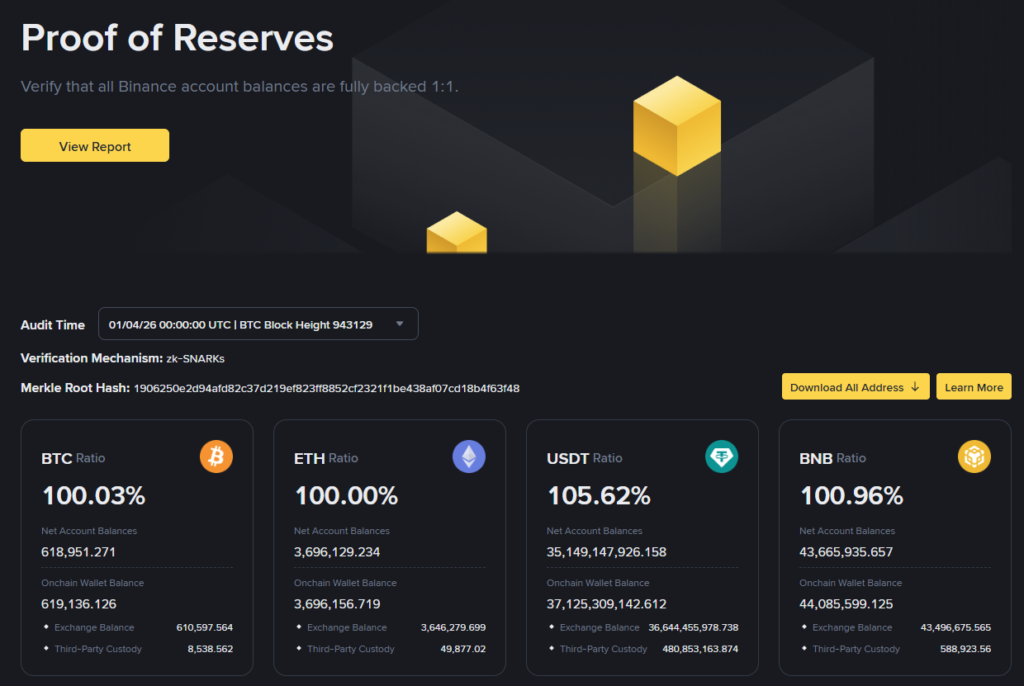
Binance now publishes monthly Proof of Reserves reports using Merkle Tree cryptography. Their 40th report, released in March 2026, confirmed that user holdings for BTC, ETH, and USDT are backed at a ratio of 1:1 (plus additional reserves). This isn’t just a spreadsheet; you can actually verify your own account’s inclusion in the snapshot.
2. The SAFU Fund (Now in Bitcoin)
The Secure Asset Fund for Users (SAFU) is Binance’s emergency insurance pot. In an interesting move in early 2026, Binance converted the entire $1 billion SAFU reserve into Bitcoin.
-
Current Status: Held in dedicated BTC addresses.
-
The Nuance: While holding the fund in BTC shows long-term confidence, it does mean the fund’s “purchasing power” fluctuates with the market. However, Binance has committed to topping it up from company resources if the value drops below $800 million.
Fees: How Much Does Trading Actually Cost?
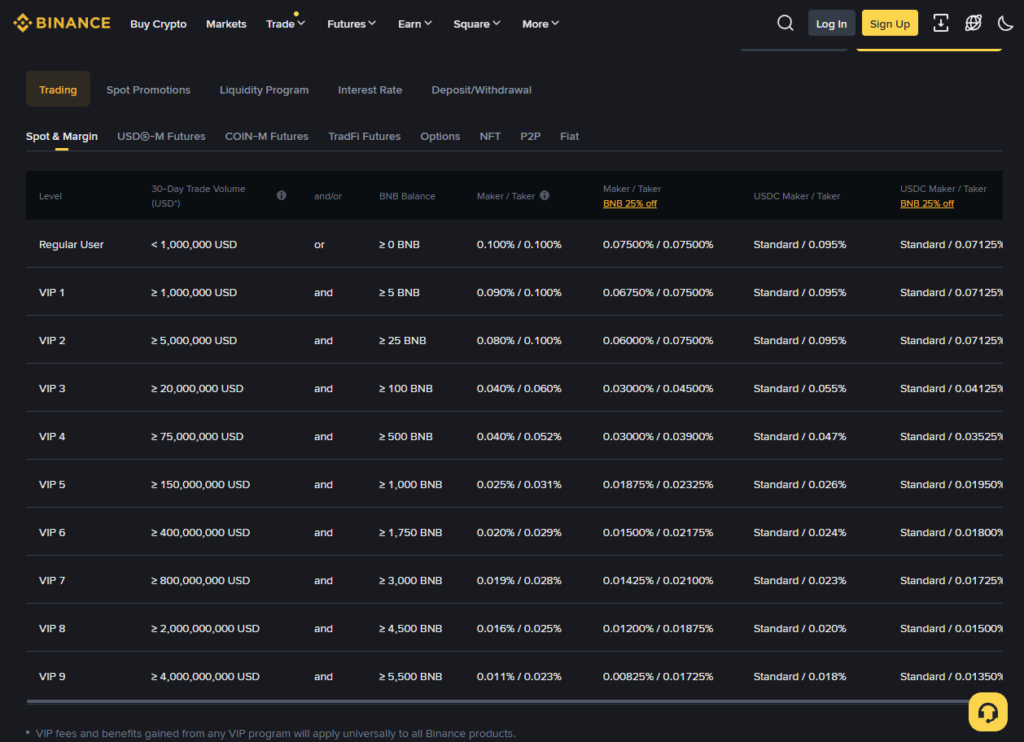
Binance’s fee structure is famously competitive, but it can be a bit of a maze. For most of us starting out, you’ll be in the “VIP 0” tier.
-
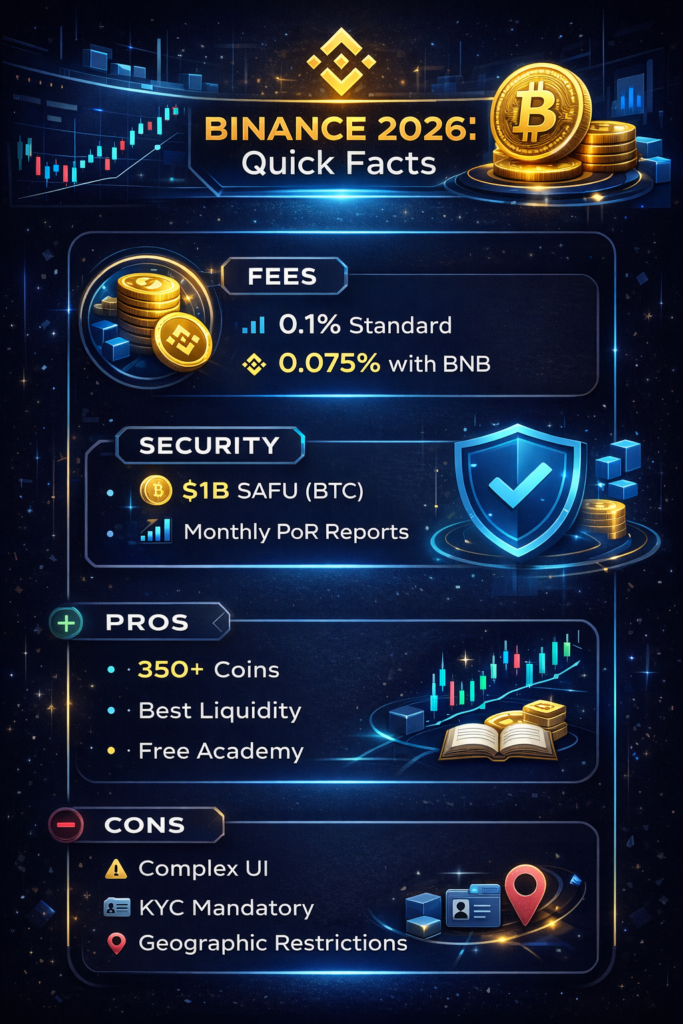
Spot Trading Fee: A flat 0.1% for both makers and takers.
-
The BNB Advantage: If you hold Binance Coin (BNB) in your wallet and use it to pay for fees, you get a 25% discount, bringing your fee down to 0.075%.
To put that in perspective: if you buy $1,000 worth of Bitcoin, you pay just $1 in fees (or $0.75 with BNB). Compared to some “beginner-friendly” apps that charge 1.5% or hidden “spreads,” Binance is significantly cheaper.
Pro Tip: Always keep about $10-$20 worth of BNB in your spot wallet. The app will automatically deduct fees from it, saving you 25% without you having to do any extra math.
🔹 Start trading on the world’s largest exchange: Join Binance here
Pros for Beginners: Why it Works
-
Unmatched Selection: With over 350+ coins listed, you won’t need to jump to other exchanges to find smaller projects.
-
Binance Academy: Their educational portal is genuinely one of the best in the industry. It’s free, and they even have “Learn and Earn” programs where you get small amounts of crypto for finishing courses.
-
P2P Trading: For users in regions where bank transfers to exchanges are blocked, the Binance P2P (Peer-to-Peer) platform is a lifesaver, supporting over 100 local fiat currencies.
-
Binance Lite: If the main Pro interface looks like a NASA terminal, you can toggle “Lite” mode. It simplifies everything down to: Buy, Sell, Convert.
Cons: The Real-World Friction
-
Complexity Overload: Even with “Lite” mode, the sheer number of products (Earn, Launchpad, Dual Investment) can lead beginners into risky products they don’t understand.
-
Regulatory Map: While they’ve cleaned up their act, Binance is still restricted in the United States (users must use Binance.us), the UK, and parts of Canada. Always check if your specific country has local restrictions.
-
Customer Support: While it has improved, getting a human on the phone is still impossible. You are mostly dealing with an AI bot until your issue is escalated.
How to Sign Up: A 5-Minute Guide
Getting started in 2026 is stricter than it used to be due to global KYC (Know Your Customer) rules.
-
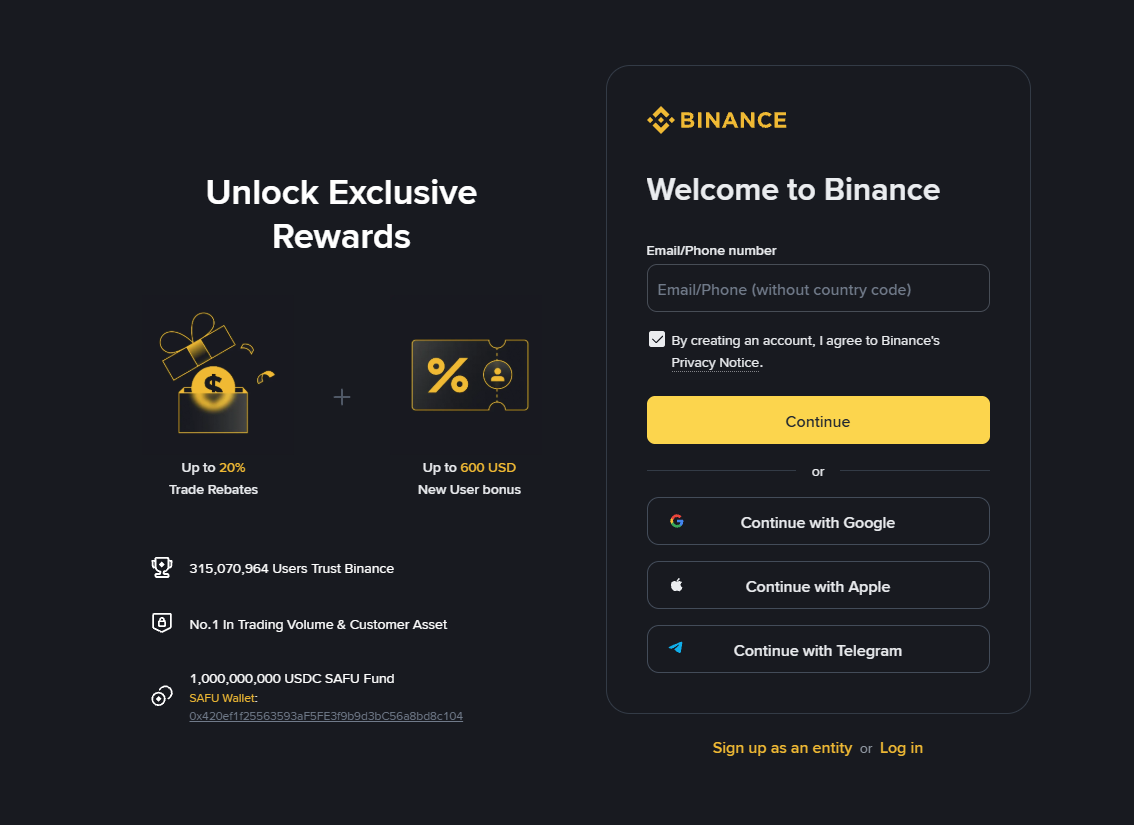
Register: Head to the Binance Homepage and sign up with an email or phone number.
-
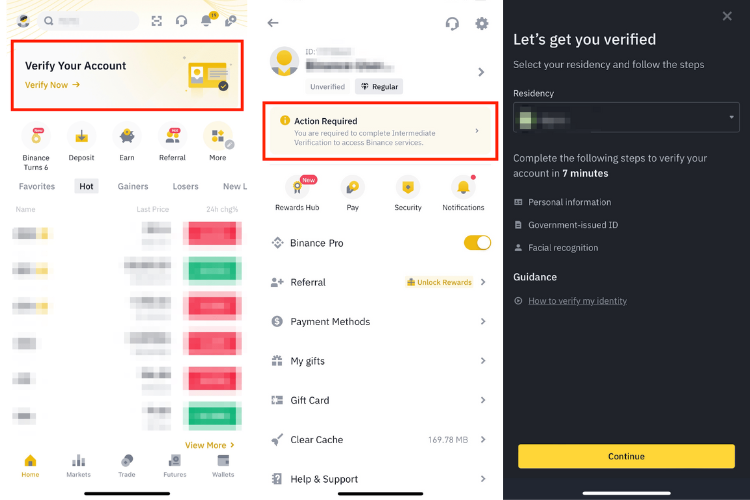
Verify Identity (KYC): You must do this to trade. You’ll need a photo of your ID (Passport or Driver’s License) and a quick “liveness” facial scan using your phone camera.
-
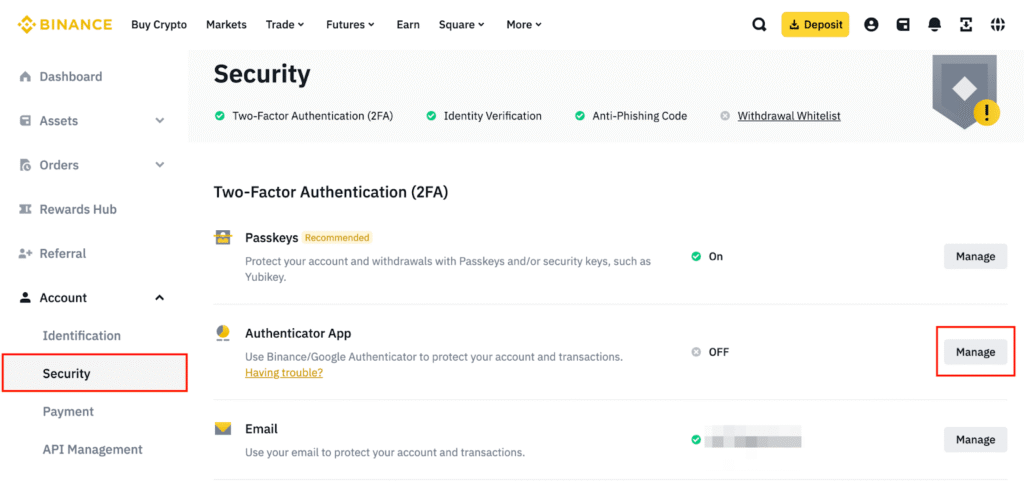
Enable 2FA: Do not skip this. Link Google Authenticator or a Passkey. SMS codes are better than nothing, but they are vulnerable to SIM swapping.
-
First Deposit: Use the “Buy Crypto” button to use a credit card, or use P2P if you prefer bank transfers.
Binance vs. Bybit: A Quick Look
If you find Binance too “corporate” or restricted in your region, many traders are moving to Bybit. While Binance is the “everything app,” Bybit has gained a massive following for its superior mobile app UI and aggressive rewards for new users.
-
Read our full Bybit Review 2026 to see the comparison.
Frequently Asked Questions
Is Binance safe after the DOJ settlement?
Yes, in many ways it is safer now. The settlement required Binance to have an independent compliance monitor for five years. This “over-the-shoulder” supervision by U.S. authorities means their internal controls are likely stricter than almost any other offshore exchange.
Can I use Binance without KYC in 2026?
No. In 2026, Binance requires “Identity Verification” for all services, including deposits and withdrawals. This is a standard industry practice now to prevent money laundering.
What is the minimum deposit on Binance?
For most fiat currencies (like USD or EUR) via card, the minimum is usually around $15. If you are sending crypto from another wallet, there is often no minimum deposit, though there are minimums for trading (usually $5-$10).
Final Thoughts
Binance remains the “Gold Standard” for liquidity and features in 2026. While the interface is still a bit dense for the absolute tech-averse, its low fees and massive educational resources make it hard to beat. Just remember: never keep your life savings on an exchange. Use Binance to trade, but move your long-term “HODL” assets to a hardware wallet.
-
Join our OCBCrypto Telegram Hub for daily market updates!
Disclaimer: This article is for educational purposes only and does not constitute financial advice. Crypto investments carry significant risk. Always do your own research before making any financial decisions.
2 thoughts on “Binance Review 2026: Is It Still the Best Crypto Exchange for Beginners?”