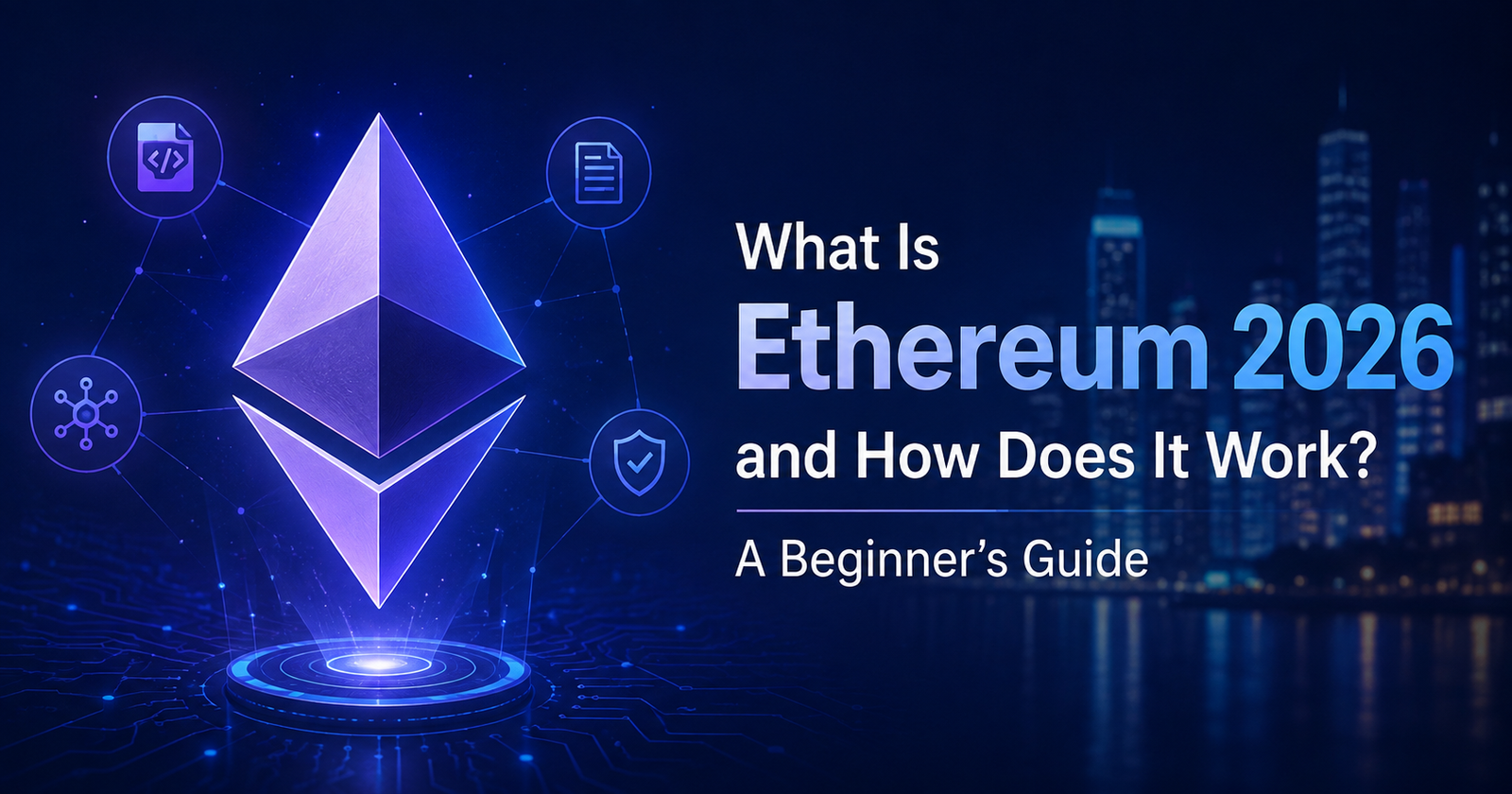
Curious about what is ethereum 2026? Discover how Ethereum works, smart contracts, ETH vs. Bitcoin, DeFi, NFTs, risks, and how to get started in this ultimate beginner’s guide.
What Is Ethereum 2026 and How Does It Work? A Beginner’s Guide?
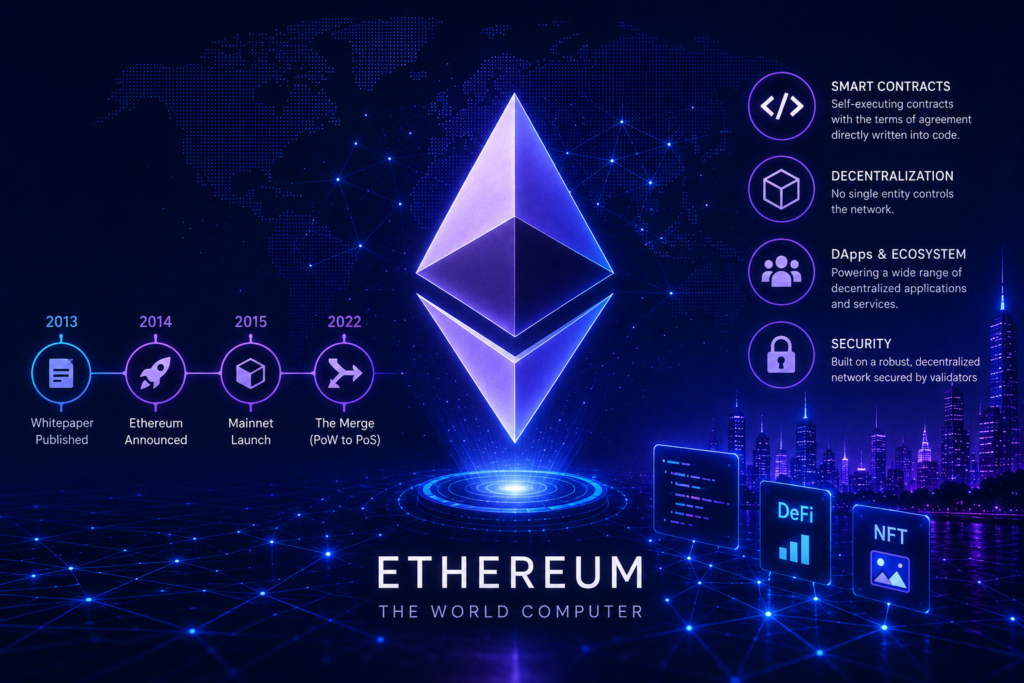
If you are entering the world of digital assets, you have undoubtedly heard of Bitcoin. However, right alongside it stands another giant that powers a massive chunk of the entire Web3 universe: Ethereum.
Whether you are looking to diversify your portfolio, explore decentralized applications, or simply understand how modern digital finance operates, learning what is ethereum 2026 is one of the most crucial steps you can take. While Bitcoin functions primarily as digital gold and a store of value, Ethereum was built as a global, decentralized supercomputer.
In this comprehensive beginner’s guide, we will break down what is ethereum 2026, how smart contracts work, the role of ETH, how it differs from Bitcoin, and everything you need to know before getting started.
1. What Is Ethereum? History, Vitalik Buterin, and Core Concepts
To understand what is ethereum 2026, we must look back at its origins and core purpose.
The Origins: Vitalik Buterin and the 2015 Launch
In late 2013, a 19-year-old Russian-Canadian programmer named Vitalik Buterin published a whitepaper proposing a new type of blockchain platform. While Bitcoin was revolutionary for peer-to-peer digital payments, Buterin argued that blockchain technology could do much more than just transfer money. He envisioned a programmable blockchain that could execute complex agreements automatically.
Along with co-founders including Gavin Wood and Charles Hoskinson, Buterin launched the Ethereum network on July 30, 2015. Since then, Ethereum has grown from an ambitious open-source project into the foundational layer for decentralized technology worldwide.
+-----------------------------------------------------------------------+
|                         ETHEREUM TIMELINE                             |
|                                                                       |
|   2013           2015               2022                 2026         |
|   Whitepaper     Mainnet Launch     The Merge            Global Web3  |
|   Published      (Proof-of-Work)    (Proof-of-Stake)     Ecosystem    |
+-----------------------------------------------------------------------+
The Core Concept: A Decentralized Global Computer
If Bitcoin is a digital ledger that records transactions, Ethereum is an entire operating system running on a global network of computers (nodes). Anyone can write programs—known as smart contracts—and run them on Ethereum without relying on a central authority like a bank, corporation, or government.
Key Takeaway: Understanding what is ethereum 2026 means recognizing that it is not just a cryptocurrency—it is a global, censorship-resistant software platform.
If you are entirely new to digital currencies, you may also want to read our fundamental guide on What Is Cryptocurrency 2026 to get a solid grasp of the basics.
2. How Ethereum Works: Smart Contracts, Ether (ETH), and Gas Fees
Now that we have defined what is ethereum 2026 at a high level, let’s look at the mechanical engine under the hood.
Smart Contracts Explained Simply
A smart contract is a self-executing digital agreement stored on the blockchain. It operates strictly on an “if/then” conditional logic.
-
Traditional Agreement: You pay a landlord rent, and they give you a key. If a dispute arises, you go to court.
-
Smart Contract Agreement: IF Alice sends $1,000 worth of crypto to the contract on the 1st of the month, THEN the digital key to the apartment is automatically transferred to her phone. No middleman required.
Once deployed, a smart contract cannot be altered or shut down by any single party.
+-----------------------------------------------------------------------+
|                    SMART CONTRACT WORKFLOW                            |
|                                                                       |
|   [ User Action ]  ==>  [ "IF / THEN" Condition ]  ==> [ Automatic ]  |
|   Send Funds            Automated Smart Contract        Execution     |
+-----------------------------------------------------------------------+
What Is Ether (ETH)?
People often confuse “Ethereum” with “Ether.”
-
Ethereum is the blockchain network/platform.
-
Ether (ETH) is the native cryptocurrency that powers the network.
ETH is used to pay for computational power on the network, acts as collateral in financial applications, and serves as a medium of exchange.
Gas Fees and Network Efficiency
To run programs or execute transactions on Ethereum, users must pay a network transaction fee known as a gas fee. Gas fees are paid in ETH and go to the network validators who process transactions.
-
In previous years, gas fees could spike dramatically during periods of high congestion.
-
As of 2026, average transaction gas fees on Ethereum’s main network have stabilized significantly due to architectural optimizations and the heavy adoption of Layer 2 scaling solutions.
3. The Evolution of Consensus: From Proof-of-Work to Proof-of-Stake (The Merge)

A central milestone in understanding what is ethereum 2026 is the historic network upgrade known as The Merge.
What Was The Merge?
When Ethereum launched in 2015, it used a Proof-of-Work (PoW) consensus mechanism, similar to Bitcoin. PoW required power-hungry mining rigs to solve complex mathematical puzzles to secure the network.
In September 2022, Ethereum executed “The Merge,” switching its underlying consensus protocol from Proof-of-Work to Proof-of-Stake (PoS). This transition was equivalent to changing an airplane’s engine in mid-flight without interrupting passengers.
+-----------------------------------------------------------------------+
|                    PROOF-OF-WORK vs PROOF-OF-STAKE                    |
+-----------------------------------+-----------------------------------+
| PROOF-OF-WORK (Old System)        | PROOF-OF-STAKE (Current System)   |
+-----------------------------------+-----------------------------------+
| Uses specialized physical miners  | Uses economic validators          |
| High electricity consumption      | ~99.9% energy reduction           |
| Hardware competition              | Capital staking (32 ETH)          |
+-----------------------------------+-----------------------------------+
Key Benefits of Proof-of-Stake
-
99.9% Energy Reduction: Ethereum became an environmentally friendly, green blockchain almost overnight.
-
Network Security via Staking: Instead of buying expensive hardware, network security is guaranteed by validators who lock up (stake) 32 ETH as economic collateral. If a validator acts maliciously, their staked ETH is penalized (“slashed”).
-
Staking Yields: Holders who stake their ETH help secure the network and earn an ongoing yield (historically ranging between 3% to 5% APY).
If you are comparing blockchain foundations, make sure to read our detailed guide on What Is Bitcoin 2026 to contrast PoW and PoS in depth.
4. The Ethereum Ecosystem: DeFi, NFTs, and Layer 2 Scaling
To fully appreciate what is ethereum 2026, one must explore the vast ecosystem built on top of its infrastructure.
+-----------------------------------------------------------------------+
|                        ETHEREUM ECOSYSTEM                             |
|                                                                       |
|     +-------------------+    +-------------------+                    |
|     |   DeFi Networks   |    |   NFT Marketplaces|                    |
|     |  (Lending/DEXs)   |    |  (Digital Assets) |                    |
|     +---------+---------+    +---------+---------+                    |
|               |                        |                              |
|               +-----------+------------+                              |
|                           |                                           |
|               +-----------v------------+                              |
|               |   Layer 2 Scaling      |                              |
|               |  (Arbitrum, Optimism)  |                              |
|               +-----------+------------+                              |
|                           |                                           |
|               +-----------v------------+                              |
|               |   Ethereum Mainnet     |                              |
|               |   (Settlement Layer)   |                              |
|               +------------------------+                              |
+-----------------------------------------------------------------------+
Decentralized Finance (DeFi)
DeFi rebuilds traditional financial services—like borrowing, lending, trading, and earning interest—on smart contracts without central banks or intermediaries.
-
Decentralized Exchanges (DEXs): Swap tokens directly from your wallet.
-
Lending Platforms: Deposit collateral to borrow assets instantly.
To learn more about this financial paradigm, read our article on What Is DeFi 2026.
Non-Fungible Tokens (NFTs)
NFTs are unique digital certificates of ownership stored on the Ethereum blockchain. Beyond digital art and collectibles, NFTs power tokenized real-world assets (RWA), ticketing, digital identity, and gaming items.
Layer 2 Networks (L2s)
To handle millions of global transactions without slowing down, Ethereum relies on Layer 2 scaling solutions (such as Arbitrum, Optimism, and Base). These L2 networks bundle hundreds of transactions off the main blockchain and settle them on Ethereum in a single batch, drastically reducing fees while maintaining Ethereum’s robust security.
5. Ethereum vs. Bitcoin: 5 Key Differences
While Bitcoin (BTC) and Ethereum (ETH) consistently top market capitalization rankings as the two foundational pillars of the digital asset industry, asking what is ethereum 2026 highlights a fundamental reality: they were built to solve entirely different problems.
Bitcoin was created as a decentralized, peer-to-peer monetary network—often referred to as “Digital Gold.” Ethereum, on the other hand, was engineered as a programmable, global computer designed to power an entire ecosystem of software applications.
+-----------------------------------------------------------------------------------+
|                        BITCOIN vs. ETHEREUM AT A GLANCE                           |
+----------------------+-----------------------------+------------------------------+
| Feature              | Bitcoin (BTC)               | Ethereum (ETH)               |
+----------------------+-----------------------------+------------------------------+
| Primary Purpose      | Sovereign Store of Value    | Programmable Web3 Infrastructure |
| Consensus Protocol   | Proof-of-Work (PoW)         | Proof-of-Stake (PoS)         |
| Smart Contracts      | Limited (Scripting)         | Advanced (Turing-Complete EVM)|
| Token Economics      | Hard Cap (21 Million BTC)   | Dynamic (Issuance - Burn)    |
| Block Production     | ~10 Minutes                 | ~12 Seconds                  |
+----------------------+-----------------------------+------------------------------+
To truly grasp how these networks compare, let’s analyze the 5 primary differences that separate them:
a. Primary Purpose and Vision
-
Bitcoin (BTC): Designed as a censorship-resistant, decentralized digital currency. Its primary narrative is serving as a global store of value and a hedge against fiat inflation—earning it the title of Digital Gold.
-
Ethereum (ETH): Envisioned as a decentralized operating system. While ETH operates as money within its ecosystem, the main purpose of the network is to host decentralized finance (DeFi) protocols, digital collectibles (NFTs), real-world asset tokenization (RWA), and enterprise applications without centralized control.
b. Consensus Mechanism: Proof-of-Work vs. Proof-of-Stake
-
Bitcoin’s Proof-of-Work (PoW): Relies on physical computational power. Miners worldwide run high-powered ASIC rigs to solve cryptographic puzzles, consuming energy to validate transactions and secure the network.
-
Ethereum’s Proof-of-Stake (PoS): Operates on economic collateral. Rather than using energy-intensive hardware, Ethereum validators deposit (stake) 32 ETH as collateral to propose and validate blocks. This approach reduces network energy consumption by over 99.9% while introducing native staking yields for token holders.
c. Smart Contract Capability & Programmability
-
Bitcoin’s Scripting Language: Intentionally limited and basic by design to prioritize maximum security and stability. While developments like Ordinals and Layer 2s have added new capabilities, Bitcoin’s base layer does not natively support complex logic.
-
Ethereum Virtual Machine (EVM): Ethereum features a Turing-complete execution environment. Developers can write complex, self-executing code using languages like Solidity. This allows software applications to execute automated financial transactions, governance voting, and collateralized loans without third-party intervention.
+-----------------------------------------------------------------------------------+
|                           PROGRAMMABILITY COMPARISON                              |
|                                                                                   |
|  BITCOIN LOGIC:   [ Send 1 BTC from Person A to Person B ]                         |
|                                                                                   |
|  ETHEREUM LOGIC:  [ IF Person A deposits 1 ETH, AND Interest Rate > 3%,           |
|                     THEN Issue Person B a 50% collateralized stablecoin loan ]    |
+-----------------------------------------------------------------------------------+
d. Monetary Policy & Supply Dynamics
-
Bitcoin’s Fixed Cap: Hard-coded maximum supply of 21 million BTC. Block reward issuance halves approximately every four years (the “Bitcoin Halving”), creating a predictable, strictly deflationary supply schedule.
-
Ethereum’s Dynamic Supply: Ethereum has no fixed maximum supply limit. Instead, its supply model balances new ETH issuance given to stakers against ETH permanently burned through transaction fees (via EIP-1559). During periods of high network activity, more ETH is burned than issued, making the supply net-deflationary (often called “Ultra Sound Money”).
e. Block Time, Throughput, and Transaction Finality
-
Bitcoin: Produces a new block approximately every 10 minutes. This deliberate pace optimizes for global node synchronization and ultimate security rather than rapid transaction throughput.
-
Ethereum: Operates on a predictable slot schedule of ~12 seconds per block. This faster block cycle enables quick interactive confirmations necessary for complex decentralized applications, DEX trading, and real-time smart contract executions.
6. Risks, Challenges, and How to Get Started

While Ethereum powers a revolutionary decentralized ecosystem, entering this market without a clear understanding of its risks can lead to costly mistakes. Whether you are looking to hold ETH as a long-term investment, participate in network staking, or build decentralized applications, navigating both the technical and market dynamics requires careful consideration.
Key Risks & Challenges to Consider
+-----------------------------------------------------------------------+
|                    ETHEREUM RISK MATRIX                               |
+-------------------+---------------------------------------------------+
| Market Risk       | Price volatility, macroeconomic shifts            |
| Technical Risk    | Smart contract bugs, Layer 2 bridge exploits      |
| Regulatory Risk   | Staking classifications, tax and compliance rules |
| Usability Risk    | Phishing attacks, loss of private keys            |
+-------------------+---------------------------------------------------+
a. Market Volatility & Economic Drivers
Like all digital assets, the price of Ether (ETH) is subject to sharp price fluctuations driven by global economic conditions, market sentiment, and macroeconomic liquidity.
-
Macro Trends: Interest rate changes, global inflation rates, and geopolitical shifts directly impact institutional capital flows into ETH.
-
Supply & Demand Dynamics: Post-Merge mechanisms—such as fee burning via EIP-1559 and staking rewards—influence ETH’s circulating supply, creating dynamic periods of inflation or deflation depending on overall network usage.
b. Smart Contract Vulnerabilities & DApp Exploits
While the core Ethereum base layer (Layer 1) is exceptionally secure and heavily battle-tested, the applications built on top of it (DeFi protocols, bridges, and smart contracts) carry inherent coding risks.
Important Note: A vulnerability in a third-party application’s code can allow malicious actors to drain funds from a pool, even if the underlying Ethereum blockchain itself remains completely uncompromised. Always stick to thoroughly audited protocols with established track records.
c. Evolving Regulatory Landscape
Government agencies worldwide continue to refine their frameworks surrounding digital assets. Key regulatory focus areas include:
-
Staking Regulations: Clear guidelines regarding custodial vs. non-custodial staking pools and whether yield generation triggers specific security registrations.
-
Tax Compliance: Enhanced reporting rules for crypto transactions, capital gains, and decentralized finance interactions.
d. User Experience & Self-Custody Pitfalls
“Being your own bank” offers complete control over your assets, but it comes with sole responsibility. Losing access to your seed phrase, falling victim to sophisticated phishing attacks, or interacting with malicious dApp permissions can lead to permanent loss of assets without any customer support to reverse the transaction.
Step-by-Step Guide: How to Buy ETH Safely
Getting started with Ethereum does not need to be complicated. Following a structured and security-focused approach ensures your entry into the ecosystem is smooth and secure.
+-----------------------------------------------------------------------+
|                 4-STEP ONBOARDING PROCESS                             |
|                                                                       |
|   [ 1. Select Exchange ]  ==>  [ 2. KYC Verification ]               |
|                                         ||                            |
|                                         \/                            |
|   [ 4. Self-Custody Wallet ] <==  [ 3. Purchase ETH ]                 |
+-----------------------------------------------------------------------+
Step 1: Choose a Reputable Exchange
Select a regulated, highly secure cryptocurrency exchange that supports native ETH trading and withdrawal capabilities. Check our comprehensive breakdown of the Best Crypto Exchanges 2026 to compare fee structures, security features, and regional support.
Step 2: Account Setup & Verification (KYC)
Sign up on your chosen platform and complete the required Know Your Customer (KYC) verification process. This typically involves submitting:
-
A valid government-issued photo ID (Passport or Driver’s License).
-
Proof of address (utility bill or bank statement).
-
Enabling Two-Factor Authentication (2FA)—preferably using an authenticator app rather than SMS verification.
Step 3: Deposit Funds & Execute the Purchase
Fund your exchange account using your preferred payment method:
-
Bank Transfers (ACH/SEPA/Wire): Offer the lowest transaction fees for medium to large purchases.
-
Credit/Debit Cards: Provide instant processing, though usually subject to higher processor fees.
Once your deposit clears, place a Limit Order (to target a specific entry price) or a Market Order (to purchase instantly at current market rates) to acquire your ETH.
Step 4: Secure Your Assets (Self-Custody)
Leaving large amounts of crypto on an exchange exposes you to counterparty risk. For long-term holdings, transfer your ETH to a secure non-custodial wallet:
-
Hardware Wallets (Cold Storage): Physical devices (like Ledger or Trezor) that keep your private keys isolated from internet threats.
-
Software Wallets (Hot Storage): Browser extensions or mobile apps suitable for active interaction with DeFi platforms and NFTs.
Conclusion
Understanding what is ethereum 2026 boils down to recognizing its role as the settlement and execution engine of the decentralized web. From powering decentralized finance and digital ownership to executing smart contracts on a green Proof-of-Stake architecture, Ethereum remains a bedrock technology of modern Web3.
Ready to take your next step in digital assets? Check out our step-by-step tutorial on How to Buy ETH to make your first secure transaction today!
Disclaimer: This article is for informational and educational purposes only and does not constitute financial, investment, or legal advice. Cryptocurrency investments are subject to high market volatility and risk. Always conduct your own research (DYOR) and consult a qualified financial advisor before making any investment decisions.