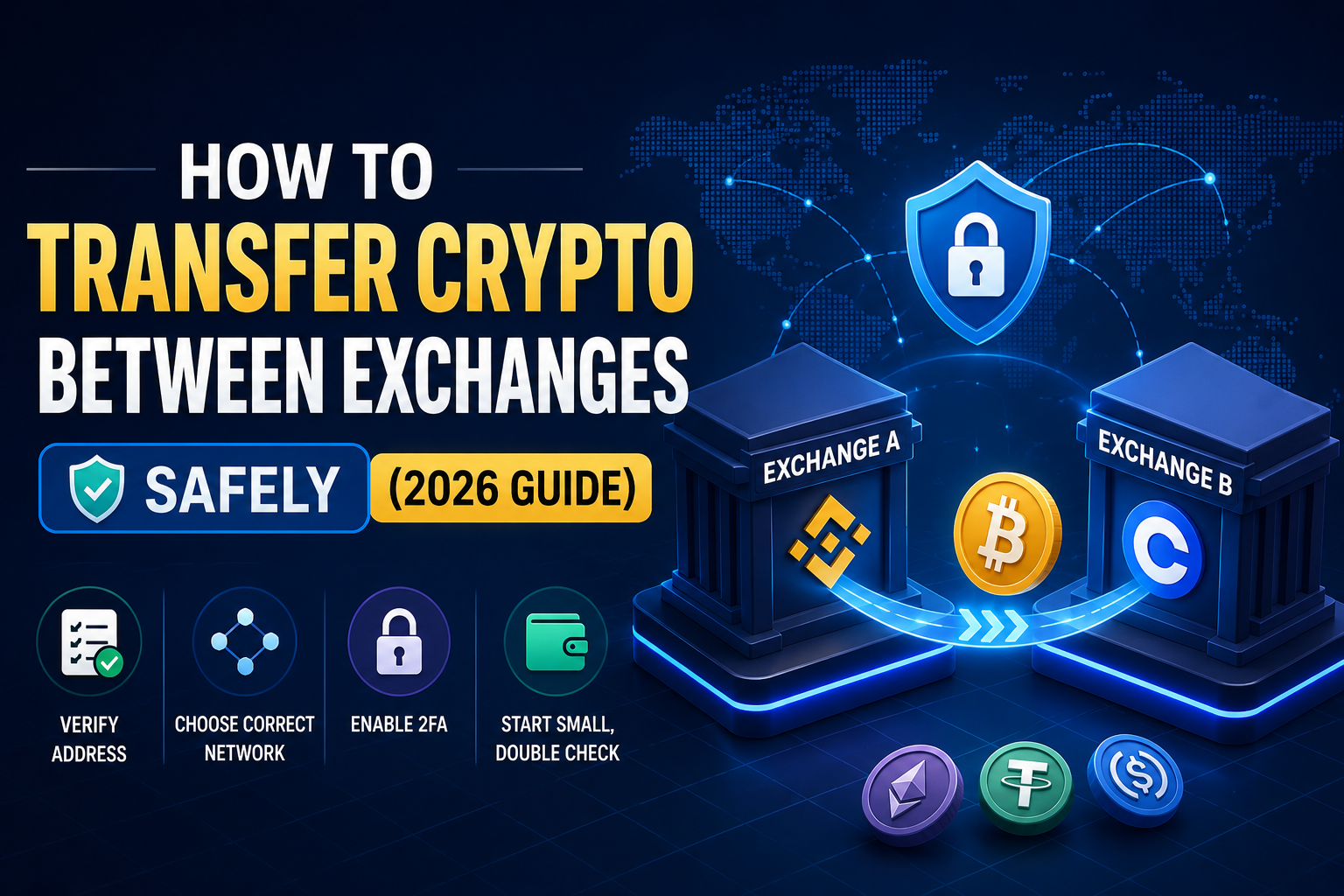
Learn how to transfer crypto between exchanges 2026 safely and efficiently. This ultimate step-by-step guide covers network selection, minimizing fees, and avoiding costly mistakes.
The digital asset ecosystem has matured significantly, transitioning into an institutional era where security, cost-efficiency, and speed are paramount. For modern traders and investors, mastering how to transfer crypto between exchanges 2026 is no longer just a basic technical skill—it is a critical necessity for portfolio optimization. Whether you are moving assets to capture better liquidity, accessing exclusive staking yields, or diversifying across platforms, moving crypto securely from one centralized exchange (CEX) to another requires absolute precision.
Navigating multi-chain architectures can feel like walking through a minefield for beginners and intermediate users alike. One wrong click or an oversight in selecting a blockchain network can result in the permanent loss of capital. This crypto comprehensive guide breaks down exactly how to transfer crypto between exchanges 2026, illuminating the core mechanics of blockchain routing, providing a concrete real-world walkthrough, and offering a failsafe checklist to ensure your digital wealth arrives safely at its destination every single time.
1. Foundation Knowledge: Core Crypto Transfer Mechanics Explained
Before initiating any transactional routing, it is absolutely crucial to deconstruct the digital infrastructure underlying modern cross-platform asset movements. Moving digital assets between centralized trading platforms does not operate like a traditional banking wire or an automated clearing house (ACH) network; it relies entirely on ledger-to-ledger settlement broadcasted across public decentralized rails. If you want to master how to transfer crypto between exchanges 2026 with absolute precision and zero anxiety, you must fundamentally master these four foundational technological pillars:
Blockchain Networks (The Cross-Chain Highways)
Think of independent blockchain networks as completely separate, parallel highway systems. Bitcoin ($BTC$), Ethereum ($ERC20$), BNB Chain ($BEP20$), TRON ($TRC20$), and Solana are distinct network architectures that do not naturally intersect, talk to each other, or share cross-compatible addresses. Sending an asset via the wrong highway means your funds will crash into a structural void.
When analyzing how to transfer crypto between exchanges 2026, always remember that you cannot send a token natively across conflicting highways. For instance, sending native Tether ($USDT$) out via the Ethereum network directly into a TRON-only deposit address on the target platform will cause the transaction to get permanently stranded in the blockchain ether, completely unrecoverable by either customer service team.
Wallet Addresses (The Cryptographic Coordinates)
A wallet address is a unique, case-sensitive alphanumeric string acting as your precise blockchain destination coordinates. In 2026, many leading centralized global platforms utilize unified account systems or multi-asset sub-wallets, but your specific inbound deposit address remains unique to each individual token and network combination.
As you develop a workflow for how to transfer crypto between exchanges 2026, you must treat these strings with extreme precision. A single missing letter or number changes the cryptographic destination entirely. Furthermore, never try to guess an address structure; always utilize the direct automated extraction tools provided inside your exchange user interface to ensure perfect coordination.
Memo / Destination Tag (The Internal Routing Numbers)
For specific high-speed or low-cost consensus networks like Ripple ($XRP$), Stellar ($XLM$), or Cosmos ($ATOM$), a unique identifier known as a Memo or Destination Tag is strictly mandatory. Because centralized platforms use one massive, collective omnibus wallet to store and hold these specific assets on behalf of millions of users, the public address alone is not enough to identify you. The Memo acts as an internal routing number that instructs the exchange’s automated database exactly which individual user profile to credit upon arrival.
Omitting or mistyping this variable while figuring out how to transfer crypto between exchanges 2026 means your funds will settle successfully into the exchange’s generic pool, requiring tedious, manual, and often costly customer support intervention to manually recover and credit your balance.
Confirmation Times (The Consensus Validation Thresholds)
Once an outbound asset transfer successfully leaves Exchange A, it must be validated, grouped into blocks, and mathematically confirmed by distributed network validators or miners across the globe. Each centralized exchange enforces its own strict, conservative security policy regarding the minimum number of block confirmations required before officially crediting your account balance.
This security measure is designed specifically to protect order books against double-spending attacks and blockchain reorganization (reorg) risks. Understanding these validation windows is a core part of learning how to transfer crypto between exchanges 2026, as it explains why your funds may be visible on a public block explorer but not yet tradeable inside your target account dashboard.
2. Step-by-Step Practical Blueprint: Transferring Crypto from Bybit to Binance
To understand how to transfer crypto between exchanges 2026, let us look at a real-world scenario. In this blueprint, we will execute a standard withdrawal from Bybit and deposit it directly into Binance. This practical example utilizes USDT, the market’s leading stablecoin, which represents the highest volume of cross-exchange transfers globally.
Step 1: Retrieve Your Deposit Credentials on Binance
-
Log in to your Binance account and navigate to the Dashboard.
-
Click on Deposit and select Deposit Crypto.
-
Choose USDT (Tether) from the coin dropdown menu.
-
Select the Network: This is the most critical juncture. For this example, we will select TRON (TRC20) due to its balance of speed and low fees.
-
The platform will display your unique USDT deposit address. Click the Copy icon.
Screenshot Opportunity: Capture the Binance deposit page showing the selected TRON (TRC20) network and the clearly visible wallet address.
Step 2: Initiate the Withdrawal on Bybit
-
Log in to your Bybit account, go to Assets, and select Withdraw.
-
Select USDT as the asset to move.
-
Paste the Binance deposit address into the Wallet Address field.
-
Match the Network: Select TRC20 from the network list. It must perfectly match the network selected on Binance.
-
Enter the amount you wish to transfer. Bybit will automatically calculate the fixed network withdrawal fee.
-
Click Submit.
Screenshot Opportunity: Capture the Bybit withdrawal page showing the exact pasted address, matching TRC20 network selection, and fee breakdown.
Step 3: Clear Security Screenings and Verify
-
Pass your Two-Factor Authentication (2FA). This typically requires entering an email verification code alongside your Google Authenticator token. Learn more about protecting your accounts in our comprehensive guide on [How to Set Up 2FA].
-
Confirm the transaction. Bybit will broadcast the transaction to the TRON blockchain.
Step 4: Monitor and Confirm Settlement on Binance
-
Open Binance and navigate to Transaction History under your wallet tab.
-
You will see an incoming transaction status marked as Pending or Confirming.
-
Once the TRON network achieves the required number of block confirmations, the status will shift to Completed. Your assets are now fully available on Binance.
Screenshot Opportunity: Capture the Binance deposit history log showcasing the successfully confirmed transaction hash (TxID) and status.
3. Optimizing Network Selection and Minimizing Costly Transfer Fees
When figuring out how to transfer crypto between exchanges 2026, optimizing execution costs is vital for preserving profit margins. The most expensive mistake an investor can make is blindly clicking the default network or choosing an unoptimized blockchain path.
The table below contrasts the main network options available when processing standard stablecoin ($USDT$) movements across global exchanges:
| Network Protocol | Average Processing Time (2026) | Typical Withdrawal Fee Range | Optimal Use Case |
| Ethereum (ERC20) | 3 – 10 Minutes | $5.00 – $15.00+ (Gas dependent) | High-volume institutional transfers |
| TRON (TRC20) | 1 – 3 Minutes | $1.00 – $2.00 | Standard retail & mid-tier transfers |
| BNB Chain (BEP20) | 1 – 2 Minutes | $0.30 – $0.60 | Low-fee ecosystems & fast routing |
| Arbitrum / Optimism | Under 1 Minute | $0.10 – $0.50 | Advanced Layer-2 infrastructure optimization |
| Solana (SOL) | Under 30 Seconds | $0.05 – $0.20 | Micro-transfers and ultra-fast speed |
Strategies to Minimize Transfer Fees
-
Leverage Layer-2 and High-Throughput Chains: If both trading platforms support it, utilizing networks like Solana or Arbitrum drastically reduces expenses compared to legacy Ethereum rails.
-
Review Platform-Specific Baselines: Always consult dedicated platform reviews. For instance, detailed structures can be reviewed at our Bybit Review 2026 and Binance Review 2026 hubs to compare updated tier-based withdrawal discount architectures.
-
Consolidate Transfers: Instead of initiating five small transfers that generate five independent platform flat fees, consolidate your activity into a singular transaction block.
4. Troubleshooting and the 2026 Fail-Safe Safety Checklist
Even when you are fully educated on how to transfer crypto between exchanges 2026, unexpected architectural bottlenecks and temporary delays can still occur. Watching your digital assets hang in limbo can be an anxiety-inducing experience, but the key is to approach the issue systematically rather than emotionally. If your funds have not arrived at their destination within a standard 60-minute window, do not panic. Follow this multi-step troubleshooting protocol designed specifically for modern blockchain routing:
Step 1: Query the Native Blockchain Explorer
The very first diagnostic step when executing how to transfer crypto between exchanges 2026 is to locate the Transaction ID (TxID) or TxHash generated by the sending exchange. This string can always be found under your outbound platform’s “Withdrawal History” log. Once copied, paste this unique hash into a dedicated network scanner—such as Etherscan for Ethereum ($ERC20$), Tronscan for TRON ($TRC20$), or BscScan for BNB Chain ($BEP20$).
-
If the Explorer displays “Fail” or “Reverted”: The transaction aborted at the smart contract level. The funds will typically be returned automatically to your source exchange balance minus the non-refundable network gas fee.
-
If the Explorer displays “Success” but the balance hasn’t moved: This proves that the underlying blockchain ledger has completed its work flawlessly. The current bottleneck is entirely internal, residing within the receiving exchange’s deposit indexing queues.
Step 2: Audit Exchange Status Infrastructure Logs
Centralized liquidity hubs frequently conduct unannounced backend maintenance. If you are experiencing delays while figuring out how to transfer crypto between exchanges 2026, check the real-time system status pages of both platforms. Exchanges will temporarily freeze deposit addresses or disable withdrawal engines during scheduled wallet maintenance, major network upgrades, or unexpected node desynchronizations. If an asset is suspended after your broadcast, your funds are safe but will remain frozen until the engineering team brings the wallet nodes back online.
Step 3: Conduct a Post-Mortem Inspection of Submission Records
Go back to your initial confirmation receipts and audit every single variable. Did you accidentally route an $ERC20$ token directly into a target address that only supports native $BEP20$ assets? Did you mistype or completely omit a mandatory destination tag for a high-speed cross-platform asset transfer? Identifying these structural errors immediately dictates whether you need to wait out a network congestion spike or initiate an urgent, manual data recovery request with customer support.
The Ultimate 2026 Failsafe Transfer Checklist
Before you ever hit that final, definitive “Confirm Withdrawal” button on any web or mobile interface, you must meticulously run through this strict, five-point safety checklist to ensure your process of how to transfer crypto between exchanges 2026 goes without a single hitch:
-
The Explicit Address Audit (The 6-and-6 Rule): Have I physically compared the first 6 characters and the final 6 characters of the destination wallet address displayed on the withdrawal screen against the raw string generated by the deposit page? This completely eliminates the threat of active clipboard-hijacking malware mutations.
-
The Ironclad Network Match: Is the outbound network protocol actively selected on the source platform (e.g., Arbitrum One, Solana, or TRC20) 100% identical to the exact inbound network path generated by the receiving platform? Remember, a mismatch here is the single most common cause of permanent capital loss when executing how to transfer crypto between exchanges 2026.
-
The Tag/Memo Validation: If I am moving specific architectural tokens like Ripple ($XRP$), Stellar ($XLM$), or Cosmos ($ATOM$), is the correct numeric destination tag or alphanumeric memo explicitly typed into the designated input field? Have I verified that it wasn’t accidentally cleared out by an interface refresh?
-
The Test Balloon Option (Small-Scale Trial): If I am migrating a massive, high-value corporate or personal portfolio balance, have I taken the time to run an initial, minimal “test transfer” first? Spending an extra $1.00 on an initial test network fee is the cheapest insurance policy available when deploying how to transfer crypto between exchanges 2026.
-
The Cross-Platform KYC Compliance Clearance: Are both participating centralized exchange profiles fully verified with up-to-date Know Your Customer (KYC) documentation? Executing a large-scale asset transfer into an account with expired or incomplete verification credentials can trigger automated anti-money laundering (AML) defense protocols, locking your funds in an administrative review loop.
5. Frequently Asked Questions (FAQ)
Q1: Can I send Bitcoin directly to an Ethereum wallet address?
No, you absolutely cannot. Sending native Bitcoin ($BTC$) straight to an Ethereum ($ERC20$) address will result in an immediate, irreversible loss of funds. When learning how to transfer crypto between exchanges 2026, you must understand that different blockchains speak completely different languages. Native Bitcoin operates on its own UTXO-based ledger, while Ethereum relies on an EVM account-based model. They do not naturally intersect.
To cross-network assets when executing how to transfer crypto between exchanges 2026, you have three safe alternatives:
-
Convert to Stablecoins: Sell your BTC for a cross-chain stablecoin like USDT or USDC on the source exchange, then move it via an optimized mutual network (such as TRC20 or BEP20).
-
Use Wrapped Tokens: Convert your native Bitcoin into Wrapped Bitcoin ($WBTC$), which is an ERC20 token pegged to BTC’s value, allowing it to navigate the Ethereum network safely.
-
Internal Exchange Bridges: Leverage modern centralized exchange interfaces that automatically handle multi-chain execution bridges behind the scenes during the deposit process.
Q2: What happens if I forget to input a Memo or Destination Tag?
If you omit the mandatory Memo or Destination Tag, your transaction will settle successfully on the underlying blockchain, but the receiving exchange will not be able to automatically credit it to your balance. Centralized platforms use a single, massive corporate wallet address to receive high-volume tokens like Ripple ($XRP$), Stellar ($XLM$), or Cosmos ($ATOM$). The Memo/Tag acts as an internal routing number that identifies your unique user account.
When mastering how to transfer crypto between exchanges 2026, avoiding this oversight is vital. If the mistake has already occurred, you must follow this recovery protocol:
-
Immediately open an official customer support ticket with the destination exchange.
-
Provide the explicit Transaction ID (TxID) and network details.
-
Complete enhanced identity verification to prove ownership of the sending wallet.
-
Be prepared to pay a fee: In 2026, most centralized platforms charge a manual recovery processing fee, and the asset retrieval timeline can take anywhere from a few days to several weeks.
Q3: Why does Binance say my deposit is pending when the blockchain explorer says completed?
This discrepancy occurs due to the independent security protocols enforced by centralized platforms. A blockchain explorer (like Etherscan or Tronscan) marks a transaction as “Completed” or “Success” the moment it is successfully written into a single block by network validators. However, standard exchange risk management frameworks require a specific safety buffer of subsequent block confirmations to protect their order books against potential chain reorganizations (reorgs) or double-spending attacks.
Therefore, while mastering how to transfer crypto between exchanges 2026, do not panic if you see a temporal mismatch. While the public ledger registers a cleared transfer, the receiving exchange’s internal credit architecture will keep the asset status as Pending or Confirming until their strict safety threshold is achieved. For example, Ethereum assets might require 15 to 30 block confirmations, whereas networks like Arbitrum or Solana might require hundreds of fast-paced confirmations before your balances are fully unfrozen and tradeable.
Q4: Are there maximum limits when learning how to transfer crypto between exchanges 2026?
Yes, every major centralized platform implements strict tier-based maximum limits on daily and monthly asset movements. These transactional ceilings are tied directly to your verified Identity Verification (KYC) compliance status. In 2026, global regulatory frameworks have pressured exchanges to significantly tighten rules surrounding unverified accounts.
If you are structuring a strategy for how to transfer crypto between exchanges 2026, keep these standard tier brackets in mind:
-
Unverified / Basic Accounts: Many top-tier exchanges have completely removed withdrawal privileges for non-KYC accounts, or capped them at nominal daily amounts (e.g., less than $1,000 equivalent).
-
KYC Level 1 (ID Verification): Typically unlocks robust daily limits, allowing users to move anywhere from $50,000 to $2,000,000 worth of digital assets within a 24-hour window.
-
KYC Level 2 (Proof of Address / Wealth): Completely removes standard restrictions, offering institutional-grade volume allowances exceeding $10,000,000 daily. Always review your current tier status on both the source and target exchanges before planning large-scale liquidity migrations.
Q5: How do clipboard-hijacking exploits interfere with transferring crypto?
Clipboard-hijacking is one of the most sophisticated malware threats targeting investors who frequently look up how to transfer crypto between exchanges 2026. This malicious software operates silently in the background of compromised operating systems (Windows, macOS, or Android). When you copy a long, complex cryptographic destination wallet address from the receiving exchange, the malware instantly intercepts the clipboard command and replaces your address with an attacker’s wallet address.
Because crypto addresses are long alphanumeric strings that look identical to the untrained eye, users who do not manually inspect the text before hitting “Confirm” will accidentally route their wealth directly to a hacker’s wallet. To protect yourself against this threat while executing how to transfer crypto between exchanges 2026, always implement the 6-and-6 Rule: manually verify the first 6 characters and the last 6 characters of the address on the final withdrawal screen against the original deposit screen. Furthermore, keeping dedicated anti-malware software updated and utilizing trusted hardware environments is highly recommended.
Conclusion
Mastering how to transfer crypto between exchanges 2026 boils down to patience, meticulous verification, and a clear understanding of network protocols. By selecting the optimal blockchain network, double-checking addresses, and utilizing secure platforms, you can move your digital assets across ecosystems seamlessly and cost-effectively. Treat every transfer with precision, utilize test transactions for larger balances, and always keep your account security updated to preserve your capital in this evolving financial landscape.
Disclaimer: Cryptocurrency trading, investing, and cross-platform asset transfer involve substantial financial risk. Blockchain transactions are immutable; once executed, they cannot be reversed or recalled by any centralized entity or protocol. Improper execution, including selecting mismatched networks or omitting mandatory destination tags, can result in the total and permanent loss of your digital assets. The information presented throughout this guide is intended purely for educational and informational purposes and does not constitute formal financial, investment, or legal advice. Always cross-reference official documentation provided directly by Bybit, Binance, and respective network protocols before initiating live transactional routing.