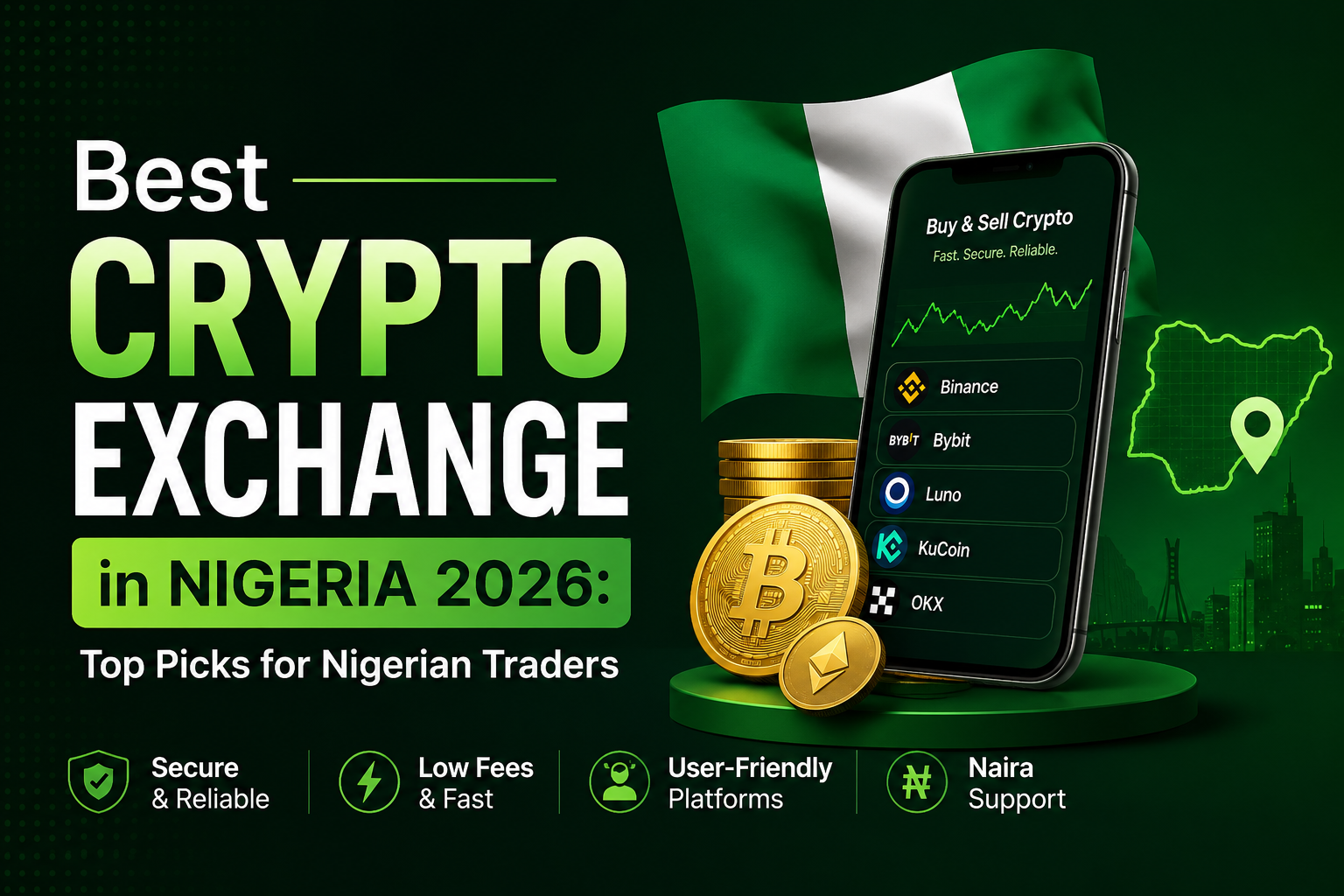
Looking for the best crypto exchange in nigeria 2026? Read our detailed guide covering regulatory compliance, P2P options, Naira (NGN) support, and top picks for Nigerian traders.
Nigeria has established itself as an undeniable powerhouse in the global digital asset ecosystem. Navigating the local cryptocurrency landscape requires finding a secure, reliable, and compliant platform. Local traders must carefully balance features like liquidity and user experience against shifting regulatory requirements and practical funding methods.
Whether you are looking to safeguard your capital against inflation or actively trade volatile digital assets, selecting a suitable trading platform is critical. This comprehensive guide reviews the top options available to local investors, evaluates the regulatory climate under the Securities and Exchange Commission (SEC) Nigeria crypto framework, and details how to securely manage Naira transactions.
Why Nigeria is Africa’s Largest Crypto Market
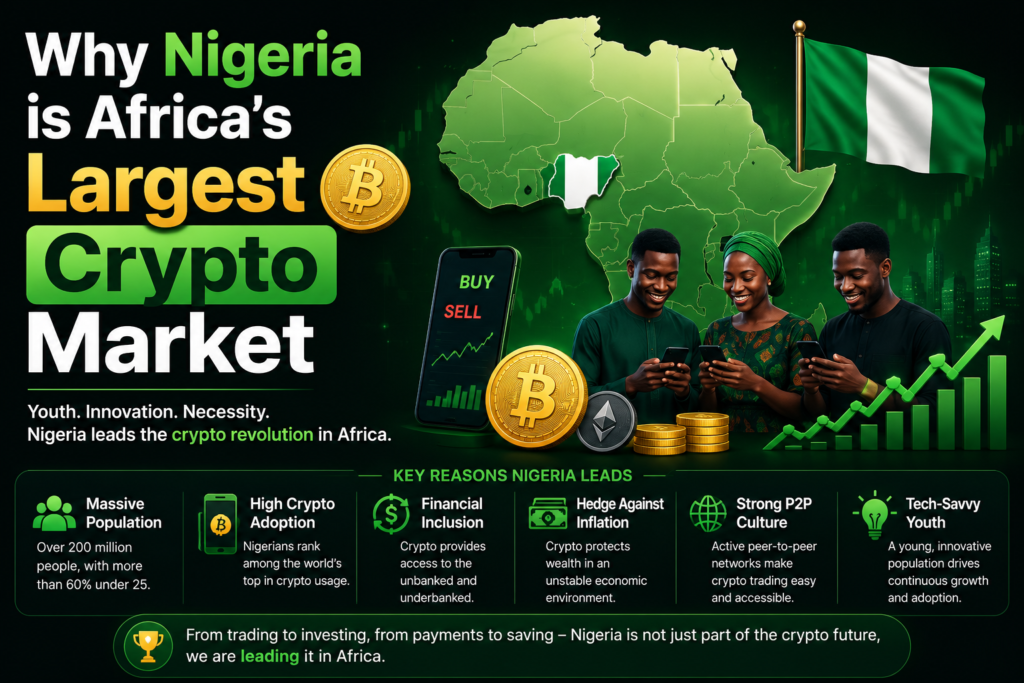
Nigeria is the largest and most dynamic cryptocurrency hub across the African continent. This widespread adoption is driven by structural economic factors rather than mere speculation. Local users frequently turn to digital assets to solve practical everyday financial challenges.
A primary catalyst for this shift is the ongoing macroeconomic pressure facing the local currency. High inflation and the consistent devaluation of the Nigerian Naira (NGN) have driven millions of everyday citizens to seek out alternative stores of value. Stablecoins pegged to the US Dollar, such as USDT and USDC, serve as accessible financial hedges, allowing individuals to preserve their purchasing power when local currency values fluctuate.
Furthermore, traditional banking rails present significant hurdles for cross-border commerce. High transaction fees, complex bureaucratic processes, and strict weekly or monthly foreign exchange limits on local bank cards make international payments incredibly difficult for businesses and freelancers. Cryptocurrencies offer a borderless, permissionless alternative. Digital assets allow local entrepreneurs to settle global invoices or receive remittances from the diaspora in minutes, completely bypassing traditional financial intermediaries.
A young, highly tech-savvy population combined with near-ubiquitous mobile connectivity has created an ideal environment for decentralized financial products. According to comprehensive industry data from CoinGecko exchange rankings, Nigeria consistently places near the top globally for retail trading volume, P2P transaction density, and search interest in digital assets. This grass-roots financial movement has successfully transformed a regional trend into a major global market.
Key Criteria for Choosing a Crypto Exchange in Nigeria
Selecting the best crypto exchange in nigeria 2026 requires looking past promotional bonuses or flashy marketing campaigns. Because local market conditions feature distinct banking restrictions and evolving compliance mandates, traders must evaluate platforms using a specific set of core operational parameters. Evaluating these parameters carefully is the only way to safeguard your capital while maintaining a seamless trading experience.
Peer-to-Peer (P2P) Naira Liquidity
Direct bank deposits to cryptocurrency platforms remain tightly restricted or subject to complex identity tracking. Consequently, the P2P marketplace serves as the primary gateway for moving funds into and out of the crypto market. When searching for the best crypto exchange in nigeria 2026, a top-tier platform must maintain a deep, active pool of verified P2P merchants. This liquidity ensures you can exchange NGN for crypto at fair, competitive rates without suffering from massive slippage or long waiting times. Without robust local fiat order books, traders are frequently left stranded with delayed orders and disadvantageous pricing.
Security and Escrow Infrastructure
Since P2P trading relies on direct bank transfers between individual buyers and sellers, robust platform security is non-negotiable. The best crypto exchange in nigeria 2026 must provide an automated, foolproof escrow system that locks the seller’s crypto assets until the buyer provides verified proof of payment. Advanced security features like mandatory two-factor authentication (2FA), biometric logins, hardware security key support, and cold storage proof-of-reserves (PoR) are vital for safeguarding user funds. A secure escrow infrastructure eliminates counterparty risk, ensuring that bad actors cannot vanish with your hard-earned Naira.
Compliance and Local Regulatory Alignment
The regulatory environment has shifted away from anonymous trading. Top platforms competing to be named the best crypto exchange in nigeria 2026 must align directly with local frameworks, including identity verification mandates set by the Nigeria Revenue Service and the SEC. Under the landmark Investments and Securities Act 2025, digital assets are formally categorized as regulated securities. Choosing an exchange that actively cooperates with local regulatory expectations minimizes the sudden risk of account freezes, sudden regional service halts, or asset blockages. For a truly sustainable trading path, aligning with licensed entities like Quidax or fully compliant international majors is essential.
Fee Schedules and Hidden Spreads
Trading costs can quickly erode profit margins, especially for high-frequency day traders or retail users moving smaller amounts. When evaluating the best crypto exchange in nigeria 2026, traders should look for transparent fee structures that separate maker/taker fees from P2P network fees. Be sure to check the hidden spreads within the P2P order book; a platform claiming “zero trading fees” might feature heavily distorted exchange rates on local fiat pairs. True transparency means knowing exactly how many Kobos out of every Naira are lost to frictional transaction costs.
Top Picks for Nigerian Traders: Deep Dive
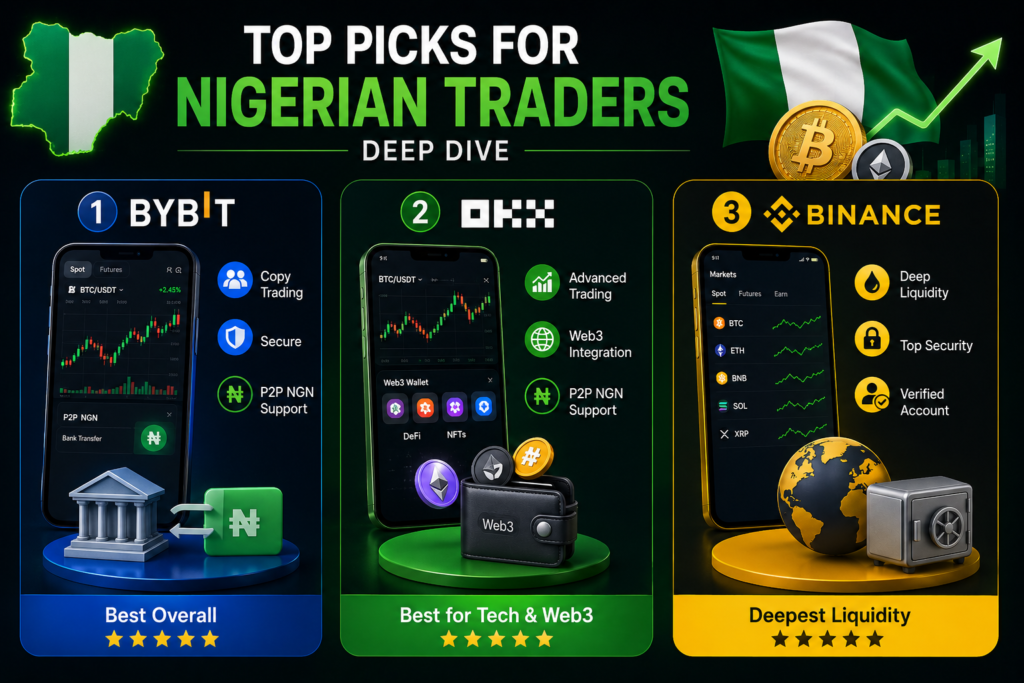
Finding the best crypto exchange in nigeria 2026 involves evaluating how global platforms handle specific local needs. Below is an analytical review of the top three platforms actively serving the Nigerian market, detailing their regulatory status, unique features, and trade-offs.
#1 Bybit: The Best Overall Platform for Features & UX
Bybit has rapidly expanded its presence to become a premier destination for local traders. It successfully combines advanced trading features with a highly accessible user interface. For a detailed breakdown of the platform’s global features, trading fees, and security architecture, read our full Bybit Review 2026.
-
P2P NGN Integration: Bybit features an incredibly active P2P marketplace supporting direct Naira bank transfers. The platform regularly launches dedicated liquidity programs for African market makers, ensuring the NGN book remains deep with competitive spreads.
-
Key Features: Outside of standard spot trading, Bybit is globally recognized for its robust derivatives infrastructure, copy trading systems, and structured yield products. The copy trading feature is popular among local beginners, allowing them to replicate the strategies of experienced global traders.
-
Regulatory Stance & Availability: Bybit remains fully operational and unrestricted in Nigeria. It implements standard Tier 1 Identity Verification (KYC), requiring users to link valid government-issued IDs to maintain full access to P2P and withdrawal functions.
#2 OKX: Best for Technical Altcoin Trading & Web3 Integration
OKX stands out as an exceptional option for intermediate and professional traders who require advanced charting tools alongside deep asset variety. The platform seamlessly bridges the gap between centralized trading services and decentralized Web3 applications.
-
P2P NGN Integration: OKX offers a highly reliable P2P platform with native NGN support. It includes built-in merchant rating systems and historical completion rates, helping users avoid unreliable counterparties during fiat exchanges.
-
Key Features: OKX provides a massive selection of utility altcoins, advanced options/futures pairs, and an integrated Web3 wallet. This built-in custody solution allows users to easily interact with decentralized finance (DeFi) protocols and NFT marketplaces directly through the main application.
-
Regulatory Stance & Availability: Fully accessible across Nigeria. OKX maintains strict compliance with identity and transaction-linkage rules, ensuring its platform operations remain stable under current regulatory frameworks.
#3 Binance: Deepest Global Liquidity with Ongoing Local Adjustments
Binance remains one of the largest and most liquid cryptocurrency platforms in the world. However, its history within the local market requires careful navigation. For a comprehensive look at its global liquidity pools and account structures, see our Binance Review 2026.
Important Operational Context: In 2024, Binance faced severe regulatory friction with Nigerian authorities, resulting in the suspension of direct Naira trading pairs and various structural service restrictions. While the platform is currently engaged in out-of-court settlements regarding tax compliance, standard NGN spot pairs remain heavily altered.
-
P2P NGN Integration: While global liquidity is unmatched, local P2P options on Binance are subject to strict monitoring and shifting availability compared to historical levels. Many users utilize alternative platforms for fiat on-ramps before transferring crypto assets to Binance to access its deep spot order books.
-
Key Features: Unrivaled selection of trading pairs, massive liquidity for large-volume traders, institutional-grade security architecture, and a highly comprehensive suite of financial products.
-
Regulatory Stance & Availability: Accessible to local users, but subject to strict tracking. Users must link accounts to verified national identities and tax records to ensure full compliance with current regulatory requirements.
How to Deposit and Withdraw Money Using NGN (Naira)
Because traditional credit card deposits and direct banking API integrations face strict limitations, peer-to-peer (P2P) architecture is the primary method for moving fiat currency into the digital asset ecosystem. Understanding this flow is essential for safe trading.
The following step-by-step sequence outlines how to securely buy cryptocurrency using a local bank transfer on a P2P marketplace:
Crypto Regulation in Nigeria: Navigating the Legal Framework
The regulatory stance on digital assets has transitioned from initial skepticism toward a structured, comprehensive framework focused on taxation, data collection, and financial oversight.
The Evolution of the Central Bank Position
The historic 2021 circular from the Central Bank of Nigeria (CBN)—which strictly banned commercial banks from processing cryptocurrency-related transactions—has been superseded by pragmatism. Rather than attempting an outright ban on a multi-billion dollar parallel market, financial regulators have chosen to bring digital assets into the formal financial system. This shift allows for clearer oversight, capital flight monitoring, and systematic revenue collection.
SEC Nigeria Crypto Framework and Identity Rules
The Securities and Exchange Commission (SEC) of Nigeria enforces an explicit regulatory framework for Virtual Asset Service Providers (VASPs). Under these rules, any platform operating within the country must register formally, maintain transparent transaction histories, and meet strict institutional capital requirements.
Furthermore, stringent identity and tax linkage laws mandate that all registered cryptocurrency platforms connect user trading profiles directly to verified national identity systems and Tax Identification Numbers (TIN).
| Regulatory Body | Core Mandate & Enforcement Focus | Practical Impact on Traders |
| Securities and Exchange Commission (SEC) | VASP licensing, consumer protection, anti-fraud enforcement | Platforms must register and maintain transparent operational histories. |
| Nigeria Revenue Service | Systematic collection of capital gains taxes on realized crypto profits | Centralized exchanges must submit monthly transaction reports; capital gains can be taxed up to 25%. |
| Central Bank of Nigeria (CBN) | Anti-Money Laundering (AML) monitoring and banking rail stability | Commercial banks monitor accounts for high-velocity P2P patterns to prevent illicit capital flows. |
Anonymous trading on centralized, compliant exchanges has effectively ended. Platforms that fail to comply with monthly transaction reporting rules face heavy financial penalties or potential license revocation. While these rules add compliance requirements for everyday retail traders, they provide a much higher degree of long-term operational predictability, significantly reducing the likelihood of a sudden, industry-wide ban.
Specific Risks in the Nigerian Crypto Market
While trading digital assets presents massive opportunities for wealth preservation, local traders must navigate unique, country-specific operational risks.
Shifting Bank Account Enforcement
Although the regulatory environment has normalized, individual commercial banks still maintain highly sensitive internal fraud detection systems. If a user’s personal bank account exhibits high-velocity, round-the-clock P2P transaction patterns, automated systems may flag or temporarily suspend the account for review. Traders should avoid using a single primary salary account for P2P transactions; instead, utilize dedicated secondary accounts to protect core everyday funds.
P2P Fraud and Triangulation Scams
Bad actors frequently attempt sophisticated manipulation schemes on P2P networks. A common method is the triangulation scam, where a fraudulent buyer utilizes a compromised or stolen third-party bank account to send you funds. If you accept the transfer and release the cryptocurrency, the actual owner of the bank account will eventually report the fraudulent transaction. This can lead to your bank account being swept into a broader police investigation or frozen as part of an illicit money trail.
Rule of Thumb: Always verify that the name on the incoming bank transfer matches the verified identity displayed on the exchange’s P2P profile exactly. If the names do not match, immediately initiate a refund to the sending account and file a formal dispute with the platform’s support team.
High P2P Market Spreads During Volatility
During periods of extreme global market volatility or sudden dips in the value of the Naira, the spread on local P2P order books can widen dramatically. Fear or sudden demand spikes can cause merchants to price USDT at a premium well above the official parallel bank rates. Retail traders who buy during these panic-driven cycles face immediate capital drawdowns once market spreads stabilize.
Frequently Asked Questions (FAQ) for Nigerian Users
Is cryptocurrency legal in Nigeria?
Yes. Cryptocurrency trading is legal. The regulatory approach focuses on oversight and taxation rather than prohibition. Virtual Asset Service Providers must operate under SEC guidelines, and users are required to link their trading accounts to verified national identity and tax databases.
Can I deposit Naira directly using my local debit or credit card?
Direct deposits using local NGN bank cards remain highly restricted or unavailable on major global platforms due to banking compliance frameworks. Peer-to-peer (P2P) trading via local bank transfers remains the most reliable and highly used method for depositing and withdrawing fiat currency.
What happens if I forget to use a blank memo during a P2P transfer?
Including terms like “crypto,” “Bitcoin,” or specific exchange names in your bank transfer description can trigger automated compliance flags within local banking systems. This often results in a temporary or permanent freeze on your bank account. Always follow platform safety guidelines and keep payment memos completely neutral.
How are cryptocurrency gains taxed under local laws?
Under updated digital asset rules, profits realized from cryptocurrency transactions are treated as taxable income. Registered platforms are required to submit transaction reporting data to the Nigeria Revenue Service, and realized capital gains can face personal income tax rates up to 25%.
Which exchange offers the lowest P2P transaction fees?
Bybit and OKX offer highly competitive fee structures for peer-to-peer trading. While platforms generally do not charge makers or takers high flat fees for utilizing the escrow service, users must carefully evaluate the individual exchange rates set by merchants within the order book to minimize spread costs.
Conclusion & Next Steps
Finding the best crypto exchange in nigeria 2026 requires assessing your trading volume, feature requirements, and risk tolerance. Platforms like Bybit and OKX offer a strong balance of advanced trading tools, deep P2P Naira liquidity, and stable regulatory compliance.
As the local market continues to mature under clear SEC and tax reporting frameworks, the key to successful trading lies in using disciplined operational security. Always leverage secure escrow platforms, double-check transaction identities, and stay informed on local compliance rules to protect both your capital and your banking relationships.
To compare how regional market dynamics and localized banking restrictions affect digital asset trading across other developing economies, feel free to read our comprehensive guide on the [Best Crypto Exchange in Pakistan 2026] or explore our broader global analysis of the [Best Crypto Exchanges 2026].
Disclaimer: Cryptocurrencies and digital assets are highly volatile financial instruments. Trading involves significant risk, including the potential loss of all invested capital. This content is compiled strictly for informational and educational purposes and does not constitute financial, legal, investment, or professional advice. Nigerian traders should conduct independent research, understand local tax and regulatory obligations, and carefully consider their personal financial situations and risk tolerances before participating in digital asset markets.