

Selecting your first crypto exchange in 2026 feels a bit like trying to pick a favorite child — both Bybit and Binance are industry titans that have survived multiple bear markets and regulatory storms. If you’re a beginner, you’ve likely seen the ads, heard the influencers, and now you’re stuck at the registration screen, wondering where your money is actually safer.
Here’s the thing: while Binance remains the “Amazon of Crypto” with an ecosystem that spans everything from NFTs to complex institutional lending, Bybit has carved out a massive niche as the go-to platform for smooth, high-speed trading and user-friendly features. In practice, the best exchange in this Bybit vs Binance 2026 comparison isn’t about which one has the most users — it’s about which one won’t leave you feeling lost in a sea of buttons and charts.
In this guide, we’re stripping away the marketing fluff to compare both platforms side-by-side. You’ll learn exactly how much they charge, how they protect your assets, and most importantly, which one actually fits your trading style.
Before we dive into the weeds, let’s look at the hard numbers. As of April 2026, both exchanges have solidified their status in the top three globally by trading volume.
| Feature | Bybit | Binance |
|---|---|---|
| Founded | 2018 | 2017 |
| Total Users | 50M+ | 240M+ |
| Headquarters | Dubai, UAE | Global (Regional Hubs) |
| Coin Selection | 400+ | 350+ (Core) / 500+ (Global) |
| Trust Score | 10/10 (CoinGecko) | 10/10 (CoinGecko) |
| Proof of Reserves | Monthly Reports (32nd released) | Real-time Merkle Tree + SAFU |
What most beginners don’t realize is that while Binance is significantly larger, Bybit has actually overtaken many legacy players to become the #2 exchange for derivatives volume globally. Size isn’t everything — and this comparison will show you exactly why.
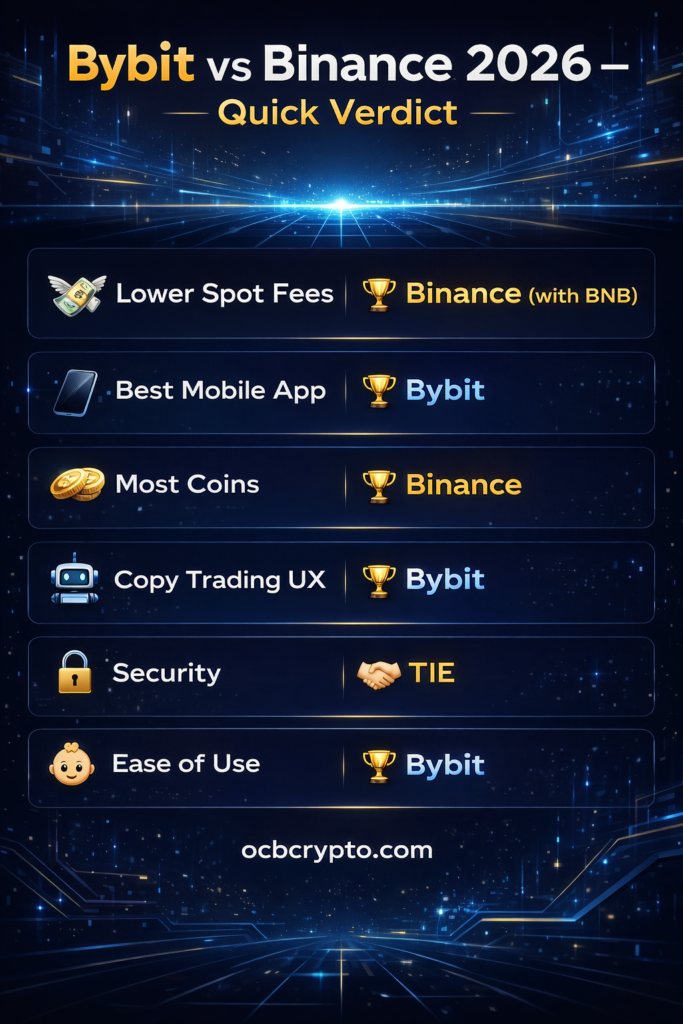
Bybit vs Binance 2026 Fees: Who Actually Wins on Your Wallet?
Fees are the silent killer of crypto portfolios. If you aren’t careful, a “cheap” trade can become expensive once you factor in withdrawal costs. Let’s break it down properly.
Spot Trading Fees
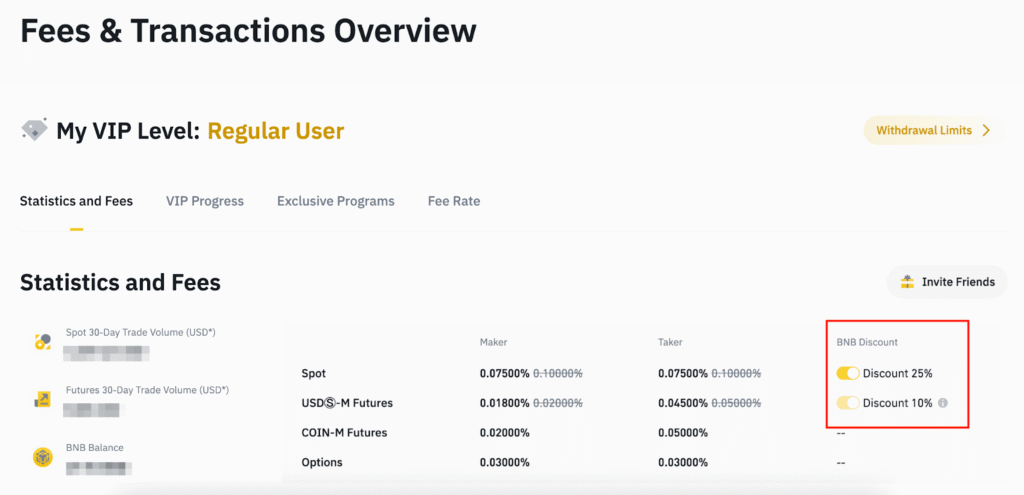
Both exchanges currently stick to a base 0.1% maker/taker fee for spot trading. However, the ways you can lower these fees differ significantly.
- Binance: Hold BNB (Binance Coin) and use it to pay fees, and you get a 25% discount — bringing your cost down to 0.075%. It sounds small, but it adds up fast if you’re trading daily.
- Bybit: Doesn’t offer the same native token discount for spot, but their VIP tiers are generally easier to reach for active retail traders.
Derivatives (Futures) Fees
This is where Bybit truly shines. In 2026, Bybit’s maker fees for perpetual contracts sit at a competitive 0.02%, with taker fees at 0.055%. Binance is nearly identical on paper, but Bybit’s engine is widely regarded by the trading community as more reliable during high-volatility events — meaning fewer system freezes when the market moves fast.
⚠️ Risk Warning: Futures and leveraged products carry substantial risk and are not suitable for all investors. You could lose more than your initial deposit. Never trade with money you cannot afford to lose.
Withdrawal Fees
Binance often has slightly higher withdrawal fees for small-cap altcoins. Bybit has optimized its fiat on-ramps to keep entry costs low for beginners.
Pro Tip: Always check the network before you withdraw. Sending USDT via Tron (TRC-20) or Arbitrum is almost always cheaper than using Ethereum (ERC-20). This one habit can save you real money over time.
Security Comparison: Is Your Money Actually Safe on Bybit vs Binance?
Binance: SAFU Fund and Proof of Reserves
Look, in this post-FTX world, the only rule that actually matters is “trust but verify.” You’ve probably heard that a thousand times by now — but how do you actually know your money is sitting where they say it is? Binance handles this with their SAFU Fund, an emergency insurance pot worth over $1 billion. They also use a Merkle Tree Proof of Reserves system, which lets you verify on the blockchain that your specific account balance is backed 1:1. For more details, you can check Binance’s official Proof of Reserves page.
Bybit: 32 Months of Consecutive Transparency
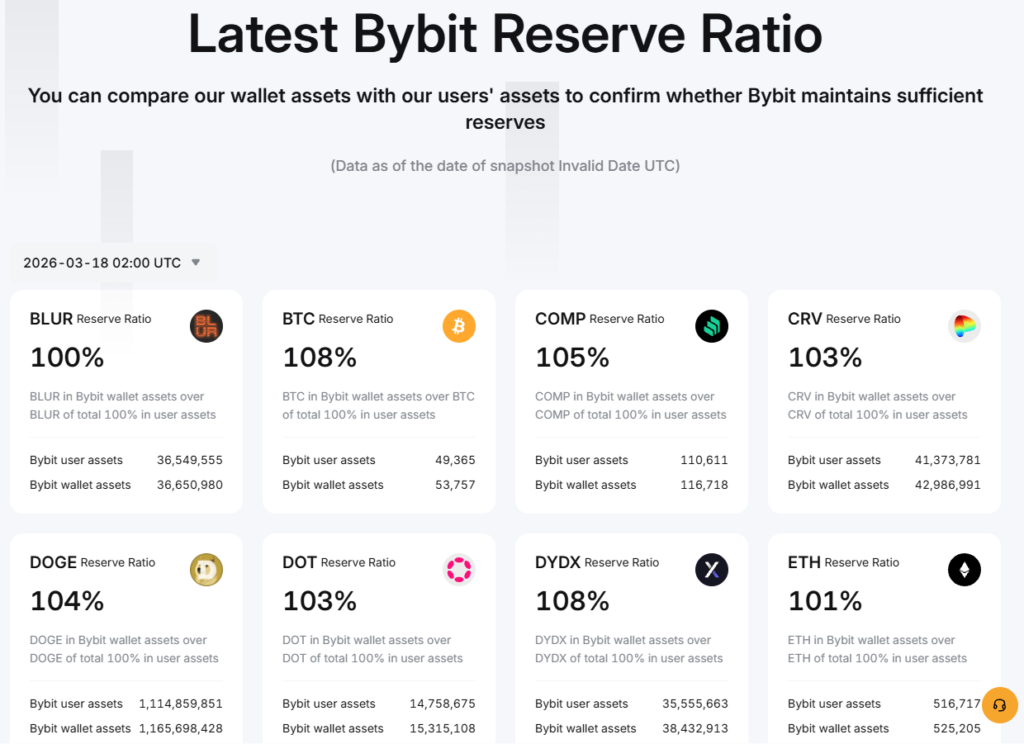
Bybit has really leaned into the transparency side of things. In April 2026, they released their 32nd consecutive Proof-of-Reserves report, showing they’re overcollateralized at 108% for BTC and USDT. That means for every $100 you deposit, they’re holding $108 in their vaults. In my experience, seeing that kind of consistent monthly reporting makes it a lot easier to trust them with daily trading capital. You can verify this yourself at Bybit’s Proof of Reserves dashboard.
But here’s the honest truth from someone who’s been in this industry since 2021: I don’t believe any exchange is ever 100% safe. They’re great for liquidity and quick trades, but I never keep my long-term holdings on any platform. Is any exchange truly unhackable? Probably not. That’s why I always move large holdings to a hardware wallet where I’m the only one with the keys — it’s the only way to truly sleep at night in crypto.
Beginner Experience: UI, Apps, and Copy Trading
Binance: Powerful, But Overwhelming
When you’re just starting out, you don’t need a Bloomberg terminal — you just need an app that’s clean and doesn’t crash when the market gets exciting. In my experience, Binance is a bit of a double-edged sword. I first tried the platform back in 2021 and, honestly, felt completely overwhelmed by “Pro” mode. They do have a “Lite” version that’s perfect for your first week — it hides all the complex charts and just gives you simple “Buy” and “Sell” buttons. But the moment you outgrow that and flip the switch to Pro, you’re hit with a massive ecosystem of Earn products, staking, loans, and their social feed. It’s powerful, sure — but do you really want to feel like you’re piloting a fighter jet just to trade your first $50?
Bybit: Cleaner, More Focused
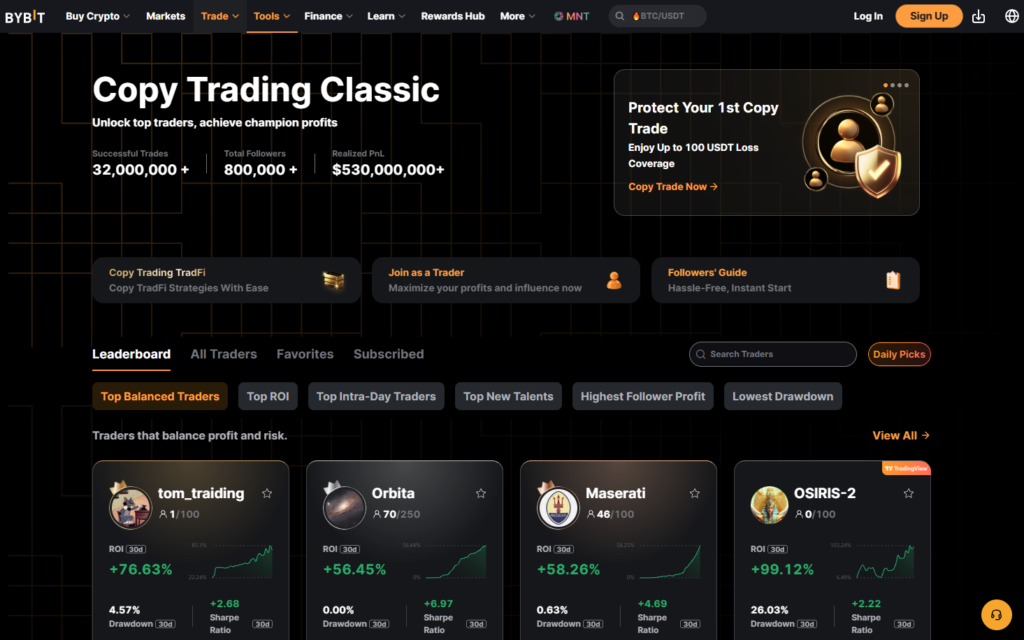
That’s why I eventually started spending more time on Bybit. It just feels more focused. When I first got into futures trading, I switched to Bybit specifically because the interface was so much cleaner and didn’t make my head spin. And in 2026, their mobile app is still arguably the best in the business for active trading. They’ve also really mastered Copy Trading — a feature that lets beginners automatically mirror the trades of experienced “Master Traders.” I’ve used it myself with pretty mixed results. It’s definitely not a “get rich quick” button, and you should go in with realistic expectations. But the interface is far more intuitive than Binance’s version, which makes it a solid starting point if you want a more hands-off approach to the markets.
For a deeper dive into Bybit’s specific tools, check out our full Bybit Review 2026.
Coin Selection and Liquidity
Does it really matter if an exchange has 300 coins or 500? For a beginner, usually not. But here’s the practical difference:
- Binance focuses on “high-quality” listings with strict requirements. If a coin is on Binance, it’s passed significant scrutiny — which is actually reassuring for new investors.
- Bybit is often faster to list trending “narrative” coins like AI or DePIN tokens. If you want to catch a trend before it becomes old news, Bybit often gets there first.
In terms of raw liquidity, Binance is still the undisputed king. This means when you buy or sell larger amounts, the price won’t move against you as much — less slippage, better execution.
Pros and Cons: The Honest Breakdown
Binance Pros and Cons
| ✅ Pros | ❌ Cons |
|---|---|
| Largest liquidity globally | Pro mode is overwhelming for beginners |
| BNB fee discount (25% off) | Interface can feel cluttered and slow |
| Widest product ecosystem | Some Earn/DeFi products have hidden risks |
| Strong SAFU insurance fund | Regulatory issues in several countries |
Bybit Pros and Cons
| ✅ Pros | ❌ Cons |
|---|---|
| Cleaner, more beginner-friendly UI | Smaller liquidity vs Binance |
| Best-in-class mobile trading app | Fewer fiat on-ramp options in some regions |
| Excellent Copy Trading interface | No native token fee discount for spot |
| 32 months of consistent PoR reports | Smaller overall ecosystem |
Regional Availability: Can You Actually Sign Up?
This is often the deal-breaker section — because it doesn’t matter how good an exchange is if you can’t legally access it.
- USA: Neither Global Binance nor Bybit is available to US residents. You’ll need Binance.US (which has fewer features) or a US-regulated exchange like Coinbase.
- UK: Both platforms face heavy FCA restrictions. Basic spot markets are usually accessible, but futures and Earn products are often restricted.
- Asia & Middle East: Both are fully operational and licensed in Dubai under VARA, making them the top choices for users across the Middle East and Southeast Asia.
Frequently Asked Questions
Is Bybit better than Binance for beginners in 2026?
It depends on your goal. If you want a full “super-app” that does everything — NFTs, Pay, Loans, Social — Binance is more comprehensive. But if you want to actually learn how to trade with a clean interface and solid copy-trading tools, Bybit is often the more beginner-friendly choice.
Which exchange has lower fees in the Bybit vs Binance 2026 comparison?
They’re neck-and-neck on base fees. Binance is cheaper if you hold BNB for the 25% discount. Bybit is often better value for high-volume derivatives traders due to their competitive maker/taker structure.
Do I need to complete KYC on both platforms?
Yes. In 2026, no-KYC exchanges are essentially extinct among reputable platforms. Both Bybit and Binance require government-issued ID and selfie verification before you can deposit or trade.
Is my money safer on Binance or Bybit?
Both use cold storage and publish Proof of Reserves. Binance has the added SAFU insurance fund. Bybit has a strong track record with no major exploits. That said — never keep your entire savings on any exchange. Use a hardware wallet for long-term storage.
What happens if an exchange gets hacked?
This is why the SAFU fund and Proof of Reserves matter. Binance’s SAFU is designed to compensate users in extreme scenarios. Bybit’s overcollateralization provides an extra buffer. But again — hardware wallet for anything you can’t afford to lose.
Final Thoughts: Which One Should You Choose?
The Bybit vs Binance 2026 debate doesn’t have a single winner — because they genuinely serve two different types of users.
Choose Binance if you want the largest ecosystem, the highest liquidity, and plan to hold BNB to save on fees. It’s the industry standard for a reason.
Choose Bybit if you want a superior mobile app, you’re interested in Copy Trading, or you’re planning to explore crypto futures with a cleaner interface.
Still undecided? Read our Binance Review 2026 for a full breakdown of their latest features and security updates.
🔔 Want daily exchange promos, fee tips, and market updates? Join 10,000+ traders in our community → t.me/OCBCryptoHub We share real-time insights that help you stay ahead of the curve.
Disclaimer: This article is for educational purposes only and does not constitute financial advice. Cryptocurrency investments carry significant risk, including the potential loss of your entire investment. Always conduct your own research and consult a qualified financial advisor before making any investment decisions. The author’s personal experiences shared in this article are illustrative only and not indicative of typical results.



One thought on “Bybit vs Binance 2026: Which Crypto Exchange Should Beginners Choose?”