In 2026, the long-held “Halving Cycle” theory—the idea that Bitcoin’s price follows a predictable four-year rhythm dictated by supply shocks—has effectively been retired by most institutional analysts.
For over a decade, the halving (the 50% reduction in new Bitcoin supply) was the primary engine of the market. However, by early 2026, the narrative has shifted from a supply-driven market to a demand and macro-driven ecosystem.
What Actually Drives Crypto in 2026?
1. The Marginalization of the Halving
The April 2024 halving was the first to see a new all-time high before the event itself, and 2025 famously broke the “post-halving bull year” script by finishing in the red.
-
Reduced Supply Gravity: Each halving now reduces the daily production by a smaller absolute amount of Bitcoin. In 2026, the 3.125 BTC block reward is a “drop in the bucket” compared to the billions in daily trading volume.
-
ETF Dominance: Spot Bitcoin ETFs now move roughly 12x the daily mined supply. This means institutional “buy” or “sell” buttons at BlackRock or Fidelity have more impact on the price than the miners themselves.
2. The New Engine: Global Liquidity (M2)
In 2026, Bitcoin and Ethereum are no longer viewed as isolated experiments but as high-beta macro assets. Their prices are now tethered to the global money supply ($M2$).
-
The Liquidity Barometer: Crypto has become the most sensitive sensor for “cheap money.” When the Fed or other central banks signal rate cuts or end Quantitative Tightening (QT), crypto reacts faster than stocks.
-
Fiat Debasement Hedge: With sovereign debt reaching record highs in 2026, institutional demand is driven by the need for “alternative stores of value” to protect against the long-term devaluation of the dollar and euro.
3. The “Institutional Era” Pillars
The market structure in 2026 is defined by three new structural forces that didn’t exist in previous cycles:
| Driver | 2026 Impact |
| Corporate Treasuries | Led by firms like MicroStrategy, over 170 public companies now hold Bitcoin, treating it as a standard reserve asset rather than a speculative bet. |
| Regulatory Clarity | The passage of legislation like the CLARITY Act in the U.S. has allowed banks to offer native custody and settlement, removing the “reputation risk” for pension funds. |
| Stablecoin Integration | Stablecoins have moved beyond trading pairs to become the “internet’s dollar,” with 2026 seeing them used for 24/7 cross-border corporate settlements. |
On-Chain Innovation vs. Simple Hype
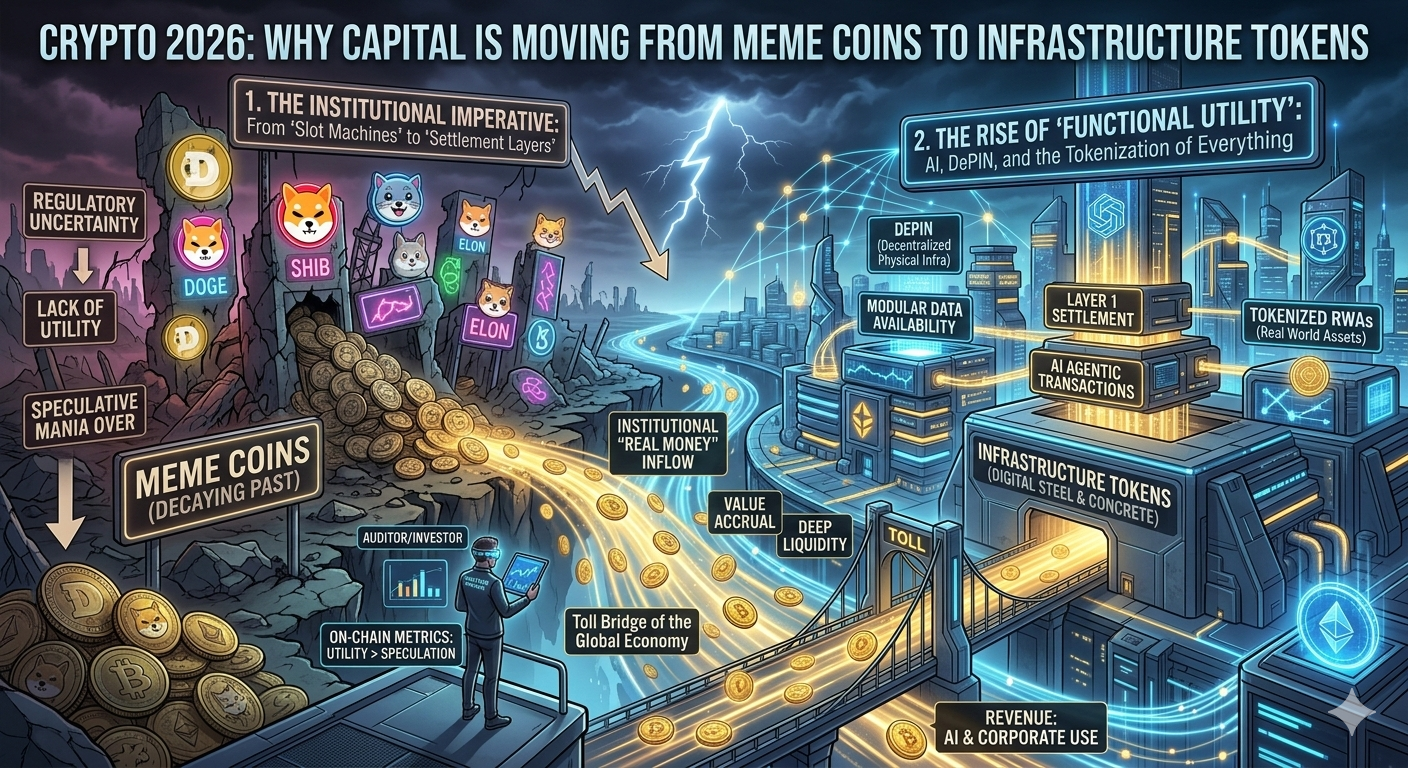
Unlike the 2017 (ICOs) or 2021 (NFTs) manias, 2026 is focused on utility and production:
-
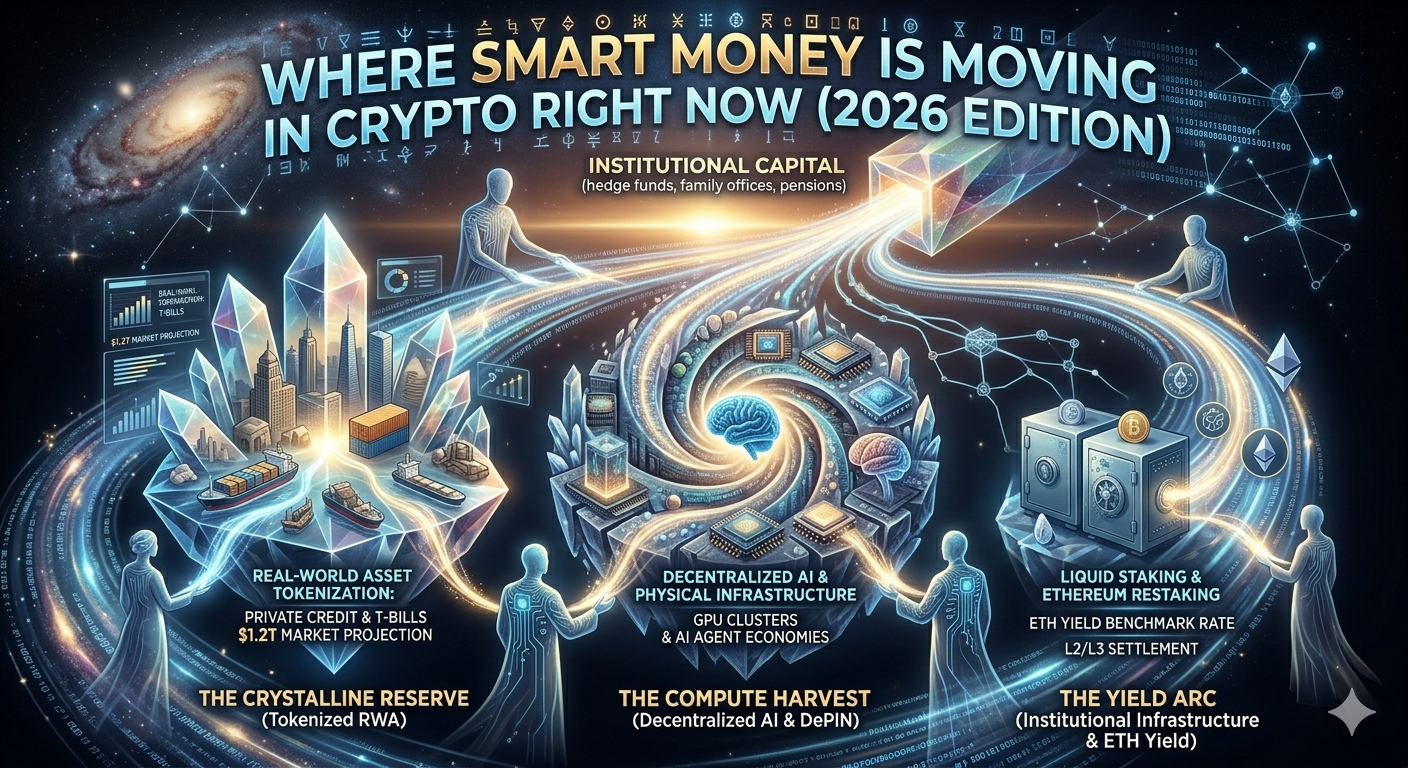
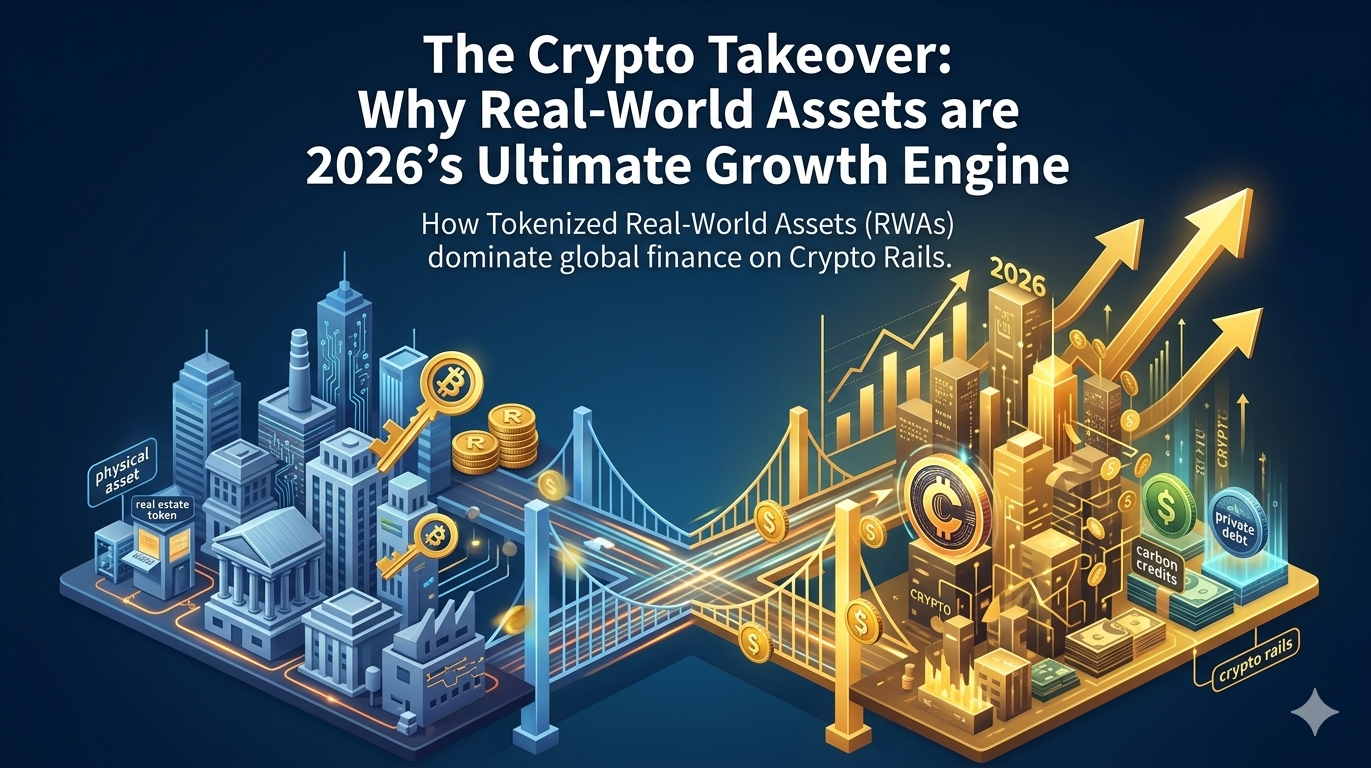
RWA Tokenization: Real-world assets (T-bills, equities, and real estate) are moving on-chain at scale, providing “real yield” that isn’t dependent on token inflation.
-
AI x Crypto: Blockchains are being used as the settlement layer for AI-to-AI transactions, where machines pay each other for compute power and data without needing traditional bank accounts.
The Crypto 2026 Reality Check
While the “four-year cycle” is dead, volatility is not. The market is now “de-risked” (less speculative leverage) but “fragile” (highly sensitive to Fed policy). The 2028 halving is still on the calendar, but the market is no longer counting down to it; it’s watching the Fed’s dot plot instead.
In 2026, the “Reality Check” for crypto isn’t about whether the technology works, but about its transformation into a regulated, institutionalized, and macro-sensitive asset class. The “wild west” era has officially given way to the “Wall Street era.“
Here is the continuation of the 2026 Crypto Reality Check:
1. The Institutional Price Ceiling and Floor
In 2026, the massive influx of institutional capital has created a “dampening” effect on volatility. While we no longer see 90% crashes, we also rarely see 1,000% “moonshots” for major assets.
-
The BTC “Fair Value” Range: Major banks have settled on high-conviction targets. JPMorgan projects Bitcoin to trade around $170,000, while Standard Chartered remains more aggressive with a target of $250,000 by year-end 2026.
-
The ETF Floor: With over $400 billion in assets under management (AUM) across global crypto ETFs, the market now has a structural “buyer of last resort.” Every dip is met with programmatic buying from pension funds and 401(k) allocations.
-
Ethereum’s Pivot: ETH is no longer just “digital oil.” Wall Street now values it as a yield-bearing asset. With targets ranging from $7,000 to $9,000, its price is increasingly driven by the “Tokenization of Everything” (RWAs).
2. The Rise of “Agentic Commerce”
The biggest surprise of 2026 is the intersection of AI and Crypto. We have moved past the hype of “AI tokens” to a functional reality:
-
AI Wallets: Large Language Models (LLMs) now have their own on-chain wallets. AI agents are the primary users of high-speed networks like Solana and Layer 2s, using them to pay for API calls, compute power, and data verification.
-
24/7 Liquidity: AI agents don’t use bank accounts because banks close on weekends. Crypto rails provide the only “always-on” settlement layer capable of keeping up with machine-speed transactions.
3. Regulatory “Adulting”: The Clarity Act
The “Reality Check” includes the end of the war with regulators. In the U.S., the passage of the Clarity Act has provided the one thing big money craved: Rules of the Road.
-
Bank Custody: Your local bank can now legally hold your Bitcoin, making “self-custody” a choice for enthusiasts rather than a necessity for everyone.
-
Stablecoin Legitimacy: Stablecoins like USDC and PYUSD are now integrated into the ACH and SWIFT systems. In 2026, more cross-border value is moved via stablecoins than through traditional wire transfers.
4. The “Altcoin Season” Extinction
The 2026 reality is harsh for “zombie” projects.
-
Value Capture > Hype: Investors are no longer buying tokens based on “roadmaps.” They are looking at PE (Price-to-Earnings) ratios for protocols. If a decentralized exchange (DEX) or lending protocol isn’t generating real fees, its token is heading to zero.
-
Consolidation: The market has consolidated around the “Big Three” (BTC, ETH, SOL) and specialized infrastructure. 95% of the 2021-era “Ethereum Killers” have pivoted to being Layer 2s or have simply faded away.
The 2026 Portfolio Reality
| Asset Class | Role in 2026 | Expected Behavior |
| Bitcoin | Digital Gold / Reserve Asset | Low volatility; tracks M2 money supply. |
| Ethereum | The Global Settlement Layer | Driven by institutional staking and RWA fees. |
| Stablecoins | The “Internet Dollar” | Primary tool for global commerce and yield. |
| DePIN/AI Tokens | The High-Growth “Tech” Wing | Highly volatile; tied to actual hardware/AI usage. |
Final Reality Check: In 2026, crypto is no longer a “protest” against the financial system. It is the financial system’s new back-end. The thrill of the “underground” is gone, replaced by the stability (and boredom) of a mature market.
Conclusion: The Death of the Countdown
By 2026, the “Halving Cycle” has transitioned from a market-moving prophecy into a historical footnote. The transition from a supply-shock model to a demand-driven institutional model is complete. While the code still cuts rewards every four years, the market no longer waits for it with bated breath.
The reality of 2026 is that crypto has finally “grown up,” trading less like a speculative experiment and more like a sophisticated extension of the global financial system.
Key Takeaways for the 2026 Era:
-
The M2 Connection: Bitcoin has solidified its role as the world’s most sensitive “liquidity sponge.” Its price action is now a reflection of global central bank policies rather than internal mining mechanics.
-
Institutional Stewardship: With spot ETFs, corporate treasuries, and pension fund allocations now accounting for a massive share of the circulating supply, “Paper Bitcoin” and institutional flows are the new marginal price drivers.
-
Utility over Hype: The market has bifurcated. While Bitcoin serves as a macro hedge, the rest of the ecosystem (Ethereum, Solana, and beyond) is valued based on productive metrics: transaction fees, RWA tokenization volume, and AI-driven on-chain commerce.
-
A “Boring” Bull Market: The era of 80% drawdowns followed by 1,000% rallies has likely ended. In its place is a more resilient, albeit slower, upward grind—a “gradual, then sudden” maturation that rewards long-term holders over cycle-chasers.
Ultimately, the end of the halving cycle doesn’t mean the end of growth; it marks the beginning of stability and integration. In 2026, the question is no longer “When is the next halving?” but rather “How much of the global economy is moving on-chain?”
Ready to start your cryptocurrency journey?
If you’re interested in exploring the world of crypto trading, here are some trusted platforms where you can create an account:
🔹 Binance – A global leader in cryptocurrency trading.
🔹 Bybit – A user-friendly platform for both beginners and advanced traders.
These platforms offer innovative features and a secure environment for trading and learning about cryptocurrencies. Join today and start exploring the opportunities in this exciting space!
🚀 Want to stay updated with the latest insights and discussions on cryptocurrency?
Join our crypto community for news, discussions, and market updates: OCBCryptoHub on Telegram.
📩 For collaborations and inquiries: datnk710@gmail.com
Disclaimer: Always do your own research (DYOR) and ensure you understand the risks before making any financial decisions.