This detailed analysis explores the transition of the cryptocurrency space, moving from the volatile “Wild West” era of high fragmentation and regulatory uncertainty (Chaos) into a more mature, scalable, and institutionally integrated market (Clarity) by the year 2026.
From Chaos to Clarity: The New Order of Crypto in 2026

The year 2026 is shaping up to be a defining inflection point for the global crypto market — a moment when the industry finally steps out of its turbulent adolescence and begins to resemble a mature financial ecosystem.
After years of extreme highs and devastating lows, crypto has endured a full spectrum of transformation: from the euphoric bull runs of 2021 and 2023 to the spectacular collapses that followed — bankrupt exchanges, unsustainable tokenomics, and disillusioned retail investors. Yet, through each crisis, the industry has quietly evolved. Developers kept building, regulators began to engage, and institutional capital slowly returned to the table.
What’s emerging in 2026 is not another speculative frenzy, but a structural reset — a new, data-driven foundation that signals crypto’s transition from chaos to clarity.
At the core of this transformation lies what many are calling “The New Order of Crypto” — an ecosystem defined by three interlocking pillars:
-
Regulatory certainty, which provides legitimacy and investor protection;
-
Scalable infrastructure, which enables real-world applications at global scale; and
-
Institutional dominance, as traditional finance integrates blockchain into its core systems.
Together, these forces are reshaping digital assets from a volatile experiment into a disciplined, transparent, and globally recognized component of the modern financial landscape.
For the first time, crypto isn’t fighting to prove its existence — it’s proving its endurance.
The Regulatory Crucible: Establishing Global Standards
The most significant shift from “Chaos” to “Clarity” is the global move towards comprehensive regulation. The era of regulatory arbitrage—where projects migrated based on the leniency of jurisdictions—is fading.
Key Developments by 2026:
- Global Harmonization: Driven by foundational frameworks like the European Union’s MiCA (Markets in Crypto-Assets), major economies (including the US, UK, and APAC regions) have established clear, principles-based rules for stablecoins, centralized exchanges, token classifications (securities vs. commodities), and DeFi governance.
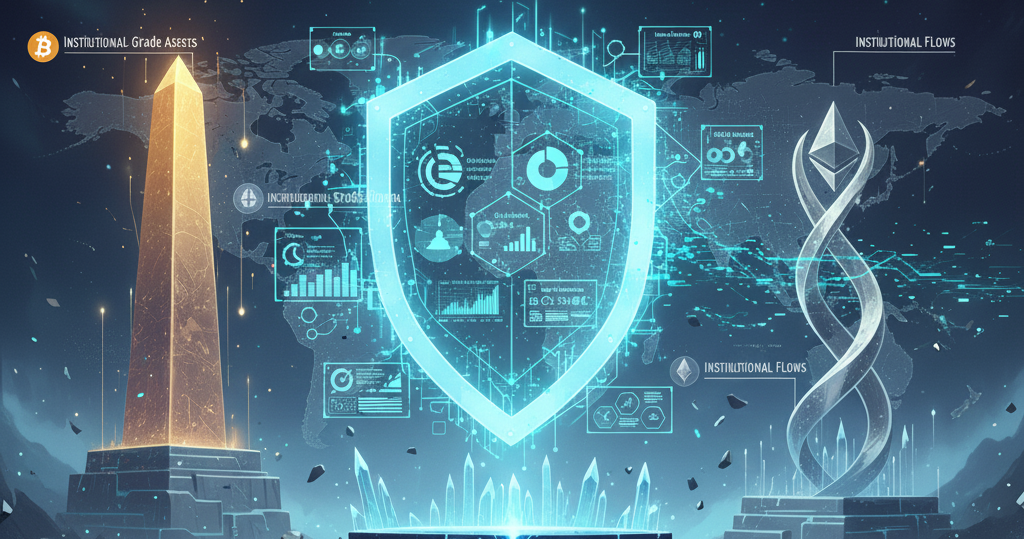
- Institutional Confidence: This regulatory clarity unlocks unprecedented institutional capital. With clear compliance paths, major sovereign wealth funds, pension funds, and traditional asset managers treat crypto as a legitimate, regulated asset class. The launch of global Spot Bitcoin and Ethereum ETFs has solidified this acceptance.
- The End of the “Wild West”: Projects and platforms that resist compliance are increasingly marginalized, losing access to key banking rails and institutional partners. This forces bad actors and unsustainable business models out of the ecosystem, cleaning up the market structure.
The Infrastructure Revolution: Scaling and Modularity
The chaotic user experience of previous cycles—marked by network congestion, exorbitant gas fees, and chain fragmentation—is replaced by robust, scalable architecture. In 2026, transactions are nearly instantaneous and cost-effective, driven by advanced Layer 2 (L2) technology.
The New Architecture:
- L2 Dominance: The user layer has decisively moved onto Layer 2 rollups (both Optimistic and ZK-based). These L2s are no longer merely “bridges” but self-contained ecosystems with shared liquidity and unified standards, settling data reliably and securely on the underlying Layer 1 (e.g., Ethereum).
- Modular Architecture: The concept of the blockchain monolith is obsolete. The New Order favors modular architecture, where chains specialize: one layer for data availability, one for execution (L2s), and one for settlement (L1s). This design significantly enhances throughput, performance, and decentralization.
- Account Abstraction (AA): A major roadblock to mass adoption was the complexity of private keys and seed phrases. By 2026, Account Abstraction is standard, allowing users to interact with blockchains using familiar methods like social recovery, biometric login, and batched transactions, dramatically improving the user experience and security for the masses.
Institutionalization and Real-World Value (RWA)
The market narrative shifts from speculative bets on meme coins and unproven protocols to tokenized real-world value and utility. DeFi stops being an isolated financial system and begins integrating with TradFi.
The Financialization of Everything:
- RWA Tokenization Boom: Tokenization of Real-World Assets (RWAs)—such as treasury bonds, real estate, and private equity—becomes a trillion-dollar industry. This provides institutional investors with a compliant way to access DeFi-like liquidity and settlement efficiency, while bringing stable, yield-bearing assets on-chain.
- Institution-Grade DeFi: Decentralized Finance (DeFi) protocols mature, featuring integrated KYC/AML (Know Your Customer/Anti-Money Laundering) solutions for institutional pools. Liquidity is deeper, risks are better modeled, and smart contract security is standardized by major auditing firms, moving away from experimental code to battle-tested primitives.
- The Web3 Utility Drive: Beyond finance, Web3 applications finally move past speculation. Ownership of digital assets (NFTs) is integrated into major gaming, brand, and social media platforms, providing clear, persistent utility (e.g., digital identity, loyalty programs) rather than just being collectible JPEGs.
The “New Order of Crypto in 2026” represents a successful maturation. The volatility and uncertainty that characterized the earlier chaotic phase are not eliminated entirely, but they are significantly mitigated by robust regulation, highly efficient technology, and institutional guardrails.
In this clear new environment, success for crypto projects will be determined less by marketing hype and more by three core factors: Compliance, Scalability, and Provable Utility. The market becomes less of a lottery and more of a predictable, yet still revolutionary, financial and technological force.
The Decentralized Identity (DID) and Privacy Stack
A crucial element of the New Order is the resolution of the tension between transparency (the core feature of public blockchains) and privacy (a necessity for mass and institutional adoption). By 2026, sophisticated solutions allow for compliance without sacrificing individual data sovereignty.
- Verified Decentralized Identity (DID): DID standards become widely adopted, allowing users to prove identity, age, or accreditation (e.g., “I am an accredited investor”) without revealing the underlying personal data. This enables participation in compliance-focused DeFi pools or regulated marketplaces without exposing KYC data to every single protocol.
- Zero-Knowledge (ZK) Technology Maturation: Zero-Knowledge Proofs (ZKPs) move from theoretical concepts to practical, widespread application across finance and computation. ZKPs enable verifiable computations on private data, allowing businesses to run complex models or conduct audits on-chain while keeping transaction details, balances, and sensitive information hidden. This is the lynchpin for institutional adoption of private settlement layers.
- Privacy-Enhancing Wallets: Wallets evolve into integrated identity hubs, managing DIDs, ZKP credentials, and traditional crypto assets. These are often non-custodial but feature institutional-grade security like multi-party computation (MPC) and social recovery, bridging the gap between security and usability.
Monetary and Governance Maturity
The stability and operational efficiency of the core assets and their governance structures solidify, moving away from erratic, community-driven drama to predictable, automated processes.
- The Stablecoin Standard: The fragmented stablecoin market consolidates around a few, highly regulated, fiat-backed coins (digital dollars, euros) that operate under tight regulatory oversight (e.g., a MiCA-like framework). Decentralized stablecoins that have survived regulatory and market scrutiny maintain a niche but vital role as the permissionless money of DeFi. The clarity regarding stablecoin backing and auditing is fundamental for global payment systems integration.
- Evolved Decentralized Autonomous Organizations (DAOs): DAO governance improves through professionalization. Protocols adopt hybrid governance models that integrate legal wrappers, specialized sub-committees (for treasury management, development, and risk), and formalized voting structures. This ensures agility in decision-making while maintaining decentralization, avoiding the slow, often chaotic, community votes of the past.
- Sustainable Tokenomics: The industry learns from past pump-and-dump cycles. New projects launch with tokenomic models focused on long-term value accrual, revenue sharing, and utility creation, rather than pure supply inflation and speculation. This shift leads to more resilient assets and healthier protocol treasuries.
Conclusion: The Era of Responsible Growth and Integration
The transition from the “Chaos” of the 2017-2024 era to the “Clarity” of 2026 marks the successful institutionalization and financialization of the asset class.
Chaos was characterized by:
- Uncertain Regulation (Wild West)
- Fragmentation and Low Scalability (High Gas Fees)
- Speculation (Meme Coins and Hype)
- User Vulnerability (Seed Phrases and Hacks)
Clarity is defined by:
- Regulatory Certainty: Clear rules enable trillions in institutional capital.
- Modular Scalability: Layer 2s and ZK-tech create a seamless, cheap user experience.
- Real-World Utility: RWA tokenization and DID bring tangible value on-chain.
- Maturity: Professional governance and sustainable tokenomics foster long-term stability.
In 2026, crypto is no longer a fringe asset class but a digitally native, parallel financial and data infrastructure. It provides superior efficiency and transparency to traditional systems, yet is governed by rules and technology that ensure greater stability, accessibility, and verifiable privacy. This New Order shifts the focus from investing in risk to investing in verifiable, technological revolution, positioning the ecosystem for its next phase of exponential, yet responsible, growth.
Ready to start your cryptocurrency journey?
If you’re interested in exploring the world of crypto trading, here are some trusted platforms where you can create an account:
🔹 Binance – A global leader in cryptocurrency trading.
🔹 Bybit – A user-friendly platform for both beginners and advanced traders.
These platforms offer innovative features and a secure environment for trading and learning about cryptocurrencies. Join today and start exploring the opportunities in this exciting space!
🚀 Want to stay updated with the latest insights and discussions on cryptocurrency?
Join our crypto community for news, discussions, and market updates: OCBCryptoHub on Telegram.
📩 For collaborations and inquiries: datnk710@gmail.com
Disclaimer: Always do your own research (DYOR) and ensure you understand the risks before making any financial decisions.