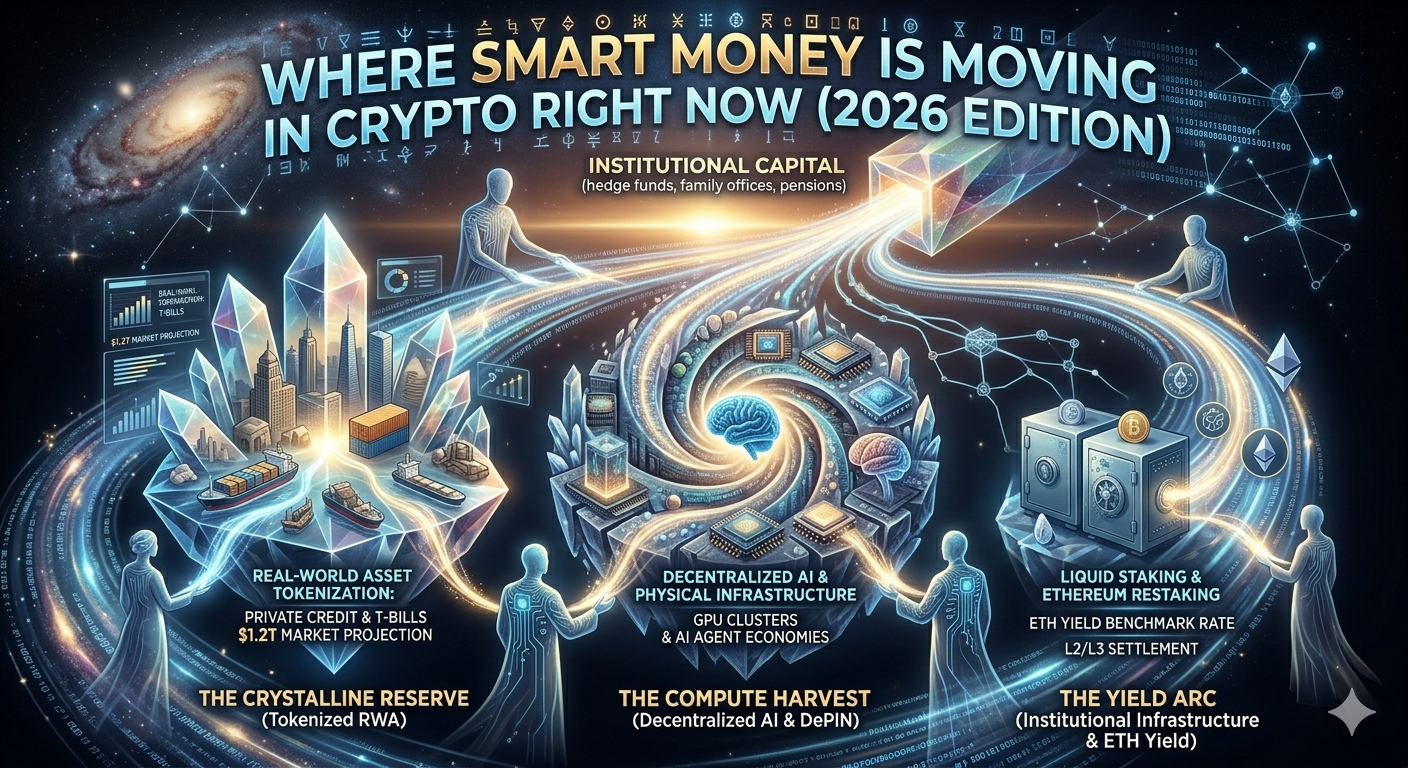
In 2026, the era of “moon missions” and overnight meme-coin millionaires has largely matured into a sophisticated, institution-led financial landscape. For a beginner, the mantra “Build First, Not Fast” is the only sustainable way to survive a market now dominated by Bitcoin ETFs, AI-driven trading, and strict global regulations.
The following guide outlines how to build a resilient foundation in today’s crypto environment.
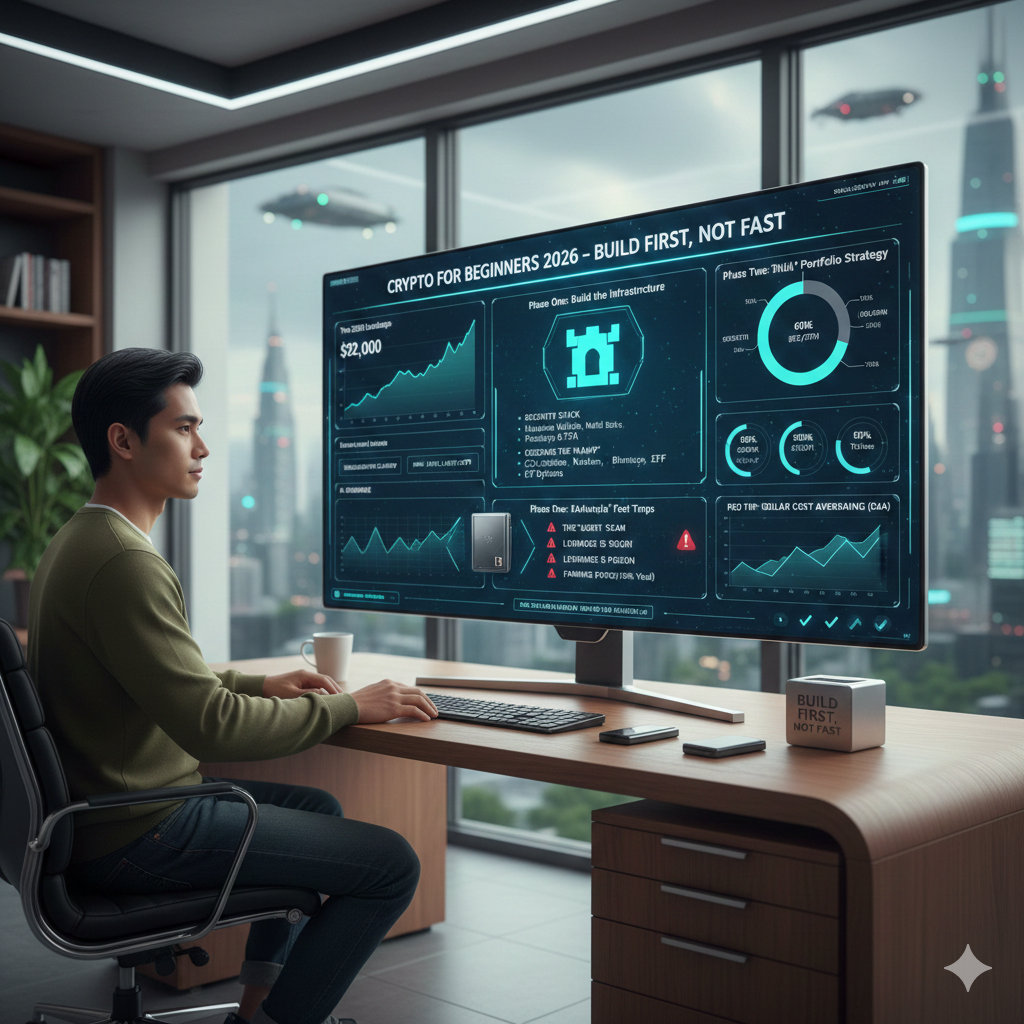
Crypto for Beginners 2026 – Build First, Not Fast
The 2026 Landscape: What has Changed?
The “Wild West” days are mostly over. Here is the current reality:
-
Institutional Stability: Bitcoin (trading near $92,000) and Ethereum are now considered “digital commodities.” They move more like tech stocks than lottery tickets.
-
Regulatory Clarity: With the implementation of acts like MiCA in Europe and the CLARITY Act in the US, your identity (KYC) is required on almost all platforms. This reduces scams but increases the need for tax compliance.
-
AI Dominance: Professional firms now use “Agentic AI” to trade. If you try to “day trade” against them without a plan, you are effectively donating your money to a bot.
Phase One: Build the Infrastructure (The “First” Step)
Before buying a single dollar of crypto, you must build your “fortress.”
A. The Security Stack
In 2026, the biggest threat isn’t a market crash; it’s a security breach.
-
Hardware Wallets are Mandatory: For anything over $500, use a cold storage device (e.g., Ledger, Trezor). If you don’t own the keys, you don’t own the coins.
-
The “Metal” Backup: Paper fades and burns. Store your 12-24 word recovery phrase on a metal seed plate.
-
Passkeys & 2FA: Move away from SMS-based 2FA (which is vulnerable to SIM-swapping). Use hardware security keys (like Yubico) or authenticator apps.
B. Choosing the “On-Ramp”
Stick to regulated, high-liquidity exchanges.
-
Centralized (CEX): Coinbase, Kraken, or Binance are the “banks” of crypto. They are the easiest way to turn your local currency into digital assets.
-
ETF Options: If you don’t want to manage private keys, 2026 offers highly liquid Spot ETFs for BTC, ETH, and even SOL through traditional brokerage accounts.
Phase Two: The “Build First” Portfolio Strategy
Stop looking for the “next 100x” coin. Instead, build a core that allows you to sleep at night.
The “60/30/10” Rule for 2026
| Allocation | Asset Type | Why? |
| 60% | Core (BTC / ETH) | These are the “Blue Chips.” They provide the foundation and are now backed by pension funds. |
| 30% | Growth (SOL / RWA) | Focus on high-speed chains (Solana) or Real World Assets (RWA) like tokenized treasury bills. |
| 10% | Speculative | This is your “fun money” for AI tokens or new protocols. If this goes to zero, your life doesn’t change. |
Pro Tip: Use Dollar Cost Averaging (DCA). In a mature 2026 market, buying $50 every Tuesday is statistically superior to trying to “time the bottom” of a volatile asset.
Phase Three: Avoiding the “Fast” Traps
“Fast” is the enemy of “Rich” in crypto. Watch out for these 2026-specific pitfalls:
-
The “Agent” Scam: Beware of social media bots promising “AI-driven returns.” If an AI could guarantee 1% profit a day, the creator wouldn’t be selling it to you for $50.
-
Leverage is Poison: Beginners often use 10x or 50x leverage to “catch up.” In 2026’s liquid market, “wicks” (sudden price spikes) will liquidate your position in seconds. Trade spot only.
-
Farming Fatigue: High-yield DeFi “farms” often collapse. If the yield is over 10-15%, ask yourself: Where is that money actually coming from?
In 2026, the strategy for a beginner moves from “buying tokens” to “participating in ecosystems.” If the first part of your journey was about building your fortress (security and core assets), the second part is about understanding the two massive shifts that have defined this year: The Tokenization of Everything and Active Capital Efficiency.
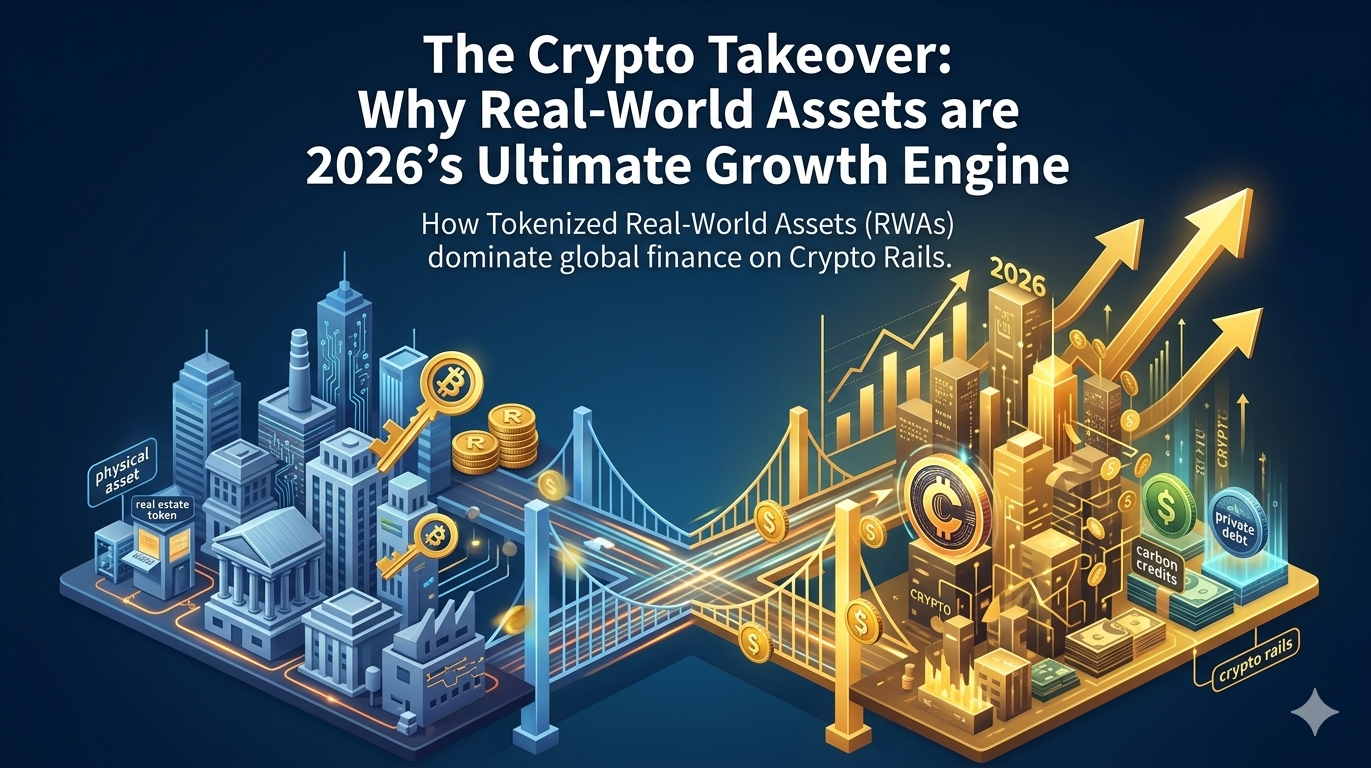
The Rise of “Real World Assets” (RWA)
By 2026, the most successful investors have stopped chasing “pure” digital tokens and started buying RWAs.
-
What are they? These are traditional assets—like U.S. Treasuries, gold, or commercial real estate—moved onto the blockchain.
-
Why they matter: They provide “Real Yield.” Instead of earning rewards in a volatile meme coin, you earn yield backed by the U.S. government or rental income from a building in Singapore.
-
The 2026 Strategy: Look for projects like Ondo Finance or BlackRock’s BUIDL fund. In 2026, you can own 1/1000th of a skyscraper and receive your “rent” in stablecoins every second.
Staking vs. Restaking: The New Yield Curve
In 2026, “Staking” (locking up your coins to help run a network) is considered the “savings account” of crypto. However, Restaking has become the high-performance engine for advanced beginners.
-
Staking: You lock ETH and get ~3–4% annual return. Safe, steady, boring.
-
Restaking (e.g., EigenLayer): You take your already-staked ETH and “re-lend” its security to other services like AI networks or oracles.
-
The Risk/Reward: You earn an extra 2–5% (Totaling 6–9%), but you face “slashing” risk. If the second service fails or gets hacked, you could lose a portion of your original ETH.
-
Beginner Tip: Start with Liquid Staking Tokens (LSTs) like stETH. They let you earn yield while keeping your money “liquid” so you can sell it at any time.
DePIN: Getting Paid for Your Physical World
A major “Build First” trend in 2026 is DePIN (Decentralized Physical Infrastructure Networks). This is where you use your hardware to earn crypto.
-
Drive to Earn: Projects like Hivemapper pay you in tokens for simply driving with a specific dashcam that helps build a decentralized Google Maps.
-
Internet to Earn: Projects like Helium or DAWN reward you for sharing your extra home internet bandwidth with neighbors.
-
Storage to Earn: If you have an old PC with a massive hard drive, you can “rent” that space to the Filecoin network.
The 2026 Philosophy: Why buy a token with a credit card when you can earn it by living your normal life? This is the ultimate “slow and steady” build.
The Tax & Regulatory “Reality Check”
In 2026, “I didn’t know” is no longer a valid excuse for the IRS or international tax authorities.
-
Automatic Reporting: Under DAC8 (EU) and CARF (OECD), exchanges now automatically send your transaction history to your government.
-
The 1099-DA: In the U.S., you will receive a 1099-DA form from your broker just like you do for stocks.
-
Strategy: Use crypto tax software (like CoinLedger or Koinly) from Day 1. Sync your wallets every month. Trying to reconstruct three years of trades in one night is a recipe for a massive fine.
Summary: Your 2026 “Build” Schedule
If you want to build wealth rather than just “gamble,” follow this timeline:
-
Month 1: Set up your hardware wallet and buy $100 of BTC/ETH. Do nothing else.
-
Month 3: Explore Layer 2s (Base, Arbitrum, or Optimism). These are “sub-networks” where fees are less than $0.01. Move $20 there to learn how to use a decentralized exchange (DEX).
-
Month 6: Look into RWA Yields. Move a small portion of your savings into tokenized T-Bills to see how “on-chain” interest feels.
-
Month 12: Evaluate your Restaking or DePIN options. By now, you’ll have the “crypto-intuition” to spot a scam from a mile away.
In 2026, the era of “luck-based” crypto investing has been replaced by a “skill-based” landscape. The market has moved from a chaotic periphery to a core component of the global financial system. To succeed today, you must accept that the “build first” mindset is not just a suggestion—it is the price of admission.
The Final Takeaway: The “Stay In” Philosophy
The most successful participants in 2026 are not those who made a “quick buck,” but those who survived. They didn’t chase every narrative; they built a system that automated their wins and minimized their losses.
-
Crypto is no longer an “alternative”: It is a legitimate asset class. Treat it with the same respect you would a high-growth stock or a piece of real estate.
-
Fundamentals > Hype: In a world of AI-driven trading, assets with real revenue (like Layer 1 fees) and real utility (like RWA yields) are the only ones with a floor.
-
Self-Custody is the Ultimate Freedom: Despite all the new regulations and ETFs, the power to hold your own keys remains the most revolutionary part of this technology. Never let convenience lead you to give up your sovereignty.
2026 Beginner’s Success Matrix
| If you want… | Then focus on… | Avoid… |
| Stability | Bitcoin (BTC) & Spot ETFs | Unregulated offshore exchanges |
| Income | Real World Assets (RWA) & Liquid Staking | High-yield “ponzi-nomics” |
| Growth | High-performance L1s (SOL) & AI Infrastructure | Micro-cap meme coins |
| Security | Hardware Wallets & Passkeys | SMS 2FA & Paper backups |
Conclusion
“Build First, Not Fast” means choosing clarity over complexity. It means setting up your security before your first trade, choosing dollar-cost averaging over emotional timing, and prioritizing long-term ownership over short-term speculation.
The market of 2026 is efficient, regulated, and institutionalized. It will punish the impatient but reward those who treat it as a multi-decade shift in how the world handles value. You are still early, but you must be smart.
Ready to start your cryptocurrency journey?
If you’re interested in exploring the world of crypto trading, here are some trusted platforms where you can create an account:
🔹 Binance – A global leader in cryptocurrency trading.
🔹 Bybit – A user-friendly platform for both beginners and advanced traders.
These platforms offer innovative features and a secure environment for trading and learning about cryptocurrencies. Join today and start exploring the opportunities in this exciting space!
🚀 Want to stay updated with the latest insights and discussions on cryptocurrency?
Join our crypto community for news, discussions, and market updates: OCBCryptoHub on Telegram.
📩 For collaborations and inquiries: datnk710@gmail.com
Disclaimer: Always do your own research (DYOR) and ensure you understand the risks before making any financial decisions.